Category Archives: Esports

Genting Group arrives in Miami on a monorail

The Genting Group has its hands in a number of industries around the world, including several resorts and casinos. It’s ready to tackle a new project, though, and hopes that it can change the landscape in Miami, Florida. Local authorities have approved a request to explore the possibility of constructing a local monorail system, the first step in a long-term project that Genting believes will ultimately lead to the construction of a casino in the city. 

The Miami-Dade Board of County Commissioners has signed off on a Genting proposal that will allow it to conduct a feasibility study for the development of a monorail that would connect Miami with Miami Beach. The $14-million study will be conducted in conjunction with the company’s local partner, Meridiam Infrastructure North America Corp., and is expected to take around 18 months to complete. However, this is just the beginning of the process. 

Once the findings are gathered and put into a business plan that strongly favors the idea, Genting and Meridiam will present their report to the county so that the Board can decide whether or not the project should move forward. If they sign off on the idea, a $600-million monorail would then start to emerge over and through the Miami area. Genting, however, isn’t footing the bill. Meridiam is working on being able to provide $77 million of the price tag, with the rest possibly coming from private equity money. 

Genting has had its eye on Miami for a decade and the monorail is viewed as its possible ticket for a casino in the city. It purchased 30 acres of land in 2011 that it hoped would eventually be authorized to host a casino resort (Resorts World Miami, perhaps?), but it hasn’t been able to make any progress due to gaming laws. It has, since purchasing the property, continued to find ways to embed itself in the Miami area, including through the construction of a hotel for which it received approval three years ago. 

Artists unhappy after Resorts World Las Vegas tries to get free work

Resorts World Las Vegas (RWLV) has found itself facing a bit of public animosity and it’s not even welcoming gamblers yet. The Genting Group-led venue was previously on the receiving end of a lawsuit for having allegedly copied Wynn Resorts’ designs, which led to a settlement between the two companies. The casino has faced several delays in construction already, as well as cost overruns, that have kept it from being able to open this year as previously planned. It’s getting closer, however, and recently came up with what was, in its mind, a great idea to support the local community. It would offer local artists the chance to help decorate certain sections of the property through the use of murals. While the program sounds great on the surface, RWLV brass missed one key piece that is now causing a black eye. It reportedly wasn’t willing to pay for the work. 

According to the Las Vegas Review-Journal, the multibillion-dollar project wanted local “volunteer” artists to provide their talents to paint back-of-house hallways. The project was introduced last Wednesday, and the artists would be invited to paint murals so that employees could “experience Las Vegas art” because, of course, (queue sarcasm) Las Vegas employees don’t live in Las Vegas and never get to see local art (end sarcasm). However, the property didn’t actually want to pay the artists for their time or efforts; they wanted them to supply their talents out of the goodness of their hearts. 

It didn’t take long before the idea met with a huge influx of criticism on social media. Artists and others began to trash the idea, with one artist, A.D. Cook, asserting, “The employees who are experiencing this art at the hotel are being paid, why should the artists be any different? It takes a lifetime to produce original art. Yes, employees should have murals, but the people who create them should be compensated, just like anyone else.”

Apparently, someone with his or her head in the clouds thought the move could be justified by arguing that the artists would gain “exposure” to their work, and this should be enough compensation. If that were the case, the person who came up with the idea just received a lot of exposure and probably doesn’t need to be paid. The backlash, however, will be sufficient to force RWLV brass to have to open the company’s checkbook and provide compensation. 

Universal Entertainment rejected over notes amendment request

Universal Entertainment probably thought it would be able to make peace with shareholders and backers, and even the gaming industry, by dumping former CEO Kazuo Okada, but it’s going to need more time to win back its allies. It has been struggling financially for the past couple of years, despite some interim gains, and has $600 million in issued senior notes for which it had hoped to be able to renegotiate the terms. However, the casino operator is now looking for other ways to shore up its finances after the request to make amendments to those terms was denied. 

Universal Entertainment is the parent company of Tiger Resort Leisure and Entertainment, which operates Okada Manila. It announced last month that it wanted to change the due date of the notes from December 11, 2021 to December 11, 2024 and, at the same time, keep the annual interest rate at its current level of 8.5%. The note holders, though, weren’t too impressed with the request and the measure wasn’t able to receive 100% approval. Offers representing around 80.3%, or $482 million, worth of the notes were received. 

As a result, Universal will create an exchange offer for $482 million in new notes that will be due on December 11, 2024. This only needs 75% approval, and the remaining balance, $118 million, will be redeemed when the notes reach their current maturity date next year. This will leave Universal short and it will need to figure out how to make up any difference. 

The new exchange offer will give Universal some breathing room and will allow it to delay repayments for just a portion of the notes, which will keep it from having to raise new money. However, it is still looking for additional financial resources and announced last week that another notes offering, one looking for $100 million, would be increased to $135 million as it continued to find ways to counter losses. 

Philippines Vice President comes out against POGOs

Philippine Offshore Gambling Operators (POGOs) took another shot recently, as Philippines Vice President Leni Robredo listed all the reasons she thinks they should no longer be in the country at all. Her listed reasons are as much a criticism of the industry as they are criticism of her political rival, President Rodrigo Duterte.

Robredo broke down her criticisms into a few key points. “First, the POGO should not be allowed here, because number one, it is illegal in China then we allowed it here,” she said. China has been very clear that they want the industry shut down the in the past, and have recently bolstered their efforts by suggesting criminal penalties for online gambling activities.

Her second reason was purely with a thought to the Filipinos she serves. “Number two, if they will apply for a job here, many Filipinos are already unemployed and they will compete with them,” she said, referring to Chinese immigrants working in the POGO sector.

The argument begs the question: what jobs will Filipinos compete for if the POGO sector is eradicated? Reports indicate that Filipinos have lost thousands of jobs thanks to the shrinking online gambling industry, with the economy expected to shrink further if the trend continues.

Election Odds favor Biden as Covid-19 takes center stage with 1 week to go

The final weeks leading into the U.S. Presidential election may be focused on the one thing that appears to be out of either of the candidates’ control. As Presidential Donald Trump and Vice President Joe Biden make their closing cases to the country, Covid-19 has caused a new spike in infections throughout the country, sidetracking most other topics and keeping the odds fixed in Biden’s favor.

While Donald Trump has told the country that the pandemic is nearly over, Americans will likely see a very different story from the news over the next two weeks. On October 24, the country recorded a new single day record for infections in a single day at 83,000. Most states in the country are setting record highs, forcing Texas Governor and Trump ally Greg Abbott to request military hospitals to help ease the burden on local healthcare options.

Dr. Anthony Fauci is worried that this is a bad sign for the direction the country is going in. “That is a precarious place to be for a number of reasons,” he said. While so many states are seeing spikes in infections, he explains that this would “in fact leading to increases in hospitalizations, which will ultimately lead to an increase in deaths.”

When asked if the President was taking his advice, he admitted he’s been replaced. “I definitely don’t have his ear as much as Scott Atlas right now,” Fauci said.

Macau legislators want clarification on casino concession plans

Macau’s casinos expect to have their operating licenses renewed in less than two years, with all six concessions expiring in 2022. While no one anticipates the existing license holders to be denied a new concession, Macau’s government has remained extremely tight-lipped on how the renewal process will work, and some industry experts think that a delay might be needed before any new agreements are finalized. Now, a legislative committee has come forward to ask the government to start communicating more on the subject of the concessions and wants city leaders to hold regular discussions on the subject. 

The Monitoring Commission for Land Issues and Public Concessions (MCLIPC) is part of Macau’s Legislative Assembly (AL), and it got together this past weekend to discuss a number of issues, including how the final session of the current AL’s term should be managed. Members of the commission also gave some attention to the topic of casino concession renewals, with the group’s president, Lei Cheng I, telling the media after the meeting was adjourned that the MCLIPC wants the government to explain its stance on gaming law amendments that are expected to be released sometime next year. He asserted, “The gaming industry is the most vital source of our economy and relates to a large number of employees. The influence and impact [are] great and wide. The current gaming concessions will end by 2022, so we want to know the planning for the amendment of gaming licenses.”

Macau’s government doesn’t foresee the need for postponing the relicensing of casinos in 2022, despite no guidance being given on how the gambling industry in the city is going to change with the amendments to existing gambling laws. Time is quickly running out, however, with the current AL term coming to a close next September. Failure to approve the amendments prior to the end of the term by then could automatically result in a delay in the concession process. Any bills that don’t find a resolution – positive or negative – during a given legislative term are dismissed and can only be considered in the following term if they are submitted as new items. 

Without clarification on what changes might be coming, giving casino operators only a year or so to review any approved amendments doesn’t offer them a lot of time. All that would be necessary is for there to be a legal objection filed, and the concession process could be forced to be postponed by default. A lot is riding on Macau’s future through its gaming industry and, even though the city is going to seek diversification in its tourism options, it will still need to count on the support of the gaming industry to provide a foundation for future growth.

The 10 most successful poker players at live events so far in 2020

It’s been a funny old year in poker, and with many live tournaments forced to either be abandoned on convert to online festivals instead, live poker has taken the biggest hit in years.

While many poker brands are actually stronger financially – live poker festivals are often ‘loss leaders’ designed to attract players to playing online – poker misses live action. It’s great for selling the game, but it also keep poker fans involved in it and part of the fabric of the game rather than just players.

Wondering which players are the highest earners in live poker tournaments this year? The winner is some way clear of the competition… but can you remember him?

Alex Foxen ($1,608,689)

Mike Matusow and Phil Hellmuth both betting big on Daniel Negreanu

With just a week until one of the most hotly-anticipated poker grudge matches of all-time begins, two familiar faces to poker fans have come out in support of Daniel Negreanu.

It’s just seven days until Daniel Negreanu takes on Doug Polk at two tables of $200$400 NLHE on WSOP.com, and while Poker Shares have Polk as a big favourite, better than 4/1 in fact, there are two big names who are more than willing to take Negreanu to win at that price.

Mike Matusow was the first big name to come out in defence of Daniel Negreanu’s chances and has put his money where his considerable mouth is, putting down $10,000 of his own money at odds of 4/1. Turns out, $10,000 is half of ‘The Mouth’s bankroll, at least, according to the man himself.

Well I did it! I bet 10k of my 20k bankroll on @RealKidPoker getting 4 to 1 vs @DougPolkVids. I would of bet it all but needed 6k for bills on nov. 1st. Plus the 5k I bet on Trump to win in March that could be in jeopardy. Let’s go @RealKidPoker don’t let me go bust again!

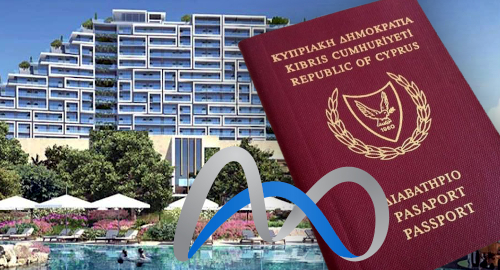
Melco casino execs’ fast-tracked Cyprus citizenship under fire

Casino operator Melco Resorts & Entertainment (MRE) is under fire in Cyprus after some top executives were granted local citizenship under a controversial program.

In August, an investigation by broadcaster Al Jazeera revealed that 18 executives of Melco Investment Holdings had filed a collective application for citizenship in July 2019 under the Cyprus Investment Programme (CIP).

The CIP allowed wealthy foreigners to obtain Cypriot citizenship by plowing at least €2.5m into local development projects. Earlier this month, following an Al Jazeera broadcast on the topic, the Cypriot government announced that it would end the CIP effective November 1.

MRE currently operates three satellite casinos and a ‘temporary’ larger casino in Limassol under its Cyprus Casinos offshoot. The company continues to develop the €550m City of Dreams Mediterranean integrated resort, which was originally scheduled to open in late-2021 but pandemic-related construction delays are expected to push this start into 2022.

Court upholds DC online betting monopoly, Hills crushes GamBetDC again

The District of Columbia’s controversial online sports betting monopoly has withstood yet another legal challenge, while the market gets ready to welcome another retail operator.

On Thursday, the District of Columbia Court of Appeals dismissed a 2019 Superior Court challenge of the DC Lottery’s controversial decision to award a no-bid online betting contract to Greek lottery/betting operator Intralot.

The challenge was brought by DC resident Dylan Carragher, a software developer who felt the DC online betting technology contract should have gone through a competitive tender. But the Court of Appeals found that Carragher had failed to demonstrate that he’d suffered any ‘injury in fact’ and thereby lacked standing, leading the Court to dismiss his challenge.

Sadly, while the Court rejected Carragher’s claims that he’d suffered injury from being denied the right to pursue the District’s betting technology contract, it also ruled that Carragher hadn’t suffered any ‘dollars-and-cents’ injury as a municipal taxpayer.

Colorado sports betting spikes in September, but state’s share slides

Colorado’s sports bettors dramatically increased their wagering handle in September but the state’s share of this action shrank due to operators’ overly generous online bonus offers.

Figures released Friday by the Colorado Department of Revenue’s Division of Gaming show the state’s licensed bookmakers generated betting turnover of over $207.6m in September, up 61% from August’s total and a new record for the market.

Sadly, while betting revenue totaled just under $4.2m, the state’s share came to less than $70k as the $3.76m in gross online betting revenue was offset by -$3.79m in ‘net sports betting proceeds,’ meaning the only taxable revenue was the $394m brought in by the state’s retail sportsbooks.

The report doesn’t state as such, but the online negativity is presumably the result of operators’ loss-leading bonus offers to bettors who may only now be activating wagering accounts in tandem with the kickoff of NFL action. A similar dynamic played out in Pennsylvania earlier this week.

Paf urges Finland to end Veikkaus online gambling monopoly

Finnish gambling operator Paf says the country should end the online gambling monopoly held by the state-owned Veikkaus in order to more successfully address the issue of problem gambling.

On Friday, Paf CEO Christer Fahlstedt published an op-ed in local media in which he argued that “the problems in the Finnish gaming industry could be solved with a regulated license system.” Fahlstedt warned the government that its plan to attempt to block Finnish gamblers’ access to Veikkaus’ online rivals won’t achieve its stated policy aims.

Paf, which holds a gambling monopoly in Finland’s autonomous Swedish-speaking Åland Islands region, has over the past few years proactively taken steps to reduce its reliance on high-rolling gamblers, despite the negative impact on the company’s financial performance. 

Veikkaus, on the other hand, has more or less been forced into imposing similar restraints following a series of embarrassing episodes that exposed its sketchy commitments to responsible gambling measures (not to mention transparency in procurement contracts).

Mohegan Gaming takes Las Vegas Strip’s tribal gaming Virginity

Nevada gambling regulators have enshrined Mohegan Gaming & Entertainment’s status as the first tribal casino operator on the fabled Las Vegas Strip.

On Thursday, the Nevada Gaming Commission (NGC) unanimously approved MGE’s application for a license to operate gaming at the Virgin Hotels Las Vegas property. The NGC ruling follows a similarly unanimous approval by the Nevada Gaming Control Board two weeks ago.

MGE chair James Gessner – one of 15 MGE figures who received personal licensing approval on Thursday – expressed pride at becoming the Strip’s first tribal operator, noting that the company had blazed a similar trail in Atlantic City years ago through a deal with Resorts Casino Hotel.

The Mohegan Sun Casino at Virgin Hotels Las Vegas is slated to open January 15, 2021, assuming everyone in the state isn’t dead from COVID-19 by then. MGE currently operates in Connecticut, Louisiana, New Jersey, Pennsylvania and Washington state, as well as two casinos on the Canadian side of Niagara Falls, and is planning mega-projects in Greece and South Korea.

Online casino struggle for Sweden’s state-run gambling ops in Q3

Sweden’s state-run gambling operator Svenska Spel reported a downturn in the third quarter as its land-based operations were laid low by pandemic shutdowns.

On Friday, Svenska Spel reported revenue of SEK1.85b (US$210.8m) in the three months ending September 30, down 8% from the same period last year. Operating profit fell harder, down 17% to SEK531m while profits slid 64% to SEK441m, although the bulk of this profit plunge was due to deferred tax income in 2019.

The company blamed the revenue downturn on the closure this spring of its land-based Casino Cosmopol operations due to COVID-19. The Casino Cosmopol venue in Sundsvall – the company’s original casino – was permanently shuttered in August as COVID-19 proved the tipping point following a decade of pre-pandemic losses.

The Vegas brand’s slots operations suffered from the closure of over 100 host venues (restaurants, bingo halls, etc.). All told, the Cosmopol & Vegas unit’s revenue was down 59% year-on-year to SEK177m.

Betsson online gambling profits jump 60% on record customer activity

Online gambling operator Betsson AB saw its profits jump by three-fifths in the third quarter thanks to a surge in customer activity.

Figures released Friday by the Stockhom-listed Betsson show revenue of SEK1.67b (US$191.1m) in the three months ending September 30, up 31% from the same period last year and a new company record (for the second straight quarter). Earnings did even better, rising 37% to SEK416.6m while net income spiked 60% to SEK290.6m.

To be clear, Q3 2019 was a downer for Betsson due to its struggles to adapt to Sweden’s regulated online market and disruptions to its Dutch– and Norwegian-facing operations. That quarter also showed an 8% fall in active customers, while Q3 2020 showed active customers up 46% to a record 920k and customer deposits jumping 53%.

Online casino revenue got a major pandemic boost, rising 39% to SEK1.3b, pushing casino’s share of the overall pie up four points to 78%. Organic growth (absent recent acquisitions) was a more modest but still impressive 29%.

NSW to ban gambling advertising for Big Bash cricket season

Cricket New South Wales has made the bold move to ban gambling advertising in the state during the lucrative Big Bash (BBL) Cricket season in 2020. Fresh off announcing a two-year partnership with Gamble Aware, Cricket New South Wales has been proactive in immediately enforcing the nature of their partnership with Gamble Aware.

The move is expected to primarily affect sportsbook operators who will be unable to release television advertising during highly lucrative Big Bash fixtures during a cricket summer that is set to also see India visit Australia.

The move from the New South Wales state government is designed to address the influx of gambling advertising during major sports events in Australia that target a family orientated audience. Already in Australia, gambling and sportsbook operators are banned from advertising on television within thirty minutes of a game commencing. It presents an interesting predicament to cricket’s governing body, Cricket Australia when their major partner is bet365.com

Cricket New South Wales boss Lee Germon supported the decision to ban gambling advertising. “We recognise the impact that constant sports betting advertising can have on young people and their families – particularly young men,” Germon said.

Gaming-focused SPAC Tekkorp goes live on NASDAQ

The Special Purchase Acquisition Company (SPAC) trend continues. There has been no shortage of interest among different commercial segments to team up with the “blank check” companies in order to be able to enter the world of public trading, and the most popular one this year in the gaming industry would have to be the deal between DraftKings and the Diamond Eagle Acquisition Corp SPAC, which allowed the sports gambling and fantasy sports operator to go public. This was just one of many, though, and another SPAC hopes it might be able to see the same success as the DraftKings/Diamond Eagle deal. Tekkorp Digital Acquisition Co. targets the digital gaming industry, and has now made its first appearance on the stock exchange. 

Tekkorp is now live on NASDAQ, trading under the ticker TEKKU. It launched there yesterday, offering 25 million units at $10 each. According to a company press release about the shares, “Each unit consists of one Class A ordinary share and one-half of one redeemable warrant. Each whole warrant entitles the holder thereof to purchase one Class A ordinary share at a price of $11.50 per share. Only whole warrants are exercisable. Once the securities comprising the units commence separate trading, the Class A ordinary shares and redeemable warrants are expected to be respectively listed on Nasdaq under the symbols (TEKK) and (TEKKW). The offering is expected to close on Oct. 26, 2020, subject to customary closing conditions.”

Tekkorp has some heavy-hitters backing it up. The board includes two long-running gaming executives, including Morris Bailey, who serves as its chairman, and Tony Rodio. Bailey is behind Resorts Casino & Hotel in Atlantic City, the first in New Jersey to offer both in-person and online sports wagers, and Rodio is the former CEO of Affinity Gaming and Caesars Entertainment. The latter gig ended when Caesars and Eldorado Resorts merged, leading to former Eldorado CEO Tom Reeg taking over the combined companies. 

In addition to those two, Tekkorp is led by CEO Matthew Davey. He is the former CEO of Scientific Games digital subsidiary SG Digital, and is joined by Robin Chhabra, who serves as the company’s president. Chhabra is the former CEO of FOX Bet, as well as the former chief corporate development officer for The Stars Group.

The Industry Eye – Season 7 Episode 11

[youtube https://www.youtube.com/watch?v=9rgYQuCR1Y4?feature=oembed&w=640&h=360]

Ed Pownall tries to understand Italian sponsorship regulation (doesn’t), agrees with Bojoko Chief, thinks Draft Kings have struck gold and looks at the UK lockdown, gambling figures.

The post The Industry Eye – Season 7 Episode 11 appeared first on CalvinAyre.com.

City Of Dreams Manila owner scrambles after 96% income loss

Belle Corp., which owns half of City of Dreams Manila (CoDM), has had a rough couple of years. Things went well in 2018, when it posted a year-on-year revenue increase of $69 million, but that was the height of the gains. Last year, it saw its consolidated net income fall 11% in the first half of the year, and 2020 has hit it even harder. According to its latest filing, Belle Corp., suffering from the casino shutdown in the Philippines, reported a 96% drop in income for the first nine months of the year.

From January to September, Belle Corp. had income of just $1.92 million, down from $52.8 million during the same period in 2019. The Philippines, like virtually everywhere else around the world, was forced to shut down its gambling and other commercial operations because of COVID-19, leading to the company seeing revenue of just $60.06 million compared to the $119.09 million it recorded during the first nine months of last year.

From July to September, the company took a net loss of $2.66 million after having gains of $10.64 million during the same period in 2019. That quarter’s bottom line came off of revenue that had fallen 42%, dropping to $18.69 million from $32.43 million a year earlier. The majority of the losses are directly attributed to the shutdown of CoDM, which caused the company to lose 86% of its revenue from the venue over the first nine months of 2020. It only received $6.717 million during the period, whereas it had been able to rake in $49.19 million for the period last year.

COVID-19 forced the Philippines to either shut down completely or severely handicap casinos from the middle of March until September. Losing a primary revenue stream for six months is enough to hurt any company, and Belle Corp. added in its filing, “The decreases in revenues and profits resulted primarily from Covid-19 related developments. The effects of the pandemic began with declining tourist arrivals prior to the implementation of the community quarantines nationwide and [were] compounded by the temporary suspension of gaming operations at City of Dreams Manila on March 16, 2020 in compliance with government initiatives to contain the virus.”

Colorado voters to decide on casino gambling expansion next month

If Colorado’s commercial casinos are able to offer anything more than slot machines and a few table games, it will be because the people want it – just the way things should be decided. The U.S. is going to see national and regional elections come to a close on November 3 in what will undoubtedly be one of the most contentious election periods in the past 50 years. In Colorado, residents are going to have to determine the fate of a number of legislative issues, one of which is whether or not casinos should be allowed to expand their offerings. 

Amendment 77 addresses the subject of casino gambling, asking residents to decide whether casinos should be able to offer more types of games, as well as larger single bets. If successful, which requires at least 55% of the voters to say yes, the initiative would pave the way for local votes in Black Hawk, Central City and Cripple Creek, where the state’s commercial casinos are located. It potentially allows for games like baccarat and others to be put on the menu alongside existing options like poker, roulette and craps, and for the removal of the $100 bet cap. That limit was approved in 2018, and led to the cap increasing from $5 to its current level in 2019.

The impetus for the change stems from the assertion that gamblers are now taking their money out of state, with some studies showing that as much as $300 million is leaving Colorado for more liberal casinos elsewhere. David Farahi, the chief operating officer for Monarch Casino in Black Hawk, told Colorado Public Radio, The person that goes to Vegas, six, 10, 12 times a year — if we can get them to come to one of Colorado’s three gaming towns one or two or three of those times — it keeps the dollars in the state.”

Approval of the legislative action means more money for education in Colorado. According to an overview of Amendment 77, it specifies, in part, “The distribution of gaming tax revenue for community colleges in state statute would be amended to include distributions to programs to improve student retention and increase credential completion. If the measure is approved by voters statewide in November, each of the three towns may hold a local election to vote on whether to change betting limits and add new games. The earliest these changes would go into effect is May 1, 2021.”