Category Archives: Esports

The World Poker Tour announces WPT Online event in India

The World Poker Tour (WPT) continues to break into new markets, partnering with Adda52 to launch a new online poker event for India. The tournament will run from November 5 to 22, featuring 154 events and a guaranteed prize pool of $1.8 million USD.

Head of Business for Delta Corp Poker, Manish J. Adnani was excited to be partnering with WPT, for the upcoming Indian event.

“We expect to continue setting higher standards for online poker in the Indian Sub-continent, rollout a memorable experience on Adda52.com and offer the Indian players a platform to achieve glory at the world stage,” Adnani said.

WPT CEO Adam Pliska was excited to have the tour expand into India.

Gambling Industry Announcement and Partnership Roundup – October 1, 2020

In the fast-moving world of gambling, sometimes you might miss news that could be important to you. To make sure you’re all caught up on gaming industry news, be it online or brick and mortar, we’re rounding up the some of the announcements and partnerships from the last week that you might have missed.

Don’t miss out on all of the latest announcements. Our Press Release section is updated constantly.

Yggdrasil adds ReelPlay to rapidly growing YG Masters programme

Infinity Reels slot supplier gains access to GATI technology to further extend market reach

GGPoker Bans 13 Players after Real-Time Analysis Investigation

Poker sites have fought back against the rise of HUD’s, or Heads-Up Displays for many years. Providing real-time analysis (RTA) of other players at the table on many points of focus that as a player at a live table you wouldn’t normally be able to do, HUDs are banned by many sites, including the GGPoker Network (GGPN). 

This week, GGPoker announced on their site that they have discovered multiple users of RTA on their site and put out a statement, including the following: 

“At GGPoker Network (‘GGPN’), we firmly believe Poker to be a battle of wits that is meant to be experienced without the use of any Real-Time Assistance (‘RTA’) whatsoever. To this end, we were among the first to prohibit heads-up displays, and we have been quick to ban players in the past that were using prohibited software. 

While there will always be deceitful individuals trying to cheat the game and steal from their fellow players, our Security Team continues to be on the cutting edge with regards to detection and protection and maintains a zero-tolerance policy to Real-Time Assistance. 

Imperial Pacific tries to force regulators’ hand over Imperial Palace

Imperial Pacific International (IPI) was threatened with having its license for the Imperial Palace casino in Saipan yanked if it didn’t pay its outstanding debt to the Commonwealth Casino Commission (CCC) in two weeks. That was three months ago. IPI then came forward in August and confirmed that it would be impossible to come up with the $15.5 million regulators were waiting for, but added that it was willing to pay in installments if the CCC accepted. Now, the operator has offered some new terms to its Casino License Agreement (CLA) to be able to continue in Saipan, seemingly unwilling to accept the fact that it isn’t in a position to make demands. However, given the CCC’s inability to follow through on its threats to hold IPI accountable time and again, IPI might, once again, be able to avoid self-destruction. 

IPI wants its annual regulatory fee, set at $3 million, cut in half. It also wants the mandatory $20 million community fund contribution to be erased for the year and wants permission to go after gamblers who don’t pay their debt – because, of course, IPI is a role model for paying its debts on time. The debt-collection exercise would be backdated to 2015, and 15% of anything collected would be given to the government as tax revenue. These are only a few of the changes IPI asked for in a letter, “Points for the 9th amendment of the CLA,” it sent to the Commonwealth of Northern Mariana Islands (CNMI) this week. 

In addition, IPI wants to continue its monopoly on Saipan’s casino market, which shouldn’t sound appealing to anyone. The company’s continuing examples of skirting laws and regulations have already led to a number of investigations and lawsuits, and its debt is mounting. It reported a loss of $103.2 million for the first half of this year, and alleges that gross trade receivables stemming from VIP gambler action are at $1.17 billion. The fact that it would allow gamblers to run up that much debt speaks volumes about IPI’s ethical and moral fortitude. 

If regulators agree to the deal, IPI would pay its 2021 license fee in two payments, instead of one, with 2022 returning to the normal, single-payment arrangement. In addition, the casino operator is demanding the introduction of online gaming and a concession on license fees in the future if a catastrophe, such as COVID-19, forces it to close down for 30 days or more. From the tone of the letter sent to the CNMI government, a denial of the terms will mean that IPI will continue along its current path, which includes not paying its bills or employees on time and taking advantage of the CCC at every turn. The ball is now in the regulators’ court. 

Almost a quarter of casino workforce in Atlantic City still jobless

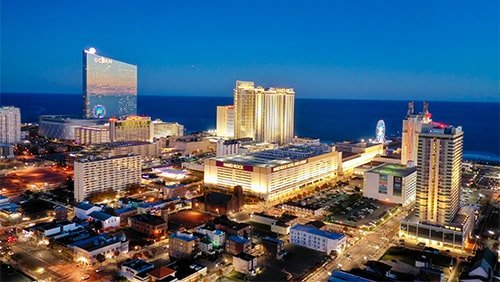
Things are starting to look up for Atlantic City and its casinos, but there is still a long way to go. New Jersey’s, and the East Coast’s, gambling hub has suffered one blow after another over the past couple of years, but nothing compared to the fallout caused by the COVID-19 pandemic. As the city struggles to get back on its feet after a flurry of punches to the gut and face, it has been able to bring back a large part of its workforce to get some help. However, according to regulators, almost 25% of that workforce is still waiting by the phone for a call to return. For many, that call will most likely never come.

The New Jersey Division of Gaming Enforcement (DGE) said this week that, as of the first of last month, there were 22,352 employees now back in action at Atlantic City’s nine casinos. However, that is a drop of 21.8% from the 6,233 seen a year earlier, and things aren’t likely to improve as the city enters the last quarter of the year. The fall and winter are typically slow for New Jersey because of the weather, and this won’t provide casinos with a huge reason to bring back more workers. Many casinos are already gearing up for a longer slowdown, relieving 2,528 employees from July to August and reducing the overall Atlantic City workforce a further 10%.

According to a report by the Press of Atlantic City, the Borgata could suffer the worst among Atlantic City’s casinos. This is due, in part, to the nongaming amenities found at the casino, which are still suffering. Jane Bokunewicz, the coordinator of the Lloyd D. Levenson Institute of Gaming, Hospitality & Tourism at Stockton University, explained to PAC that the Borgata has “more of a nongaming footprint than others. The food and beverage and convention jobs at Borgata would be among the most vulnerable under current circumstances.”

Indoor dining returned to New Jersey on September 4; however, it had been prohibited for 172 days. That suspension was devastating for all restaurants and dining facilities and, even though they’re now open, they can only operate at a maximum of 25% their normal capacity – not enough to even cover the bills in many cases. The Borgata was the last of the nine casinos in Atlantic City to reopen, a delay that had been based, in no small part, on the food and beverage restrictions ordered by New Jersey Governor Phil Murphy.

CoinGeek Live Day 1 looks at Bitcoin’s ‘fusion of data and money’

The first day of CoinGeek Live saw several Bitcoin experts explaining how the future of money and the internet will look with Bitcoin SV. This 3-day conference kicked off with a focus on payments, financial services, regulation, and the newest developments on the BSV blockchain.

The day kicked off with a message from Bitcoin Association Founding President Jimmy Nguyen. He focused on the history and vision of Bitcoin, and its destiny as the “one world chain.” Thanks to BSV returning to the original protocol set out by Dr. Craig S. Wright, under the pseudonym Satoshi Nakamoto, Bitcoin is now providing immense business power by acting as a ledger for not just payments, but data as well. “It’s a fusion of data and money,” Nguyen said.

Unlike the other blockchains that have popped up since 2008, Bitcoin will act as “the foundational rule set for an entire network,” Nguyen said, and is “re-inventing the internet.”

To do that, Bitcoin has to grow, and BSV has been allowed to scale massively. BSV currently processes over 2,800 transactions per second, and is looking to hit 50,000 in the near future. That’s because any blockchain hoping to serve enterprise needs has “got to scale,” Nguyen said, and it has “to scale big.”

Watch Day 2 CoinGeek Live for Free

CoinGeek Live Day 2  begun! If you haven’t signed up already, you can register for free to watch the whole conference at CoinGeekConference.com.

The agenda for Day 2 begins at 7:00 am EDT (Noon BST) on October 1, but you can login now to check out exhibitor booths and begin networking with others in the Bitcoin world. You can login here.

There’s still lots of great reasons to sign up and catch Days 2 and 3 of the conference, especially if you’re in the gambling industry. Day 2 will have talk about the data capabilities of Bitcoin SV, including the implementation of tokens, and Day 3 will have a dedicated gambling track you’ll need to see. You can check out the conference agenda to see what CoinGeek Live has in store, and some of our most anticipated panels

You can watch our coverage of everything that happened in Day 1 here. And of course, register now so you don’t miss another minute.

Cambodian gambling town approaches ghost town status

The town of Sihanoukville in Cambodia garnered a lot of attention recently, but not necessarily for the right reasons. It had become a hotspot for casinos and gained even more popularity when operators discovered that it was a great place to set up online gambling operations. A number of problems, including the unexpected collapse of a building under construction that killed more than 24, led to Cambodia revamping its gambling laws and shutting off the online gambling segment. Then, COVID-19 struck and made things even worse. As quickly as Sihanoukville became a gambling town, it is on a path to become a ghost town if things don’t reverse course, and another casino has decided to pack up and move elsewhere.

Century Entertainment International Holdings, which was Amax International Holdings until last September, is going to move its gaming tables out of Sihanoukville, fulfilling a plan first announced a few months ago. The company had expected to be able to move its action from the Sunshine Bay Hotel to the Ming Guan Hotel, also in Sihanoukville, but those plans fell through. Now, it has turned its sights on a hotel in Dara Sakor, an investment zone spanning 138 square miles on Cambodia’s southern coast that is primarily backed by China. 

The move is apparently coming after Century’s CEO was enticed by a generous package for the company. The new casino will provide just over 113,000 square feet of gross space, in which Century will put up 40 mass gaming tables, 80 slot machines and 55 VIP tables. There will also be a Chinese restaurant, a night club and a spa, and at least some of the gambling operations and amenities will be ready to go by the end of January of next year. 

Dara Sakor seems to be everything a jet-setting gambler would want – a tropical environment, beautiful beaches and all types of amenities. It has been in the works since 2008, when Tianjin Union Development Group, a Chinese real estate development company, was given the go-ahead to launch the project. Since then, it has continued to grow, and plans are to put in a high-speed rail system to connect the area to Phnom Penh and Siam Reap, docks capable of welcoming large cruise ships, hotels, golf courses and more. An international airport is also coming to the area, and is expected to be open sometime next year.

MGM Resorts receives order for massive Mandalay Bay shooting payout

There is finally some closure coming for victims of the unprovoked massacre of concertgoers that took place in Las Vegas in 2017. Stephen Paddock used a room at the Mandalay Bay in Vegas from which he staged his attack on unsuspecting people attending the Route 91 Harvests Music Festival, ultimately killing 58 and injuring 851. It was the largest unprovoked attack on U.S. soil ever, and victims’ families wanted MGM Resorts, the owner of the Mandalay Bay, to be held accountable. Following a lawsuit lodged against the casino operator, the case has now been brought to a close, and MGM has learned its fate. 

MGM was facing a number of lawsuits related to the incident, all of which had essentially asserted that the casino did not do enough to prevent Paddock from being able to walk in with luggage full of guns and ammo and wanted to know why he was able to access normally off-limit service elevators. After the lawsuits were launched, the company took a major cheap shot at victims by countersuing in an attempt to have the lawsuits dismissed. It failed. 

Realizing that it was most likely at the losing end of a legal battle, MGM said over a year ago that it was preparing itself to pay out as much as $800 million to be able to put the issue behind it. 

The Associated Press reports that a judge, Clark County District Court Judge Linda Bell, has signed off on the payout amount. 2,000 plaintiffs, represented by attorney Robert Eglet, had been involved in this lawsuit, and another approximately 2,400 relatives and victims were included through other attorneys and legal representation. Judge Bell explained in issuing her ruling that almost all of them agreed to the deal. Eglet told the AP, There’ve been no objections and we expect no appeals. We’ll send out notices of the order. After 30 days, the $800 million will be deposited.” 

NBA Finals Game 1 not the battle that was expected

Last night was the first game of the best-of-seven series to determine who will be the NBA 2020 champions. The LA Lakers and the Miami Heat fought to get to this point, both coming only a couple of games away from elimination in their respective conference title championship series. Before the opening tip-off last night, there was no shortage of speculation surrounding how things would play out, both for the game and the series, and everyone knew a battle was brewing. However, the battle last night ended not being between the Lakers and the Heat – it was between the Heat and injuries. 

The Lakers had been projected to take Game 1; however, there was no shortage of murmuring about the Heat being able to power through and score an underdog win. Several Lakers players, including LeBron James, were listed as dealing with minor injuries that could affect their play. In addition, the LA crew has traditionally used the first game of any playoff series to size up the competition before dropping the hammer. The most notable exception was the rally they had against the Denver Nuggets in the Western Conference title series.

LeBron’s groin injury didn’t stop him from coming out and leaving everything he had on the court last night. He put up 25 points as the Lakers found their rhythm after getting off to a strong Heat line that took the lead in the first quarter to 23-10. After that, though, Anthony Davis was all over the place, picking up 34 points and three blocks. The potential league MVP doused the Heat’s flames. At one point, the Lakers’ domination was so noticeable that they scored 18 unanswered points. 

Not only did the Lakers overpower the Heat in almost every way, but Miami suffered some major setbacks that will change the outlook for the rest of the series. If basketball fans expected this championship contest to go all the way to six or seven games, those odds just got really long as a result of devastating injuries suffered by Miami. Now at a clear disadvantage, the Heat could potentially be done in just four games. 

Becky’s Affiliated: Join me tomorrow for CoinGeek Live’s Gambling Industry Track!

Just in case you’ve missed our invites to CoinGeek Live 2020 which is now on its second of three days, I wanted to personally invite you to join us tomorrow, October 2nd, for the special gambling industry track taking place between 9:25 and 11:35 EST.

This digital event is free for everyone to attend, no matter where in the world you are. All you have to do is sign up via the CoinGeek Conference website and you can learn about the exciting intersection of the gambling industry and blockchain, in addition to hearing from 90 cutting-edge speakers, all completely live.

Completely live means absolutely nothing is pre-recorded and you can digitally interact with speakers, submit questions and network in real time, as much as you like. The sessions will also be available on-demand for registered attendees, so feel free to dip in and out as your schedule permits.

CoinGeek Live 2020 represents several “firsts”, including the dedicated gambling industry track which will feature 14 C-level speakers from the esports, land-based and online gambling space.

Albania’s casino licensing plans require a secret decoder ring

Albania’s proposal to license casinos in the nation’s capital may turn out to have been a mirage, or just another example of political cronyism run amok. 

Last week, the Albanian Gambling Supervision Authority officially announced a tender for the right to operate casinos in a designated area in the heart of the capital Tirana. Interested operators were told to ensure their submissions were received by October 22.

The notice remains posted on the Authority’s website but local media outlet Exit reported Wednesday that Prime Minister Edi Rama was denying that his government had any intention of reversing the anti-gambling policy of recent years. Rama said Wednesday that there was no “reopening of gambling in Albania” and “no casino license.”

Rama (pictured) attempted to clarify that “a specific procedure has been created which is related to the expiration of the license of the only casino operating in Tirana.” That’s a reference to Adria Entertainment (formerly known as Apex-al), which runs a gaming floor at Tirana’s Regency Hotel featuring around 240 slots and 20 gaming tables.

China’s lottery sales rise; Baidu online gambling probe just getting started

China’s lottery operations posted their second straight month of year-on-year sales increases, while the investigation into Baidu’s alleged links to illegal online gambling sites continues.

On Wednesday, China’s Ministry of Finance reported that August’s lottery sales totaled just under RMB34.8b (US$5.1b), a 2% rise from the same month last year but 3.7% below the sum earned in July 2020, which marked the first year-on-year increase in 18 months.

August’s gains were entirely due to the sports lottery, which rose 2% to RMB21.5b, while the welfare lottery product slipped 9.3% to RMB13.25b. For the year-to-date, overall sales are off 30.3% to RMB194.8b.

September’s sales may extend the two-month winning streak but the government will shut down all lottery sales – with an exception made for instant lottery products – for a four-day period starting October 1 for the annual National Day holiday. So don’t count on this streak extending to four months.

Bert Stevens wins GGPoker Super MILLION$ for $393,362

The latest Super MILLION$ event on GGPoker was a very popular one, with 196 entries coughing up $10,000 to take part. In the end, it was Bert ‘girafganger’ Stevens (sometimes known as ‘girafganger7’) who won the $393,362 top prize, defeating a highly talented final table including players such as Sean Winter and Jake Schindler.

With a massive $2million guarantee, math sharps amongst you will note that the entries were just four short of reaching that number, so a little overlay was in the pit by the time late registration ended. Stevens himself would enjoy a cool profit of 393 times his stake having won through in a satellite costing just $1,000 compared with the full $10,000 buy-in.

The final day saw Stevens head into play second in chips, after 196 players were reduced to just the final nine. With other players such as Andras Nemeth, Matthias Eibinger, Dominik Nitsche, Steve O’Dwyer, Daniel Dvoress and Ali Imsirovic all failing to cash, others snuck into the money, such as Stephen Chidwick, who min-cashed for $22,798.

While plenty of recognizable names made the money but failed to make the final such as Bertrand ‘ElkY’ Grospellier (23rd for $22,798), Christoph Vogelsang (18th for $22,798) and Mike Watson (10th for $35,953). 

The Secret Coach: Is Mourinho still the master?

For the last few years, debate has raged in English football about whether Jose Mourinho still has what it takes to manage at the top level. Despite winning the Europa League with Manchester United, the Portuguese manager could get the Red Devils no nearer to a Premier League title they haven’t win since Alex Ferguson retired in his three years at the club.

Likewise, while Mourinho excelled in his first Chelsea stint between 2004 and 2007, his return yielded one title and a lot of trouble, eventually leading to his acrimonious exit from the club. Last night, a year into his role as Tottenham Hotspur manager, Jose Mourinho welcomed not just his old team in Chelsea in the Carabao Cup , but his former midfield general Frank Lampard, who currently holds the reigns at Stamford Bridge.

We followed last night’s game in the company of a professional football coach in English football, who will remain anonymous. He’s worked with some of the biggest names in the game, going through the coaching process, and is currently part of the team at an English league side… and that’s all we’re telling you. He’ll be honest each week about what he sees as he sees it. As ever, The Secret Coach pulls no punches!

Pre-match, Mourinho has often been known to send out messages rather than talk too much about what he and his team intend to do during the game and last night’s Carabao Cup tie was no different.

Listen to Calvin Ayre talk about how he found opportunity in Bitcoin

Calvin Ayre wasn’t always the rich entrepreneur he is now; He had to work his way up the hard way. He did well for himself, building up a gambling brand, and has now moved on to the Bitcoin world. Before the CoinGeek Live conference kicked off, Ayre joined Dustin Plantholt on the Life’s Tough podcast to discuss how he got to where he is now.

Ayre grew up in the farmlands of Saskatchewan, telling Plantholt that he walked to school with pig shit on his boots, just like all the other kids. But after gaining a college education and starting a business in Vancouver, Ayre quickly saw there was a market opportunity in the nascent world of online gambling. He gave his theory of how he did so well in those early days:

“I think my secret sauce was early on, coming up with a better branding strategy and marketing plan. A lot of the incumbents in the earliest days were actually street bookies who’d just kind of said ‘Lets go online.’ So they weren’t very flamboyant and they just didn’t really understand the concept of marketing. You don’t market yourself in a traditional manner when you’re doing street bookie stuff, because you don’t want people to know other than your customers.”

Plantholt asks if a drive for money motivated Ayre. “Actually, I never really thought I’d be this successful in my career,” Ayre answered. “I actually was more driven by challenges. I think I can do this, and I do it. It was incremental and it kept getting bigger, and bigger and bigger. I kind of just like building things, I’m kind of a builder.”

888 soars on solid H1 report, speculation of deal for Hills’ Euro ops

UK-listed online gambling operator 888 Holdings saw its shares spike by more than one-fifth on Wednesday on impressive H1 earnings and speculation that it could buy William Hill’s European online operations.

Figures released Wednesday show 888 generated revenue of US$379m in the six months ending June 30, 37% higher than the same period last year, while adjusted earnings jumped 56% to $70m and pre-tax profits soared 130% to $50.9m.

The casino vertical remains 888’s bread-and-butter, and there was a whole lot more butter this year. Casino revenue shot up 48% to $260m as first-time depositors rose 72%. Poker revenue increased 56% to $36.1m as first-time depositors more than doubled. In fact, poker was responsible for nearly one-quarter of all first-time depositors in H1.

Sports betting started 2020 off strong, with revenue up 22% in the first two months, then came COVID-19 and the subsequent halt to major sports activity. But the resumption of play and a sportsbook launch in Sweden meant H1 betting revenue slipped only 1% to $44.1m – and would have risen 2% at constant currency – while June’s betting stats were 59% ahead of June 2019.

5Dimes owner settles with DOJ, eyes US sports betting licenses

Former US-facing online sportsbook 5Dimes has reached a financial settlement with the US Department of Justice ahead of a plan to pursue sports betting licenses in the regulated US market.

On Wednesday, the US Attorney for the Eastern District of Pennsylvania announced that it had reached a settlement with 5D Holdings Ltd – the parent company of Costa Rica-based online sportsbook 5Dimes – and Laura Varela, the widow of 5Dimes founder William Sean ‘Tony’ Creighton, who was murdered in Costa Rica in 2018 in an apparent botched kidnapping attempt.

The settlement involves 5Dimes forfeiting $46.8m in illegal gambling proceeds derived primarily from US bettors. This sum includes roughly $3.4m in assets seized during the 2016 probe by Homeland Security Investigation into 5Dimes’ use of Amazon gift cards to help US bettors fund their online betting accounts.

Another $26m of this sum will come from 5Dimes and Varela agreeing to “help in the collection and forfeiture of additional assets.” Another $2m comes from funds seized by Costa Rican law enforcement, while the final $15m will come from 5Dimes and Varlea agreeing to “pay and consent to the forfeiture” of additional proceeds derived from the site’s escapades.

Ontario police bust ‘high-end illegal casino’ in 53-room mansion

An illegal casino operation in Ontario is shedding light on how VIP gamblers have been filling the void caused by the COVID-19 shutdown of legal venues.

On Wednesday, York Regional Police announced the arrests of 32 individuals suspected of operating a “high-end illegal casino” out of a 53-room, 20k-square-foot mansion in Markham, just north of Toronto. The arrests, which were part of a probe titled Project End Game, occurred on July 23 but are only now just making headlines.

The C$9m (US$6.8m) mansion was among the items seized during the raid, along with C$1m in cash, 4,000 bottles of premium liquor, 11 firearms – including a rifle with a fully loaded 30-shot clip kept close to the action, just in case – as well as numerous gaming tables and electronic gaming machines.

The mansion also offered its guests the opportunity to crash overnight, along with unspecified “spa treatments,” leading police to conclude that the underground operation may have had ties to human sex trafficking.

Nevada August casino revenue slips as bettors beat up sportsbooks

Nevada casino gaming revenue suffered a modest setback in August, despite solid public interest in the state’s sports betting operators.

Figures released Wednesday by the Nevada Gaming Control Board show statewide gaming revenue of $743m in August, a 22% decline from the same month last year and slightly below the $756.8m the casinos generated in July 2020.

The year-on-year decline was significantly greater on the Las Vegas Strip, where casinos reported revenue falling 39.2% to $317m, which was also a slight fall from July’s $330m. Downtown Vegas venues were down 21.5% to $35.6m, while the Boulder Strip rose nearly 30% to $70.9m.

Nevada’s slots revenue was off 14.7% year-on-year to $525.4m, while the ‘table, counter & card games’ segment slid 35.6% to $217.6m. Nearly all table games suffered steep declines, led by blackjack ($58.3m, -40.4%), baccarat ($46.3m, -53%), craps ($28.9m, -20.6%) and roulette ($21.2m, -28.7%).