Category Archives: Esports

CasinoBeats Malta Digital: How gambling succeeds during a pandemic

CasinoBeats Malta Digital, SBC’s latest event during this tumultuous time, has kicked off with a look at how the gambling industry, particularly in Malta, continues to navigate the choppy waters of the Covid-19 pandemic.

The day began with a welcome message from the Hon. Clayton Bartolo, Parliamentary Secretary, Financial Services and Digital Economy for Malta. “The new normal dictates that we meet virtually and not in person, but I am confident that Malta’s success in handling the Covid outbreak will allow us to host you in Malta soon,” he said.

With the opening keynote was Ivan Filletti, COO GamingMalta, who remarked on the charitable efforts the gambling industry has made. Organizations have donated masks, given to charitable foundations, made apartments available for frontline workers, and much more.

On the business side, he was confident the industry will find its way to a better tomorrow, adapting to all challenges before it. “The only constant is change, as cliché as it sounds, it’s the brutal truth,” he said. “We need the continuity of these thought leadership sessions to learn how to embrace change and continue strengthening the iGaming heartbeat.”

The NBA is keeping a season cancellation on the table

The NBA is ready to finish out the season, operating inside a “bubble” at Walt Disney World in Orlando, Florida. The professional basketball league figured out, at the beginning of last month, what was needed to ensure a safe and secure environment for players and staff, and started working on a plan that would see the NBA Finals get going at the end of this month. However, with different areas across the US, and even the league, now witnessing a resurgence in the coronavirus, NBA Commissioner Adam Silver is keeping his thumb on the big red button that would bring everything to a grinding halt once again. 

Silver and the rest of the NBA are still optimistic that everything will be able to move forward as projected. However, he told TIME 100 Talks yesterday that the season could be canceled if necessary. He explained, “If cases are isolated, that’s one thing. But if we had a lot of cases, we’re going to stop.” The commissioner’s comments echoed similar remarks he made last week when he asserted, “The level of concern has increased, not just because of the increased levels in Florida, but throughout the country.”

In addition to new waves of COVID-19 seen in Florida, Nevada, California and elsewhere, a number of NBA players have tested positive for the virus. So far, at least 13 players have decided that they don’t want to make the trip to Orlando, although not all of them are backing out due to the coronavirus. Some are dealing with previous injuries or personal preferences, such as wanting to spend time with family. 

Silver adds, “Never full steam ahead no matter what. One thing we are learning about this virus is much [is] unpredictable, and we and our players, together with their union, look at the data on a daily basis. If there were something to change that was outside of the scope of what we are playing for, certainly we would revisit our plans. We are testing daily. We haven’t put a precise number on it, but, if we were to see a large number of cases and see spread in our community, that would, of course, be a cause to stop, as well.”

Yokohama delays IR plans as Japan’s gambling momentum stalls

A year ago, everyone expected Japan’s new gambling environment to be highly evolved by now. Scandals and global pandemics have gotten in the way, though, forcing the national government to shift its priorities. While the plan to see integrated resorts (IR) come to the country one day continues, they certainly won’t be seen within the timeframe initially planned. Before anything can happen, Japan needs to create a blanket “basic policy” to provide guidance to those areas interested in hosting an IR, and the delays in the creation of the framework are forcing delays all the way down the line. Yokohama thought it might be able to have its local guidelines in the works by now, but has announced that it is going to hold off because of the national government.

Yokohama’s city council was expected to meet yesterday to go over the city’s implementation policy draft. However, since Japan’s Diet has to lay out the foundation for the locations that want to host an IR, no local policy can be created until the basic policy is presented. The meeting yesterday would have been used to discuss the different options and requirements for an IR as the city plans on battling for one of the three first casino licenses, but it would be an exercise in futility without understanding what the country’s plans are going to look like. 

As a result of the delay, the expectation of being able to announce Yokohama’s implementation policy will most likely be postponed once again. This past April, the city announced that it would put off the presentation of its plan from June to August, and that timeline might be impacted further due to the current situation. Still, Yokohama is fully behind the idea of having an IR in its backyard, and will persevere through the turmoil.

The good news is that neither the delay nor the economic impact caused by COVID-19 will alter Yokohama’s plans too much. The city is spending $3.7 million in campaigns to promote the IR, and Yokohama Mayor Fumiko Hayashi plans on sticking with that budget. Some locals believed the money should have been reallocated to combat the coronavirus, but the mayor doesn’t agree. She said during a City Council meeting last week, “The IR is a national project. We have received congressional vote to promote the project. It is necessary to proceed with efforts [as a city]. We are also making public relations efforts with residents.” 

Turn on the red light if you want better eyesight

A red light has a number of connotations, most often associated with negativity – red stop light, red warning light, red-light districts, etc. However, a new study puts red light in a positive light. Appearing in The Journals of Gerontology (paywall) this week, researchers have discovered that exposing the eyes to a few minutes of red light each day could help them remain healthier longer, keeping eyesight in better shape as we get older. If future studies can confirm the results, the implications are fairly big.

In “Optically improved mitochondrial function redeems aged human visual decline,” better eyesight can be maintained over the years just by spending two or three minutes a day looking at a “deep red light.” The researchers, which include Harpreet Shinhmar, MSc; Manjot Grewal, BSc; Sobha Sivaprasad, MBBS, PhD; Chris Hogg; Victor Chong, MBBS, PhD; Magella Neveu, PhD and Glen Jeffery, D.Phil, surmise that the light has a positive impact on the health of mitochondria. As a result, the eyes become stronger and, since mitochondrial decay is associated with a number of diseases, this could also lead to the creation of new treatments for a number of ailments, including diabetes and more.

The researchers explain, “Mitochondria influence the pace of ageing as the energy they provide for cellular function in the form of adenosine triphosphate (ATP) declines with age. Mitochondrial density is greatest in photoreceptors, particularly cones that have high energy demands and mediate colour vision. Hence, the retina ages faster than other organs, with a 70% ATP reduction over life and a significant decline in photoreceptor function.”

It’s important to point out that the study was not an in-depth investigation into the effect red light has on mitochondria or sight. It was just a pilot study to test a theory, and involved two dozen test subjects – 12 men and 12 women – who were provided a flashlight that had a red light with a wavelength of 670 nanometers, just shy of the wavelength of infrared lights. For two weeks, they would look at the light for three minutes and researchers measured the eyes’ receptor cells, called cones, and retina cells, rods, to determine any changes. What the researchers found was that, after the two-week period, a 14% improvement in the ability to see colors was identified.

UNLV explores online gambling and sports wagering in new study

There have been a number of studies conducted over the years to explore the impact of gambling on both the individual and society. The results, when viewed with open eyes, have consistently revealed that the activity is relatively innocuous compared to other things (alcohol consumption can be much more damaging, both from a financial and a health perspective), and a new study is beginning that looks to provide more insight on two specific areas of the gambling ecosystem, online and sports gambling. The study is getting underway now and is expected to be one of the most detailed investigative operations conducted on the subjects.

The International Gaming Institute (IGI) of the University of Nevada Las Vegas (UNLV) is leading the research with the help of GVC Foundation US, a nonprofit organization that promotes responsible gambling. The study will explore the structure of the gaming market in the US in order to develop solid guidelines for the implementation of regulations that can provide clear oversight for gambling and sports integrity. GVC Foundation US is a subordinate entity created by the GVC Global Foundation and gaming operator GVC Holdings.

Explains Alan Feldman, Distinguished Fellow in Responsible Gaming at IGI and chair of the International Center for Responsible Gaming, “Effective public policy is always best served by an evidence-based approach to its creation. In order to provide the necessary player protections as well as ensure a stable and well-regulated marketplace, policies should be based on sound research evidence rather than opinion or conjecture. It is our hope to contribute to the body of knowledge in this area so that the public can benefit from this activity and whatever harms may arise can be minimized to the greatest extent possible.”

Now is the perfect time to be introducing this study. Sports and online gambling have become hot-button topics over the past couple of years, and the interest has only increased with the presence of the coronavirus. As the US begins to emerge from the pandemic, it has already been made clear that more states could consider legalizing the activity in order to raise revenue and the information contained in this study will be vital to how laws and regulations are crafted.

PAGCOR issues warning after fraudulent games found on Facebook

There will always be people who lack morals and ethics, those who will take advantage of any situation to line their own pockets, regardless of the cost to others. The coronavirus pandemic has proven once again how unscrupulous some people can be, with everything from fraudulent wonder cures to the theft of stimulus checks from the elderly being reported. One of the latest scams to appear comes by way of social media sites such as Facebook, proving once again that the social media giant isn’t living up to its promise of protecting consumers. Illegal gambling action is being advertised by scammers on Facebook, and the Philippine Amusement and Gaming Corporation (PAGCOR) wants to make sure consumers take the necessary precautions. 

According to the gaming regulator, illegal online bingo is appearing across the Philippines. However, any promise of offering a way to get rich quick through gambling was nothing more than a ruse designed to steal the individual’s money, financial details and identity. In issuing its warning to consumers, PAGCOR gently reminded everyone that playing the games is illegal, as well, which makes things even more worrisome. If someone were to become a target of the fraudsters, they would most likely not file complaints, fearful of being charged, as well.

PAGCOR asserts in its warning, “Pagcor is committed to the prosecution of persons involved in such illegal activities, because of the strong link” identified between illegal gambling and organized crime, which has also been tied to “credit card fraud, identity theft, money laundering, among others.” It added that only PAGCOR and government-approved operators are allowed to offer gambling activity in the Philippines, and that “Betting on such illegal gambling activities is also a crime.”

Part of the reason these alternatives have been successful is because of the continued lockdown in the country. Casinos around the Metro Manila area are still waiting to be given the green light, but will have to wait a little longer. The lockdown order was expected to be lifted as of yesterday until it became apparent that a return of COVID-19 could be seen. As a result, the government has now decided to keep a general community quarantine in place in Metro Manila for another two weeks. This means that gambling venues like the City of Dreams Manila, Okada Manila, Resorts World Manila and Solaire Resort and Casino, already having been closed since March, will need to take a deep breath and mark July 15 as the new expected reopening date. 

Station to keep the doors to several casinos closed until next year

The coronavirus chaos has taken its toll on casino operations around the world and, while most operators have been begging to be able to get back in the game, one company apparently doesn’t care about losing tons of money. Station Casinos, which is controlled by Frank and Lorenzo Fertitta, has decided that four of its venues in Las Vegas can stay closed, and most likely won’t make a return for another year. The prolonged shutdown certainly raises questions as to the motives behind the decision.

According to documents filed with the Nevada Gaming Control Board (NGCB), Fiesta Henderson, Fiesta Rancho, Palms and Texas Station are designated as being “non-operational” and under a “temp closure” through June 30 of 2021. Given that three-fourths of the casinos in Las Vegas are now back in business and doing well, including other Station properties, it’s peculiar that the company would decide to keep this handful of properties closed. However, the company already determined that it would need to make massive cuts to its workforce, which may have had something to do with the decision. Add to this the fact that it has fought against unionization, and lost, perhaps Station brass is ready to make some permanent changes.

The casino operator, in its typical fashion, hasn’t commented on the situation. It never likes to weigh in on topics that impact the public’s perception of its worthiness, and has only stated, “Due to the uncertain economic conditions in the State of Nevada, Texas Station Gambling Hall & Hotel will remain closed until further notice, and there is no known reopening date at this time.”

According to the Las Vegas Review-Journal, there will soon be some more activity at the few Station properties that have already reopened. The media outlet explains that the poker rooms at Boulder Station, Red Rock Resort and Santa Fe Station are going to open August 3; however, as COVID-19 spikes are seen in places like Nevada and California, it’s possible that new lockdown orders may come, which would force the company to change its plans. Las Vegas now has seven poker rooms open, and an eighth – the poker room at the Aria – is expected to open today.

Michael Daly: ‘People still want entertainment’ during Covid-19

We’ve looked a lot at how the well-established gambling industry in Europe has been affected by the Covid-19 pandemic, but in the U.S., where opportunities are still opening up from expansion, the story is slightly different. Even if the business has shrunk down a bit, players still want to gamble, and our Becky Liggero Fontana was joined by Catena Media’s Michael Daly, VP of North America, to discuss what he’s seeing in the market.

The loss of sports was a shock for everyone, but Catena was well established to keep people entertained, and continue to find ways for them to spend their gambling dollar. “So Catena globally, we are a sports and casino affiliate, so obviously you know around March 12th when all sports essentially stopped or postponed indefinitely, sports came to an almost grinding halt,” Daly said. “The online world is where Catena exists or it dominates in North America, as an affiliate, and people still wanted entertainment. They still have a share of wallet that they want to spend and they started looking for options, and so our sites which focus on education and other things, and how to play online, how to get online, how to get a bank account, we’re really helpful to a lot of people. So we’ve done pretty well during this time of helping people get online.”

[youtube https://www.youtube.com/watch?v=V5YnKlAKH8g?feature=oembed]

The demand for sports content never went away, and that helped Catena find something to do with its players attention. “We took a couple of prong approach on what that it was going to be, because really it’s hard to know what they’re going to do, so ours was to be positioned for wherever they might go,” Daly said. “So you had the players who still wanted to read about sports or whatever they could, so we started talking about NFL Draft, and NFL futures, and NBA, and things that are much further out and what might the world look like, because that was also, everybody’s still questioning and there’s as many guesses as there are people probably.”

Push Technology’s Diffusion chosen by Betsson Group for global sportsbook cloud rollout

SILICON VALLEY, CA, July 1, 2020 – Push Technology, the pioneer and leader in real-time data streaming and messaging solutions, today announced that Betsson Group, a multinational entertainment company, has chosen Diffusion, Push’s Real-Time API Management, to provide real time betting odds, across a wide range of sporting events, to many geographic markets. For Betsson, the deployment delivers network efficiencies and reduces infrastructure costs, while simplifying sportsbook application development.

Scalability and assured real-time application performance are crucial to Betsson Group, as they not only support multiple brands within the organization, but also deliver gaming technology solutions to other brands around the globe. Therefore, when looking for a real-time cloud-based solution to meet rigorous eGaming requirements, Betsson had several key considerations: the efficiency and cost of delivering betting odds to customers; the ability to replicate sportsbook data globally in real-time; the proficient management of network load; and the capacity to scale to meet high volume customer demand.

Fredrik Ogden, Director of Cloud and DevOps at Betsson Group, explains why they chose Diffusion to meet these requirements: “Diffusion gives us the real-time data delivery capability we require to successfully compete globally. Diffusion’s data efficiency and delta streaming technology allow us to update our sportsbook in real-time to a high volume of customers worldwide. The platform can also be used to enhance future operations.”

Ogden continued: “With Diffusion, we have the agility to commission the infrastructure necessary to expand our own branded products and to provide our technology platform to other brands.”

Norway to unify gambling laws, beef up enforcement tools

Norway’s government is proposing to streamline the country’s gambling laws while sending a message that the future of the two state-run gambling monopolies is not up for debate.

On Monday, Norway’s Ministry of Culture submitted a proposal to unify the country’s three existing gambling laws – the Lottery Act, Gambling Act and Totalizator Act – under a single legislative banner. The government has launched a consultation on the proposal that will run through September 29.

Abid Raja, Minister of Culture & Gender Equality, said the aim was to “secure responsible gaming and to prevent gambling problems and other negative consequences.” A “more comprehensive perspective” on gambling policy will see Raja’s Ministry assume all regulatory responsibility, eliminating input from the Lottery Committee and the Ministry of Agriculture & Food.

The new policy aims to ensure that gambling marketing is not “too extensive” or aimed at minors and vulnerable individuals. Raja also seeks more “efficient” operation from the Norsk Tipping (betting) and Norsk Rikstoto (racing) monopolies by putting government in charge of appointing their senior executives and board members.

DraftKings, Casino Queen ink Illinois sports betting deal

Sports betting operator DraftKings has found a way around Illinois rules aimed at delaying the entry of online-only sportsbooks into the state’s regulated wagering market.

Two weeks ago, DraftKings filed papers with the Securities and Exchange Commission (SEC) detailing plans by company insiders to unload some of their shares while the price was still in the post-IPO stratospheric range. But the filing also contained an update on the company’s Illinois opportunities.

As first noticed by Sportico, the filing notes that on June 10, DraftKings “entered into a multi-year arrangement with Casino Queen Inc. for retail and online sportsbook services providing us access to the Illinois market.” Casino Queen, an employee-owned venue in East St. Louis, was among the recipients of an Illinois ‘master betting license’ earlier this month.

The betting legislation that Illinois approved last year called for an 18-month delay between the launch of retail betting and the launch of a maximum three online-only licensees. This ‘time out’ was intended to allow the state’s brick-and-mortar casinos a window in which to establish relationships with local bettors before the big boys rolled in from out of state and sucked all the oxygen out of the room.

French gambling activity declining, problem gambling increasing

Gambling participation is on the decline in France but the ranks of problem gamblers is on the rise, presenting a dilemma for the country’s new gambling regulatory body.

A new report by Observatoire des jeux (ODJ), a French government agency tasked with monitoring the nation’s gambling activity, found that 47.2% of over 10k respondents admitted to engaging in some form of gambling in 2019. That’s a significant decline from the 57.2% who admitted gambling in the 2014 survey.

However, the 2019 report showed 1.6% of gamblers displayed signs of excessive gambling activity – twice the 0.8% rate of 2014 – while a further 4.4% were deemed to be at moderate risk of becoming problem gamblers, up from 3.8% in 2014.

Extrapolating these figures to the population at large, 0.8% (370k) of French adults can be considered problem gamblers while another 2.1% (1m) are at moderate risk of earning that dubious designation.

Nevada casino gaming revenue plummets 99.4% in May

Nevada’s gambling regulator’s monthly revenue releases are starting to resemble classified intelligence reports, leaving us absolutely no clearer as to who might have playing that slot machine on the grassy knoll.

On Tuesday, the Nevada Gaming Control Board (NGCB) released its casino gaming revenue figures for the month of May, which showed total statewide revenue of just $5,808,507, a 99.4% decline from the same month last year. That said, it was up from just $3.65m that the casinos reported in April, so yay progress.

In addition to being decimated by the COVID-19 closure of all casinos, the reports for both April and May are also notable for the big black bars hiding the minimal revenue contributions from online poker and sports betting. If you squint your eyes, you can almost convince yourself that you’re reading virtually any page from the Mueller report.

The data lockdown is based on NGCB rules that require its gaming verticals to have “three or more” licensees in order to reveal revenue specifics, ostensibly to protect proprietary operator info. The state currently has only one active online poker licensee – Caesars Entertainment’s WSOP.com – so breaking out the betting data would reveal how much (or how little) the site is currently generating.

Bolivia eyes online gambling regulation to boost employment

Bolivia is the latest jurisdiction taking a fresh look at legalizing online gambling as the country’s efforts to disrupt unauthorized operations prove inadequate.

Last Friday, Juan Carlos Antonio Abrego (pictured), executive director of Bolivia’s Gambling Control Authority (AJ), presented his group’s new guidelines for the regulation and control of the nation’s gaming sector.  Among the possible changes that lie ahead are the introduction of “regulations that will allow controlling and regulating online gambling.”

For the record, this isn’t the first time Bolivia has publicly mulled about a regulated online market, having produced reports on the subject as far back as 2012. In 2017, the AJ conducted a study of how other Latin American markets, including Colombia and Costa Rica, had approached online gambling regulation, but Bolivia’s government failed to give the regulator the green light to proceed.

Bolivia’s gambling market is currently limited to a national lottery, one private casino operator (Curucusi Games) and a handful of sports betting shops, in part due to the government setting an onerous 30% tax on gambling revenue. This has created fertile opportunities for unauthorized operators, both land-based and online, with which the AJ is perpetually at war.

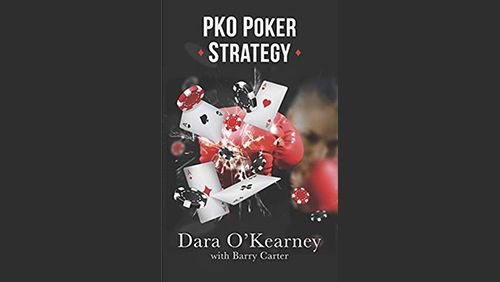
Poker in Print: PKO Poker Strategy (2020)

Each week here on Calvin Ayre, we look at poker in the popular form of the written word. Books have always been important to poker players, with volumes such as Doyle Brunson’s Super System paving the way for thousands of different strategy-based books that are designed to help poker players improve.

At the tail-end of 2019, we wrote about the newly-released Poker Satellite Strategy which was put together by legendary Irish poker professional Dara O’Kearney and respected poker author Barry Carter. This week, the two men released their latest tome, which promises to help players become better at playing PKO (Progressive Knockout) or Bounty tournaments.

The release of PKO Poker Strategy is timely to say the least. Not only are PKO or Bounty events getting to be more and more popular, but half the world seems to be playing online given the restrictions on live poker that have affected over 95% of the world’s poker events.

While PKO and Bounty events have grown in popularity, just like with poker satellites, there aren’t too many professionals who talk up their skill in the formats. That’s where PKO Poker Strategy comes in. The strategy is markedly different to a regular MTT (multi-table tournament), and the book does a very good job in explaining how to adjust your ranges to PKO events or to fire for a bounty. There are other factors at play in PKO or Bounty events, of course. The size of an opponent’s bounty on their head needs to dictate a change in whether you’re prepared to call, but not only that.

David Coleman wins WPT Online Poker open for $56,586

The World Poker Tour haven’t been running as many events as some other tours during the global pandemic, but with a tight structure, great prizepool and their historic prestige, the WPT Online Poker Open was another example of how much kudos a win on the WPT still brings.

The WPT Online Poker Open posted strong numbers from the start, and by the time the partypoker-hosted event closed its late registration for the $365+$35 event with 868 entries in the books. That meant a prizepool of $317,540, a good amount over the $300,000 guarantee that had been put up for the tournament.

It was a very special event, too. Exclusive to players physically playing from the Garden State, the most densely-populated state in the U.S.A. could take part, and plenty did, playing either on the New Jersey partypoker site, BorgataPoker.com or BetMGMPoker.com.

All the action took place on Sunday, with the trophy joined by an $11,000 VIP package from partypoker to play in the next WPT Five Diamond World Poker Classic that takes place at the Bellagio in Las Vegas for the winner, that being a $10,400 buy-in and $600 towards travel and other expenses.

Parssinen wins Poker Masters as Ike Haxton takes down Main Event

After 14 events of the PLO Poker Masters, the scores were totted up and a champion was announced. Many expected Finnish player Eelis Parssinen to hold onto his lead going into the final few events, but no-one would have guessed that he’d do it by just a single point.

The action has been great throughout the PLO Poker Masters, and with superb commentary by PLO and YouTube poker legend Joey Ingram as well as PokerGO’s own Jeff Platt, the series has been a blast for poker fans to enjoy.

The final five events saw a lot of twists and turns as Parssinen made his way to the overall championship. Andras Nemeth turned out to be his closest rival, and his victories in Event #9 and Event #12 helped him on that rise to the closest runner-up position in Poker Masters history.

Andras Nemeth has just won his second Poker Masters Online: PLO Series tournament OF THE DAY. His third of the series (through 12 events). WOW

So long Hong Kong, and the Macau Apocalypse Trade

These are dark times. It’s been over 6 years since I began writing for CalvinAyre. I have to say, it has been fantastic, and I couldn’t be more thankful to the staff for the freedom they have given me to speak my own voice. As I look at the world crumbling in fear, distrust, mutual recriminations and accusations; as I see trade barriers rise up higher and higher and the cloud of war get thicker; as I see reason fly out the window amid wild racial tensions and censorship intensify as more and more are afraid to speak their minds amid the gathering force of mobs; it’s sites like these that stand for economic liberty that give me hope that there are still people to talk to in this world. I know there always will be, and that keeps me from losing my mind.

True, gambling proper is not my passion. I don’t play poker, I don’t visit casinos, I don’t stake money on games of chance, and I’ve never been to Macau. But in a way, I gamble for a living. I am an economic forecaster, and I stake my own money on my own view of the world. At least in that way I know the thrill of gambling. The only difference is that instead of betting on a game, I bet on reality. I’ve always imagined in the childish part of my mind that when I ultimately win, I would have happiness and security. But now that it is actually happening and I see the world tearing itself apart, mostly what I feel is sadness. A bit of relief that at least I saw it coming, but mostly sadness. In the center of that sadness is a kernel of optimism and hope that will never be extinguished, but right now it’s hard to drill down deep enough to really feel it.

True, I did not see the trigger. I thought the coronavirus hype would blow over. I was wrong. It hasn’t. Now I smell the end game. I believe it’s just around the corner.

The very first article I wrote for this site was dated March 3, 2014. The title was The China Bubble. In it I laid out the end game, namely that Macau stocks are toast and wouldn’t survive the relentless rise in interest rates that was inevitably coming. I linked to a Bloomberg report that the People’s Bank of China was no longer interested in financing U.S. government deficits by increasing their holdings of U.S. debt. Indeed, Chinese holdings of U.S. debt securities topped out 3 months later, in June 2014.

Gambling Industry Announcement and Partnership Roundup – June 30, 2020

In the fast moving world of gambling, sometimes you might miss news that could be important to you. To make sure you’re all caught up on gaming industry news, be it online or brick and mortar, we’re rounding up the some of the announcements and partnerships from the last week that you might have missed.

Don’t miss out on all of the latest announcements. Our Press Release section is updated constantly.

More senior management talent finds its way to United Remote

Swiftly-growing aggregator United Remote has bolstered its Account Management team with the addition of Account Manager Daniel Cass to help shape an increasingly influential force in the iGaming industry. Daniel is responsible for managing client accounts, developing relationships and business as United Remote continues to expand across regulated markets.