Category Archives: Esports

Despite COVID-19 lockdown, “traveling” to a wellness retreat possible

Getting away from it all to recharge the batteries and center the mind has never been more important. Unfortunately, getting away from it all has never been more difficult, thanks to the coronavirus. The good news is that, despite a lack of ability to physically travel to many wellness retreats and spas (although things are looking good for the lifting of travel restrictions), wellness centers have been able to come up with alternatives to allow individuals to “travel” to their locations while staying at home. Enter the new market of virtual wellness retreats.

The Evening Standard out of the UK highlights several of the creative wellness alternatives, and they seem to be proving to be highly popular.  One option is the Triyoga virtual yoga retreat, led by Yogi Anna Ashby, who is offering a “restorative practice to replenish the body and soul” in a two-hour mini-retreat this Saturday.  The workshop includes “slow, mindful stretches to release tension through yoga postures to shift the nervous system back into balance and unblock stagnant energy using breathing techniques.” Anyone wanting to participate only needs to have a yoga mat, foam blocks, a chair and the $25 fee.

There’s also the Summer Solstice Online Retreat, a half- or full-day experience offered this Saturday by As We Live And Breathe. According to the event’s description, “Our seasonal cookery talks will explore foraging and what’s in season locally at this time, and in our live cookery workshop the wonderful Gabbi will guide you through a beautiful seasonal plant-based meal of courgette spaghetti with pesto, rocket, smoked tofu, cashew cheese and sun dried tomatoes. We’ll then sit down to eat together and share stories, learning more about the mysteries of Litha and the ancient celebrations of Solstice tied with our lands.”

A wellness center out of Ibiza, Spain has the perfect option for those who can’t pin down a day and time to experience a retreat. Soul Adventures is offering different virtual kundalini retreats, and allows people to set their own schedule. The center also has a longer course that will appeal to some, the 40-Day Journey To Joy At Home Retreat. It “fuses the technology of QR codes with ancient Kundalini Yoga techniques to give readers the ultimate, empowering, self-care experience that can be accessed from anywhere.”

Fitch Ratings expects a three-year recovery for US gaming

It would seem that larger casino operators in the U.S. should have been squirreling away more of their revenue over the years. Granted, no one expected anything like the coronavirus to roll in and change global economies from one day to the next, but companies who have banked larger percentages of their profits are in a much better position to weather the storm. Those who haven’t, and those who believe they’re too big to fail, are experiencing the repercussions of their spending habits. If you ask some people, such as Fitch Ratings, the U.S. gaming industry isn’t going to be able to recover quickly – it might take at least three years for things to return to normal.

Fitch Ratings, one of the large credit rating firms, issued a report on the state of U.S. gaming last Thursday, “U.S. Gaming Will Experience A U-Shaped Recovery Post-Reopening.” In it, analysts Alex Bumazhny, Colin Mansfield, Connor Park, and Carla Norfleet Taylor foresee casino operators reporting significant losses for 2020 as they slowly start to climb out of their hole next year. After that, a “full recovery” to pre-coronavirus revenue levels won’t be possible until 2023.

The report further offers, “Fitch reviewed its U.S. gaming universe in the span of four weeks, as the coronavirus outbreak intensified. Credit implications have been negative, with higher leverage forecasts resulting in the widespread revision of Rating Outlooks to Negative.” Those negative outlooks reflect a nationwide gaming revenue decline of 30% for the year, with Vegas casino operators such as Las Vegas Sands (LVS) and MGM Resorts International predicted to see drops of as much as 50%. LVS has seen its stock fall around 15% since the first month of the year and MGM’s stock is almost half of what it was at the end of January.

The Vegas Strip, which Fitch expects to see a decrease in revenue on the year of about 45%, may need the most time to bounce back from COVID-19. The analysts explain, “Recovery will be the slowest on the Strip, given its greater reliance on inbound visitation, air capacity, and conventions. Regionals are less cyclical than Las Vegas and should recover quicker, as they have mostly local, drive-in visitation.”

POGO-related kidnapping in the Philippines ends in shoot-out, death

The Philippines have had a love-hate relationship with Philippines Offshore Gaming Operators (POGO) lately, with no shortage of calls for the gaming segment to be shut down completely. The chances of the industry to survive continue to weaken as pressure is applied to the Philippine government by China, and it doesn’t help that reports of kidnappings related to POGOs continue to crop up. The latest incident happened last week, following an abduction earlier this month, and resulted in a street battle between the perpetrators and police that left two criminals dead and a police officer with a hole in his foot.

On June 1, police were able to rescue two individuals that had been kidnapped and, at the same time, arrest two suspects. That led to an investigation that uncovered the involvement of others, and which came to a head last Thursday. Police officers with the National Police-Anti-Kidnapping Group (PNP-AKG), along with law enforcement from Angeles City, were able to track down the van and, when making their approach, apparently got into a shootout with the two suspects. The police had better aim and killed both individuals, but one police officer had to make a trip to the hospital after being shot in the foot.

In many cases, gambling-related kidnapping occur to settle outstanding debts. However, a number of abductions that have been tied to POGOs stem from a sinister ruse to attract Chinese nationals to the Philippines with false promises of jobs with the gambling operator. Once in the country, they’re kidnapped and held for ransom. According to Police Major Ronaldo Lumactod Jr, “They were hired to work for a POGO but there was deceit. They were not given the jobs as casino dealers as promised. As the victims thought they were deceived, they resisted. They were then ordered to pay a ransom through their families in China.”

In the past three years, there has been almost a constant increase in the number of casino-related kidnappings in the Philippines. In 2017 and 2018, there were 17 and 16 cases, respectively, reported to police. Last year, that number more than doubled to 38. The first quarter of 2020 may find a drop because of the coronavirus, but there will also be an increase in the number of people looking for work once travel restrictions are lifted, which could make more people vulnerable.

Wynn Macau, MGM China look for financial support, Moody’s weighs in

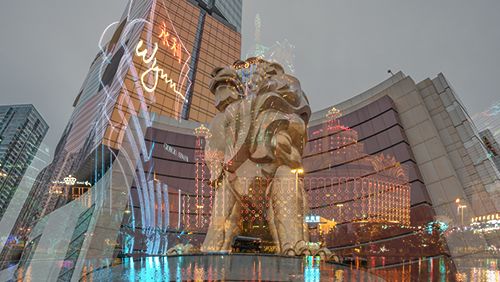
April and May weren’t kind for Wynn Macau. The Asian arm of Wynn Resorts saw a total of just under $37 million in revenue at the two casino properties it controls in Macau, a stark contrast to the more than $759 million it saw a year earlier. The company announced last week that it would be looking to generate some quick cash somehow, somewhere, and now has its plan laid out. Wynn Macau wants a loan for $750 million that is reportedly going to involve Deutsche Bank AG through its Singapore branch.

The casino operator submitted a filing (in pdf) to the Hong Kong Stock Exchange yesterday, explaining that Deutsche Bank will be the “initial purchasers” of company notes to support the loan. They will mature in 2026 and carry an interest rate of 5.5%, and are expected to be listed on the Hong Kong Stock Exchange, which has reportedly already given its thumbs up to the deal. Once all the fees and commissions are factored in, Wynn Resorts should pick up about $743 million to help it bounce back from the Macau lockdown caused by the coronavirus.

Wynn Macau adds, “The company intends to use the net proceeds from the proposed offering for general corporate purposes until business recovers from the effects of the Covid-19 pandemic, and then to facilitate the repayment of a portion of the amounts outstanding under the Wynn Macau credit facilities.” According to the terms of the agreement to offer the notes, Wynn cannot “effect a consolidation or merger” or “sell, assign, transfer, convey or otherwise dispose of all or substantially all of the properties or assets of the company and its subsidiaries” that might impact the value of the notes.

The offering has received a lukewarm response by some analysts. Moody’s Investors Service weighed in after reviewing the fundraising initiative’s guidelines, giving it a rating a “B1.” The firm explained, “The additional liquidity is beneficial as it further improves the company’s liquidity profile and runway in Macau to over two years on a cash-burn basis as they [Wynn Macau Ltd’s leadership] manage the current weak operating environment, including reduced visitation levels in Macau” and added, “Although there is an initial increase in leverage on a gross basis, the transaction enables the company to reduce the secured debt in its capital structure once business conditions improve.”

MLS CBA leaves the league in a state of flux

The resumption of Major League Soccer in the U.S. has been thrown into turmoil with the league and MLS Players’ Association at a stalemate over a resumption of the league. The League and the MLS Player’s Association had agreed to a new CBA four months ago, that was seen as a major win for the players with a major revenue sharing agreement in place and bonuses for players at the low end of the pay scale.

The outbreak of COVID-19 in the U.S. meant that the CBA was ratified, meaning that a potential renegotiation of the agreement could be on the cards, causing long term damage between the players and league. The league had threatened to lock the players out to force an agreement with the players’ association.

The MLS hierarchy used the outbreak to leverage a better long-term deal with the players’ association. The heavy-handed tactics from the league included threats to health insurance coupled with the threat to stop payments to the players.

The COVID outbreak has forced the players to take a 7.5% salary cut for the remainder of the 2020 season. The unratified CBA agreement includes a force majeure clause which allows for the cancellation of the agreement in the event of a catastrophic event.

Four Melco-led casinos in Cyprus now back in business

The Mediterranean island country of Cyprus is starting to return to normal. Gambling facilities began to reopen last month after being forced to take a break due to the coronavirus, and four more venues have now been added to the mix. Over the weekend, Melco Resorts, which has a contingent of gambling properties in Cyprus through its ICR Cyprus arm, flipped on the lights at four of the five casinos it controls in the country. It’s welcome news for the company, which took a huge financial hit by the three-month gaming shutdown on the island.

Melco controls 75% of ICR Cyprus, while the other 25% is held by Cyprus Phassouri Ltd. The local casino scene came to an abrupt halt because of COVID-19 on March 17, but has now been able to start the recovery process. C2 Ayia Napa, C2 Nicosia, C2 Paphos (which opened only three weeks before the lockdown) and C2 Limassol, a temporary casino put up ahead of the City of Dreams Mediterranean, are back in business. C2 Larnaca, the fifth property, is currently being moved from its former home at the Larnaca International Airport to a new location, and will open once the transition is complete. Employees of that facility have been temporarily reassigned to other venues until everything is in place.

In a statement about the reopenings, VP, Gaming Operations of Cyprus Casinos Devi Kerr explained, “The health and safety of guests and colleagues are our top priority. C2 has prepared a comprehensive series of hygiene measures to safeguard the health and comfort of guests and colleagues throughout the casinos. It is our belief that the casinos’ reopening will not only contribute to strengthening the tourism industry, but also the recovery of the local economy.”

Among the policies implemented, Melco patrons will find that gaming tables will have a maximum of three guests each. Additionally, every second slot machine will remain dark, and smoking will be banned at all gaming tables and slot machines. Smokers, however, will be able to puff away in designated smoking areas.

WSOP Gold: Negreanu makes a superstar fold

Some hands at the World Series of Poker are drama at every flop, turn and river. Others are magic just because you can see the years someone has been playing poker for decades by witnessing just a minute of action on a single street.

The latter certainly applies to this hand from the 2015 WSOP Main Event. Daniel Negreanu’s deep run had everyone gassed at the time – the chance of ‘Kid Poker’ winning the big one made everything seem more exciting, and while he would eventually miss out, finishing 11th for $526,778, his run to the brink of the final table was poker entertainment at its very best.

Negreanu would eventually be left on the rail as Joe McKeehen won $7.6 million for taking the bracelet. In the hand between the pair, however, it was definitely the Canadian player Negreanu who got the better of his American opponent. 

The action was fairly simple. McKeehen three-bet over an opponent’s opening bet, and Negreanu four-bet to 2.6 million chips with ace-king. McKeehen moved all-in with pocket aces and with only Negreanu needing to make the decision, and his stack covering McKeehen’s, the poker legend and six-time WSOP bracelet winner Negreanu went into the tank. As the commentary team of Norman Chad and Lon McEachern described the action as McKeehen prepared to make his move:

Teams of the century: Manchester City 2018/19

They say no-one remembers who finishes in second place. While the runners up is Premier League history have largely been forgotten, however, the exception that proves that rule might be the Liverpool team of 2018/19.

It’s not that Jurgen Klopp’s 2018/19 Liverpool team’s incredible total of 97 points would have been enough to win the Premier League title in most other years. They would have won it in every other year, including the year Arsenal went an entire season without losing (90 points) and Jose Mourinho’s first imperious year at Stamford Bridge (95 points). So what were the reasons that they didn’t win the title with that side? It’s a lot less simple than Manchester City proving to be one point better over the course of that surprising season.

The Manchester City side that went into action in 2018/19 was, of course, on the back of a record-breaking year in which The Citizens amassed 100 Premier League points. That they got within two points of this in the very next season is a feat that is truly remarkable. Many of the reasons for this must be accredited to Pep Guardiola, who propensity for motivating the most high-achieving of players is nothing short of sensational.

City got off to a traditionally strong start, winning their opening fixture away to Arsenal before thrashing Huddersfield 6-1 at The Etihad Stadium. A draw at Wolves followed, however, and City dropped to fifth place before a run of victories concluding in a dominant showing against Brighton restores them to the summit. The prescience of that moment would not be known until May.

New Jersey’s online gambling ops win record $86m in May

New Jersey’s regulated online gambling market continues to set new revenue records as Atlantic City casinos remain closed due to COVID-19, while sports betting continues to suffer from a blank calendar of events.

Figures released Friday by the New Jersey Division of Gaming Enforcement show state-licensed online gambling revenue hitting nearly $86m in the month of May, a 124.1% rise over the same month last year and handily beating the market’s previous record of $80m in April 2020.

As always, the online casino vertical did the heavy lifting, shooting up 122.8% year-on-year to $81.4m. Online poker posted a larger percentage gain, rising 151.2% to $4.5m, although that represented a step back from April’s record $5.15m, proving that even pandemic lockdowns can’t make online poker seem all that interesting for very long.

On a year-to-date basis, the overall online tally is up 88.3% to $337.8m, with casino rising 88.4% to $320.9m and poker up 86.7% to $16.9m.

So how was Damascus? Leagues press Canada to legalize sports betting

Canada needs to legalize single-game sports betting ASAP, according to the major leagues that previously declared betting to be a threat to the nation’s “moral status.”

This week, the commissioners of the National Basketball Association, National Hockey League, Major League Baseball, Major League Soccer and Canadian Football League issued a joint statement urging “prompt action” by Canada’s federal government to pass legislation that would “authorize provinces to offer betting on single sporting events.”

Canada’s provincial gambling monopolies already have sports betting, albeit limited to parlays requiring wagers on a minimum of three events. That restriction means most Canadian bettors tend to patronize internationally licensed online sportsbooks that allow an infinitely more favorable betting environment.

The commissioners note that sports betting is already happening in Canada, which they claim is illegal. That’s not technically accurate, as the single-game prohibition applies only to the provincial monopolies and private bookmakers who (foolishly) choose to base their operational infrastructure and/or ‘mind and management’ within Canada’s borders.

UK gambling activity still showing overall decline during pandemic lockdown

UK gambling activity has remained relatively flat during the COVID-19 pandemic lockdown, according to new stats by the UK Gambling Commission (UKGC).

On Friday, the UKGC released new data on COVID-19’s impact on gambling behavior, which showed that 75% of recent gamblers – defined as individuals who engaged in some form of gambling activity over the past four weeks – hadn’t increased time or money spent gambling in April, the first full month in which the nation was under pandemic restrictions.

The numbers were higher for ‘engaged’ gamblers, defined as individuals who participated in three or more gambling products over the past four weeks. Some 62% of engaged gamblers increased either time or money spent gambling on a single gambling product, although this doesn’t necessarily equate to overall increases in time or money spent by these engaged consumers.

What’s more, YouGov research showed that around 2% of UK adults stopped gambling during the past four weeks compared to just 0.2% who started gambling for the first time during the same period.

US government makes efforts to catch up on innovation

In recent years, the U.S. has fallen behind in technology innovation. Some believe the country has become too complacent, willing to rest on the laurels of its previous successes in the technology industry. However, lawmakers may have come to the realization that the country needs to place greater emphasis on the subject, especially in light of huge advances seen in competing countries such as China and others. According to what’s happening on Capitol Hill, legislators are now pushing for a massive injection of money and resources into research that covers several important areas, including artificial intelligence, 5G networks and quantum computing.

The Senate Armed Services Committee has approved, by a vote of 25-2, the annual use of Department of Defense (DOD) funds above what had previously been allocated to study emerging technologies. This request had been made in response to the massive investments in technology innovation seen in countries like Russia and China, and the request will now move to the Senate to be considered. That chamber is expected to discuss the matter next week.

The 2021 National Defense Authorization Act (NDAA) would see about $740.5 billion spent on innovation research. The House version of the NDAA is going to be discussed starting in about ten days, when it goes before the House Armed Services Committee, and the Senate will work on its own version in tandem with the House’s efforts. According to a brief (in pdf) released by the Senate on the subject, “Unfortunately, in key technologies and capabilities, we’ve fallen behind our near-peer competitors. The FY21 NDAA accelerates innovation so we can compete effectively and regain our comparative advantage over China and Russia.”

The NDAA would like to see “more than $300 million above the president’s request for DOD science and technology research, and extends or adds authorities that accelerates research [and] authorizes $200 million above the president’s request to prototype new critical subsystems for naval vessels, including unmanned vessels.” Additional funds would go to assess “U.S. efforts to develop biotechnologies compared to our adversaries; development of Artificial Intelligence use-cases for reform efforts; enhancements to the Quantum Information Science research and development program.” Other money would be used to conduct research that compares “methods for recruiting and retaining technology researchers used by both the U.S. and Chinese governments.”

Biloxi, Mississippi has become a target for casino developers

First, development firm Biloxi Capital, in November 2019, announced that it was seeking permission to build a casino in Biloxi, Mississippi. Then, rock band KISS announced that it was getting behind a KISS-themed casino in the city this past February. With two major gambling projects now planned for the region, Biloxi has become a magnet for new ideas, and a third – and massive – undertaking is now being presented. The latest would be built on the former site of the Broadwater Beach Resort and carries a price tag of around $1.1 billion.

The Sun Herald explains that the developer of the proposed casino, Broadwater Development LLP, wants to use the 266-acre former resort property to build a casino, marina, golf course, hotel, wellness spa and additional amenities. Broadwater hopes to get the city to offer it some incentives to complete the project, including through Mississippi’s tourism rebate initiative, the Mississippi Tourism Project Incentive Program. That program provides certain financial considerations for large tourist-driven projects, provided they meet the criteria. The amenities planned for the development and a private investment above the minimum threshold of $10 million help Broadwater meet those criteria.

According to a city filing (in pdf) on the subject, “[Pursuant] to Section 57-26-3 of the Tourism Act, the rebate to the Developer will be approximately 80% of the amount of sales tax revenue collected from the operation of the tourism project, after making the diversions required in Section 27-65-75(7) and (8), of which payments will be limited to 30% of approved project costs or for the prescribed rebate term, whichever occurs first.”

Biloxi Mayor Andrew Gilich supports the project and has already signed off on it; however, the city council still apparently has to weigh in. Given the scope of the resort and what it means to the local economy, provided Broadway isn’t found to be running any illegal schemes, there’s no reason to expect the project not to be greenlighted. The City Council will meet next Tuesday to discuss the issue. 

Massachusetts casinos still have weeks to go before reopening

The jury is still out on when casinos in Massachusetts will be able to reopen their doors to patrons. Many states across the US have already begun to welcome visitors again, while adhering to stringent health and social distancing protocols, but Massachusetts isn’t there yet. In fact, according to the most recent data from the Massachusetts Gaming Commission (MGC), the state may not be ready until the end of the month, at the earliest. The continued shutdown is going to make it more difficult for the casinos, and the state, to begin recovering from the coronavirus pandemic.

Local media reports that June 29 is the earliest that Encore Boston Harbor could get back in action, according to the Wynn Resorts property’s management. This could be pushed back even further, as the MGC has yet to approve a policy to allow the gambling houses to reopen. Once the policy is in place, Encore and the state’s two other casinos, the MGM Springfield and Plainridge Park, have said they need at least two weeks to implement whatever guidance is included by the MGC. However, that guidance has not yet been passed down.

The revelations were made yesterday as the MGC held a public meeting to go over the plans for casinos to resume operations with Massachusetts almost ready to move into Phase 3 of its recovery scheme. The state just moved into Phase 2 this past Monday, and each phase is expected to be in place for a couple of weeks before the next is initiated.

With that in mind, the casinos have a lot of work to do. They have to present to the MGC their own plans for how they will respond to the state-driven protocols and must cover “the steps and measures the licensee will take to achieve compliance with the guidance and protocols issued by the Centers for Disease Control [and Prevention] (CDC), the Massachusetts Department of Health (DPH), Governor [Charlie] Baker’s orders, and the Guidelines ultimately adopted by the Commission.” Those plans have to be presented at least a week before the venues are allowed to reopen, or there might be possible delays.

New Zealand considers changes to the Racing Industry Bill

The New Zealand House of Parliament is taking up the country’s Racing Industry Bill (RIB), ready to make sweeping changes to provide better oversight to gambling activity on horse and greyhound racing. Members of the New Zealand Transport and Infrastructure Select Committee (TISC) have gotten together to draft and approve 30 different upgrades to the legislation, mostly centered on how official data is distributed and who will ultimately lead that oversight. The recommendations have already been presented to the House, which isn’t expected to put up too much resistance.

One of the changes requested deals with the price of official data. The committee wants to impose a new fee structure in order to control the amount of data that flows to offshore sportsbooks. The nature of the structure or what it entails wasn’t provided. In addition, the TISC wants to work more closely with existing racing legislation, including Greyhound Racing New Zealand (GRNZ), Harness Racing New Zealand (HRNZ) and New Zealand Thoroughbred Racing (NZTR), in order to ensure that all three include the requested measures to force offshore bookmakers to pay for the acquisition of the data.

If the House approves of the changes, the RIB will be made law, which means the legislation could see implementation a little later than expected. The bill was introduced to lawmakers on December 5 last year, and had its first reading five days later. The coronavirus has forced changes to priorities and slowed down a lot of legislative initiatives across the globe. It was previously thought that a resolution could be found sometime this month, but that now looks untenable.

Unless there are changes, the bill would also lead to the creation of a single entity to manage the three legal racing structures. Racing NZ would be responsible for ensuring compliance with the RIB, and could also take control of some of the functions of each of the three codes. The result is a more uniform application of existing horse and greyhound gambling laws, as well as consistency in how the RIB’s language is applied.

DraftKings rakes it in as golfers retake the greens

The Charles Schwab Challenge got underway yesterday and the golf tournament has proven to be a smashing success all the way around. Not only are sports fans happy to see activity resuming, but sports gambling fans are thrilled, as well. While major sports leagues like the NBA and the NHL, among others, are still at least a month away from getting back into action, pro golfers in the PGA are returning to the greens and sports bettors are returning to their sportsbooks. There has been no shortage of action, and DraftKings has taken control. The major sportsbook announced that, on the first day of the tournament, it had seen more wagers than it ever saw with any other four-round event.

Casino.org got an email from the communications director for DraftKings, Stephen Miraglia, explaining that the company has been pleasantly surprised by the action it witnessed yesterday, the first day of the Charles Schwab Challenge. He states, “The Charles Schwab Challenge became our most bet golf tournament ever today before round one had been completed. Live money since first tee time this morning is already at 30% of pre-match wagering totals. To put that number in perspective, the last true golf tournament was the Arnold Palmer Invitation – this tournament has already done more in live wagering after one day than the Arnold Palmer did over four days.”

Golf was added to the DraftKings sports roster just two years ago and has consistently picked up more support as it grows. Last month’s “The Match: Champions for Charity” event in Florida, which saw Tiger Woods and Peyton Manning triumph over Phil Mickelson and Tom Brady, had been the most-active golf event in terms of wagers. However, the current event, which runs through Sunday, could set a new record for wagers.

DraftKings recently went public, and the sportsbook has seen nothing but substantial growth and responses since then. It has already been singled out by a handful of financial analysts, and investment bank Oppenheimer wasn’t going to miss out on the excitement. It started covering the company yesterday, giving it an “outperform” rating with a $48 price target – the current price is $36.28, down from the $40.64 it saw a week ago. 

OPAP online gambling revenue up 166% following pandemic lockdown

Greek lottery and betting operator OPAP saw its profit tumble nearly 40% in the first quarter of 2020 as COVID-19 brought an abrupt halt to land-based gaming.  

Figures released Thursday show OPAP’s gross gaming revenue over the three months ending March 31 totaled €328.3m, a 17.1% decline from the same period last year. Earnings were off 23.6% to €86.4m while net profits slid 37.8% to €33.8m.

The company previously warned that COVID-19 had brought a halt to 99% of its operations in Greece and Cyprus by mid-March, while its fledgling online betting site was unable to shoulder the burden due to the pandemic cancellation of major sports.

Acting CEO Jan Karas, who took over from Damian Cope on June 1, called Q1 “a double-faced quarter,” as pre-pandemic growth had been “sizeable” before everything went to hell. Karas gave a shout-out to OPAP staff for their “swift adaptation to the new norm and working conditions” and for their ability to bounce back once the retail all-clear was sounded.

Haxton Hacks into Health Concerns for Live Poker

The return of live poker around the world is a cause for massive concern both in terms of for players individually and for poker brands overall.

One player who has said more than most about the possible situations we can look forward to solving within the industry is Isaac ‘Ike’ Haxton. The partypoker pro has written about the threats to a safe return of poker in a recent blog on the partypoker website. 

Haxton, whose online and live reputation sees him sit among poker’s elite, has recently pushed for players to join him in donating to the Minnesota Freedom Fund. His words about when poker comes back to the live arena are ones informed by well over a decade at the felt.

I just donated to @MNFreedomFund

UFC Fight Night: Eye vs. Calvillo odds

Odds courtesy of OddsShark.com

UFC 250 last Saturday was headlined by a women’s bout, and so is this Saturday’s UFC Fight Night event, also at the organization’s Apex facility in Las Vegas, as a flyweight fight between Americans Jessica Eye and Cynthia Calvillo tops the card. Once again, no fans will be in attendance.

The 33-year-old Eye (15-7) is ranked as the No. 1 contender in the women’s flyweight division behind Valentina Shevchenko. “Evil” is looking for a rematch with the champion as Shevchenko beat Eye by second-round knockout (head kick) in a title fight at UFC 238 in June 2019. Eye bounced back with a unanimous decision victory over Viviane Araujo in December of last year. That Eye won by decision is no shock as she has taken 73 percent of her victories via the judges. She is -120 for Saturday.

Calvillo (8-1-1), 32, is ranked 10th in the strawweight division. Her past six bouts have been in that division. She comes off a majority draw against Marina Rodriguez in December 2019. Calvillo’s lone loss was at UFC 219 by unanimous decision to former strawweight champion Carla Esparza. Calvillo’s UFC debut was in March 2017 at flyweight and she beat Amanda Bobby Cooper by first-round submission. Calvillo is -110 for Saturday.

Wynn Resorts looks to raise cash after taking it on the chin in Macau

Casino operator Wynn Resorts says its Macau properties earned no more than $19m in the first two months of its second quarter, forcing it to raise more cash, pronto.

On Thursday, Wynn filed papers with the US Securities and Exchange Commission announcing its intention to conduct a senior notes offering to professional investors, although it couldn’t yet say how much these notes would cost nor how much the company hoped to raise via this offering.

However much change this offering puts in Wynn’s pocket, the company plans to use it to pay bills while it recovers from the impact of the COVID-19 pandemic, as well as repay a portion of the outstanding amounts of Wynn Macau’s credit facilities.

Wynn also offered a hint of the performance of its Wynn Macau subsidiary – which is 72% owned by the parent company – in the months of April and May. The company expects the combined revenue of Wynn’s two Macau properties to come in between $17.9m and $19m, down from $759.7m in the same two-month period last year. Ouch.