Category Archives: Esports

Churchill Downs reopens Derby City venue, buys 1,250 ‘historical racing’ machines

Gambling operator Churchill Downs Incorporated (CDI) has reopened its main ‘historical racing machine’ venue, while inking a deal to dramatically increase the number of machines across its retail network.

On Monday, CDI announced that its Derby City Gaming venue, which is located adjacent to the company’s flagship Churchill Downs racetrack in Louisville, Kentucky, would open its doors at 8pm that day. CDI thanked Kentucky’s governor for approving the reopening of the property, which shut down on March 15 to minimize the spread of COVID-19.

CDI CEO Bill Carstanjen said Derby City would employ the ‘CDI 360 Degree Approach to Safety,’ the company’s program of health and safety precautions to ensure the wellbeing of both customers and staff. These include unspecified capacity restrictions, customer temperature checks and regular sanitizing of gaming machines.

Historical racing machines (HRM) are effectively slot machines that rely on virtual simulations of previous races with all the identifying information stripped out. Since the venue’s 2018 launch, Derby City’s machines have become far more important to CDI’s ‘Churchill Downs’ segment than live racing.

On the Star’s Sweetheart Tax Deal and new EGM Monopoly

The lockdowns are over, and they’re not coming back. Even if there ends up being a second wave of coronavirus, I believe it would be practically impossible for any authority to enforce a second lockdown. People just won’t go for it again. Fear has subsided as even the most official of official government health agencies, the Centers for Disease Control, now admits that the fatality rate for COVID-19 is 0.4% for symptomatic carriers. That doesn’t include the asymptomatic, which if incorporated brings it down to 0.26%, well within seasonal flu rates. See Table 1. For people below the age of 50, the best estimate of fatality rates is 0.05%.  

That’s not the only reason that the lockdowns aren’t coming back. The other is that the media has a new, shinier distraction now it can focus on that should relieve us of the burden of the fear of contagious disease, and replace it with a more exciting fear of riots and looting. As coincidence would have it, this also happens to involve a bunch of people wearing masks, except this time instead of keeping their distance from one another, they’re concentrating more on destroying property. In other words, COVID-19 is finally out of the news cycle, and we’re back to the old familiar territory of racial tensions. At least those of us who aren’t all that excited about participating in riots now have a greater say in the matter compared to whether or not we want to get infected by a virus.

The most extreme about-face is arguably Australia, which back in March ordered the closure of all casinos and other entertainment venues for “at least 6 months”. Well, scratch that one. It’s quite hard to justify such a move when there have only been 7,260 cases of coronavirus in the whole country. Some Aussie companies took advantage of the situation rather well, particularly The Star Entertainment Group, which capitalized by securing an enormous 20 year deal on tax rates with the Australian government. VIP revenue will be taxed at 10%, and mass market up to AU$780 at 29% until 2041. And whoever said that the rich get preferential tax treatment? VIPs at 10%, middle class at 29%, they’re both in the double digits, so it’s practically the same thing, right?

But The Star got something else, too. New South Wales has granted The Star a monopoly on electronic gaming machines, in exchange for kickbacks to the state of 32-34%. There is a chance that the monopoly may be rescinded with Crown getting in on the action eventually, but if that happens, New South Wales has promised The Star “unspecified financial compensation” straight from taxpayers together with its Dear John letter for breaking its monogamous commitment. Call it alimony, or maybe a prenup.

WSOP Online Festival to Award 85 Bracelets

The 2020 World Series of Poker may have been postponed until at least the Autumn, but that doesn’t mean there won’t be some bracelets to play for this summer. The WSOP have partnered up with GGPoker again to offer an online WSOP Festival that will award 85 WSOP bracelets across 31 events on WSOP.com and 54 events on GGPoker.

The traditional festival of live poker in Las Vegas would already be a couple of dozen events in by now, of course. With the fabled WSOP Main Event due to start on July 1st, players would be tweeting excitedly about their chances of winning a $10 million top prize.

Instead, ‘Poker Twitter’ has been an avalanche of either dispirited messages about the current political tensions in America or celebrations of other tournaments. The recent WSOP Super Circuit Series on GGPoker was a massive success, however, and on the back of that series, the World Series of Poker and GG Poker are welcoming players to 85 events between July 1st and September 6th. 

As the WSOP have announced themselves, it will be the first time that players outside the U.S. have been able to compete for an official WSOP bracelet online. 

SiGMA Deep Tech looks at Big Data, Digital Currencies and Quantum Computing

SiGMA has always had an eye to the emerging technologies of the world, and specifically how they can help the gambling industry. Naturally then, SiGMA Deep Tech, part of the SiGMA-ICE Asia and SiGMA Deep Tech Summit, plays a huge part in discussing how technology is evolving, and how that affects every segment of the gambling world, and day 1 spent plenty of time exploring these topics.

Can Live Gaming Save Casinos in a Digital Era?

Before the Deep Tech portion of the day kicked off, moderator Oliver De Bono, COO of Condor Gaming, was joined by Albert Climent, Founder of Oneblock Technologies, Evan Spytma, CEO of eBet, and Dmitriy Paliants, CMO of TVBET. They looked at how land based casinos are realizing that live casino offerings might be beneficial for them.

Climent noted that casinos are starting to look at adopting live casino offerings, instead of seeing them as a threat, due to the pandemic. “It’s a natural transition for them,” he said.

WPT schedules Online World Championship from July to August

With the recent success of the WPT Online Series, it was only going to be a matter of time before the World Poker Tour and partypoker were back with their next offering for online players.

It hasn’t been too long to wait.

Hot on the heels of the WPT Online Series, the WPT World Online Championships will feature 15 Championship Events. Taking place from July 1st to August 9th inclusive, it’s been announced by the WPT on their official website that the series will be ‘the biggest online series ever run by partypoker’, with the full schedule soon to be released.

The World Championship Main Event will have a whopping $10,300 entry fee and is the jewel in the crown of the event schedule with the prizepool rumoured to be the biggest in WPT online history. It won’t be the only massive title to be won. As partypoker LIVE President John Duthie told the World Poker Tour:

Dragan Donkov gives the warning signs for an employee in trouble

[youtube https://www.youtube.com/watch?v=I1m_YUGVVaU?feature=oembed]

The Richmond Foundation has been an invaluable resource for mental health since 1993, and as its located in Malta, an important touchpoint for the gambling industry. To get a better understanding of how this pandemic has affected the sector mentally, and get some tips on how to manage it better, Becky Liggero Fontana spoke with Dragan Donkov of the Manager Learning and Development Team.

With so many people working remotely, Liggero Fontana began by asking how managers can look for signs that employees might be in trouble with their mental health. “What we notice is, the first thing we see a change from what was in the past,” he said. “We can see things like reduced productivity, the person is feeling overwhelmed with simple tasks, there’s lack of motivation, and when they participate in in team meetings or individual meetings, they’re not really looking forward for things to happen. They feel a bit helpless and you can’t see any signs of hope. You see the lack of energy they would present, some people are going to have pure physical experiences, like complaining they have pain, because even during stress and depression and mental illnesses there quite a lot of physical symptoms that we notice. I mean, very often mental illnesses are diagnosed through physical experiences than the psychological experiences are coming into place. They would change the way how they appeared, the way they come, and they can say, ‘I sleep late, I can’t find a routine.’ They might share that they’re drinking a bit more wine just to relax. So alcohol becomes as a way of relaxation and spending time and dealing with problems. So the quite small things that you need to pick up from your interaction with your colleagues and employees. One symptom might not be enough, in in this case.”

There are ways to mitigate the potential of these problems cropping up, but it might require a bit of diligence, and a lot of communication. “The companies needs to look into how to increase the way how people socialize as much as they can, even like by organizing individual reach outs for people that they think potentially will be alone,” he said. “When we’re talking about HR, most of the HR people know who is alone in the country, who has lack of support, especially like we’re talking about expats, being in other countries.”

Teams of the Century: Leicester City 2015/16

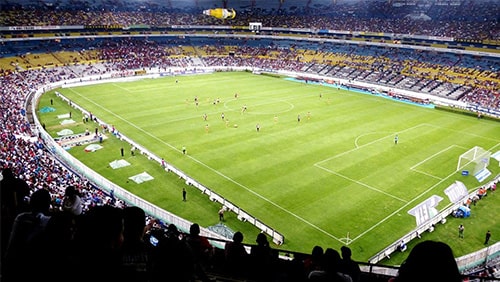
It seems like a lot longer than four years since a Leicester side featuring Riyad Mahrez, N’Golo Kante and managed by Claudio Ranieri swept to the Premier League title and became 5,000-1 winners.

 Massive outside bets at the start of the 2015/16 season, Leicester City came into what would be the most successful season of their 111-year history at the time amid massive changes. Due to a scandal involving his son, Nigel Pearson, who had guided the club to an improbable escape from relegation in the previous season, left the club.

In Pearson’s place came Claudio Ranieri, also known as ‘The Tinkerman’ during his time in football management. That reputation, however, was to change dramatically in just a single season.

Many new faces came in during a summer of growth, with players like N’Golo Kante (£5.6m), Robert Huth (£3m) and Shinji Okazaki (£7m) all signing during a busy pre-season. Friendlies mostly yielded easy victories, but a 3-2 comeback win against Birmingham City when Leicester went into the half-time break 2-0 down hinted at the resolve that was already building in the squad.

Teams of the Century: Manchester City 2017/18

In our series on the Premier League winners of the 21st century, we have covered improbable winners such as the 2015/16 Leicester City side, as well as the dominant teams of yesteryear, such as the Manchester United side who won back-to-back-to-back league titles between 2007 and 2009. 

After a season in which Antonio Conte’s Chelsea had won the league at a canter, Pep Guardiola reinforced a defence that had endured a period halfway through the previous season where they’d lost four games in just six weeks either side of Christmas. While the preceding season had been difficult, City losing five away games, an unbeaten run at the end of the season hinted at the dominance to come in 2017/18. All in all, Guardiola spent an incredible £255 million on six first-team players.

Kyle Walker arrived for £45m from Tottenham Hotspur, and Benjamin Mendy cost even more, setting The Citizens back £49.3m as he made his way to Manchester from Monaco. Aymeric Laporte arrived from Atletico Madrid for £57m, while Ederson came from Benfica for £34.9m. Danilo made his way from Real Madrid for £26.5m and Bernardo Silva swapped Monaco for The Etihad to the tune of £43 million. It was a massive summer spending spree.

Just four games into the season, Manchester City hosted Liverpool is what would be an important game for The Citizens. Sadio Mane’s senseless red card led to a five-goal rout for the home side:

Gambling Industry Announcement and Partnership Roundup – June 9, 2020

In the fast moving world of gambling, sometimes you might miss news that could be important to you. To make sure you’re all caught up on gaming industry news, be it online or brick and mortar, we’re rounding up the some of the announcements and partnerships from the last week that you might have missed.

Evoplay Entertainment joins forces with Ously Games

Innovative game development studio Evoplay Entertainment has announced an agreement with Ously Games, one of Germany’s leading providers of cross-platform gaming services.

The deal sees Evoplay Entertainment’s 50+ portfolio of engaging slots integrated with SpinArena, the intuitive social casino created by Ously Games.

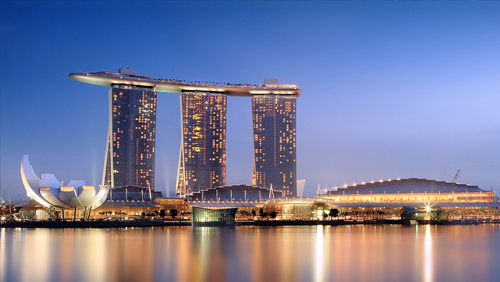
Marina Bay Sands scandal puts Singapore casinos under the microscope

Singapore had already begun to make headway toward offering a more transparent gambling market when it brought oversight of the industry under the control of one regulator in April. Those efforts, though, were forced into overdrive when the Marina Bay Sands casino, owned by Las Vegas Sands (LVS) and Sheldon Adelson, found itself in the crosshairs of a US Department of Justice (DOJ) probe into possible money laundering. With that ongoing investigation threatening Singapore’s reputation, the country is now going to take a closer look at its gambling laws to ensure that they are in line with recommendations established by the Financial Action Task Force (FATF).

GGRAsia reports that it received a statement from Singapore’s Casino Regulatory Authority (CRA), explaining that the government agency and other government officials are reviewing the country’s Casino Control Act to bring it up to FATF standards. The CRA explained, “The Ministry of Home Affairs and CRA are reviewing the legislative thresholds in the Casino Control Act with a view to lowering these thresholds further to fully comply with the FATF standards.”

Currently, cash transactions of anything above SGD10,000 ($7,177) and deposit transactions of SGD5,000 ($3,599) conducted at casinos in Singapore trigger know-your-customer protocols. However, this is higher than what the FATF has recommended, which places the transaction threshold at about $3,240. A previous study on Singapore’s gambling operations showed that it was deficient in its compliance with established protocols, having only partially created guidelines to appeal to the FATF’s recommendations. That report added that there were “deficiencies with regard to the inadequate customer due diligence requirements applicable to casinos, real estate agents, precious stones and metals dealers and accountants” that could facilitate money-laundering activity such as that now allegedly coming out of Marina Bay Sands.

LVS has a significant history of dubious practices, but has continued to push forward without much more than a slap on the wrist. It was fined $9 million by the US Securities and Exchange Commission in 2016 for violating the US Foreign Corrupt Practices Act and paid another $7 million the following year to the DOJ on related charges. There have also been reports of the company allowing drug dealers to pass massive amounts of cash through accounts registered at its casinos, and the Marina Bay Sands has been specifically targeted after a patron accused the property of transferring funds from his account to those of others without his knowledge.

The A to Z Guide to Virtual Gaming Conferences

This is a guest post from Harry Lang, founder of Brand Architects. If you are interested in advertising with CalvinAyre.com, please send an email to Bill Beatty for submission details. Thank you.

The Pros & Cons of Hosting, Exhibiting, Presenting and Attending an Online Event.

With Lockdown easing, things are slowly getting back to normal but some innovations, driven by necessity, may have paved the way for a new, better way of doing things in the future. One example is in the gaming exhibition and conference space – traditionally a mainstay of the gaming deal making, learning, networking and social calendar.

Covid-19 has forced many live event companies in the online gaming industry to rapidly adapt their live offering to adopt a virtual format. ICE North America, SBC’s Digital Summit, BetExpo, EGR’s Power 50, Esports Insider’s Digital Summit and Sigma amongst others all switched codes and for the most part, the content and experience on offer has been well received.

Bulgaria’s gambling market facing major shakeup from two new bills

Bulgaria’s gambling market could face a dramatic upheaval if a bill proposed by a far-right legislator is approved.

Last week, Valeri Simeonov, a leader of the right-wing National Front for Salvation of Bulgaria (NFSB), introduced legislation that would restrict land-based gaming operations to 10 large integrated resort casinos in five-star hotels within 20km of Bulgaria’s national borders.

Simeonov’s bill also calls for the closure of 638 existing casinos and slots halls across the country no later than December 31, 2025. On Monday, Simenov told a local TV station that the aim was “to focus this activity on foreigners, on tourists – not on Bulgarians.”

The NFSB, which is part of a coalition with the governing GERB party, also wants the government to return to its old tax regime, which collected 15% of online betting operators’ turnover, while also applying that rate to lottery sales.

SkyCity casinos cheer as New Zealand lifts all COVID-19 restrictions

New Zealand casino operator SkyCity Entertainment Group is celebrating the country’s lifting of all COVID-19 restrictions on public gatherings, while the nation’s racetracks are still wondering if they’ll have warm bodies in their betting booths this week. 

On Monday, the New Zealand government announced that the country was officially moving to COVID-19 Alert Level 1 effective at midnight after health officials reported the last known individual infected with COVID-19 had recovered. It’s been 17 days since the country reported a new infection.

The shift to Level 1 means the elimination of nearly all pandemic-related restrictions, paving the way for what Prime Minister Jacinda Ardern called “public events without limitations,” including thousands of fans packed into sports stadiums.

Ardern also declared that both retail and hospitality operations are “back without limitations.” SkyCity, which has been operating under pandemic restrictions since its May 14 reopening, announced Monday that “over the next few days,” all its New Zealand casinos (with the exception of the Wharf in Queenstown) “will return to normal hours as will the majority of SkyCity’s restaurants and the Sky Tower.”

Poker in Print: PLO poker – The Big Play Strategy (2008)

Each week, we take a look at the game of poker making it to the written page in one form or another. This week, popular poker author Jeff Hwang’s look at going from NHLE To PLO is put in the spotlight.

Adapting to modern day poker isn’t so straight forward as playing Game Theory Optimal (GTO) strategy and sticking to No Limit Hold’em. In the 2008 book Pot Limit Omaha Poker: The Big Play Strategy by Jeff Hwang, the idea of swapping the two-card game for the four-card game is explored as an appealing one by the writer in question.

Pot Limit Omaha is of course now one of the most well-loved poker formats to play, and with many PLO tournaments around the world, including many each year at the World Series of Poker, players have embraced the game now. This book is not for you if you’re already au fait with PLO to such a standard that you wouldn’t need advice on how to swap no limit skills for the four-card game.

PLO’s appeal is that bigger pots and more action are virtually guaranteed by the structure of the event and the fact that four cards means more hands are open to turn your hand into a winning one.

NBA championship odds: League plans its restart

Odds courtesy of OddsShark.com

The NBA will resume its season at Disney World in Orlando on July 31 with 22 of the league’s 30 teams: The 16 currently in the playoff field in the Eastern and Western Conference and an additional six within six games of the final postseason spot in each conference. All 22 teams will play eight regular-season games each to set up seeding for the playoffs, which will be the usual format.

There will be a “play-in tournament” if any No. 9 seed is within four games of the No. 8 following the conclusion of the regular season. In that scenario, the ninth seed would have to beat the No. 8 twice in a row to earn the conference’s final playoff spot, while the eighth seed would need just one victory.

There had been rumors that NBA commissioner Adam Silver wanted to do away with a conference-based postseason and simply seed teams 1-16 by their regular-season records. It would have been the ideal season to do that because every playoff team will be in the same location.

South Korea casinos search for silver lining in grim May revenue stats

South Korea’s casino operators are discovering that reopening after their lengthy COVID-19 shutdown doesn’t mean a return to anything resembling ‘normal.’

Last week, Paradise Co Ltd reported that sales at its four foreigner-only casinos totaled KRW29.8b (US$24.5m) in the month of May, down 51.2% from the same month last year. Table games were down 52.4% to KRW27.3b while electronic gaming machines slid nearly one-third to KRW2.5b.

However grim May’s sales may seem, they represent a step up from April’s sales of just under KRW8b. April’s numbers were laid low by Paradise’s decision to close its casinos on March 23 due to COVID-19. But as the country’s infection rate slowed, Paradise reopened its Jeju Island venue on April 13 and its three mainland properties one week later.

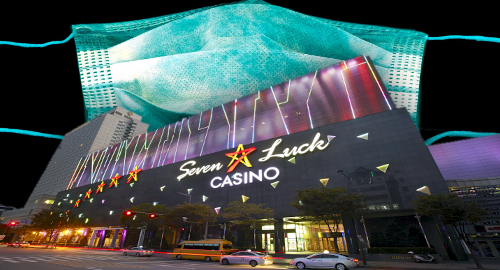
Paradise’s fortunes largely mirrored that of Grand Korea Leisure (GKL), which operates three foreigner-only casinos under its Seven Luck brand. GKL reopened its casinos in the first week of May, but the partial month’s sales were down 73.7% to KRW10.4b, with table games down 76% to KRW8.1b and gaming machines off nearly 59% to KRW2.3b.

Detroit casinos limited to 15% capacity during ‘initial reopening’

Detroit’s three commercial casinos will face some of the most restrictive measures in the country when they’re finally allowed to end their COVID-19 shutdown.

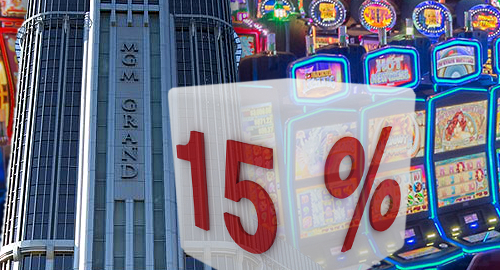
Detroit’s three casinos learned Monday that they will be restricted to just 15% of their respective Fire Department-mandated maximum capacities during the “initial reopening” after their pandemic lockdown, which has been in place since mid-March.

Casinos also won’t be allowed to operate their poker rooms, while most other table games will be limited to three players apiece, with four players allowed at roulette and mini-baccarat tables, and six allowed at craps tables. Dice must be disinfected for each new craps shooter and all dealers must wear masks and/or face shields.

The casinos’ new sportsbooks – which were in action for about a week before the lockdown commenced – will have to keep customers six feet apart at all times.

UK gov’t puts videogame loot boxes in its regulatory sights

Loot boxes in online video games could be classified as gambling products depending on the results of a new UK government impact study.

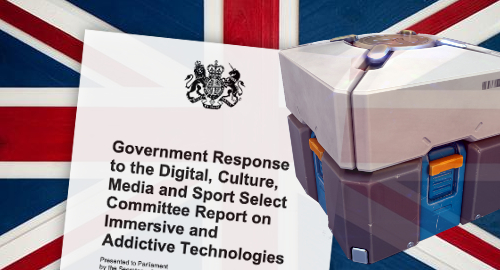
On Monday, the Department for Digital, Culture, Media and Sport (DCMS), the branch of the government which oversees gambling activity, announced plans to launch a call for evidence into “the impact of loot boxes on in-game spending and gambling-like behavior.”

The DCMS said it was prompted to act by its Select Committee’s report on Immersive and Addictive Technologies, which recommended that the government introduce regulations “to specify that loot boxes are a game of chance.”

The Committee also recommended that loot boxes containing an element of chance “should not be sold to children playing games” and games that contain such boxes should be labeled as gambling products with corresponding age limits. The Committee also urged the DCMS to establish a framework for ‘duty of care practices’ for eSports.