The YGS Group provides digital and printed reprint services for Daily Herald. Complete the form to the right and a reprint consultant will contact you to discuss how you can reuse this article.
Monthly Archives: January 2015
Ninth Circuit Holds that Under Nevada Law, a Prior…
In Arduini v. Hart , 2014 WL 7156764 , the United States Court of Appeals for the Ninth Circuit considered whether the doctrine of issue preclusion prevents a stockholder from relitigating a prior adverse determination concerning demand futility in derivative action brought by a different stockholder.
Fantasy sports continues to grow despite obvious gambling aspects
The line between sports betting and fantasy sports is pretty damn blurry these days. Just the other day, my wife, who participates in neither activity, said, “Isn’t that betting?” in reference to a FanDuel commercial. For bettors, if the growth of fantasy …
Florida sports betting consultant pleads not guilty in Milwaukee
A Florida sports betting consultant has pleaded not guilty to federal charges he allegedly threatened a customer into giving him more than $25 million. Adam Meyer appeared with his attorney in U.S. District Court in Milwaukee Monday. Meyer’s trial was set …
Court Stops New Jersey's Effort to Legalize Sports Betting
Your article was successfully shared with the contacts you provided. A New Jersey federal judge last month rejected New Jersey’s latest attempt to legalize sports betting, ruling that a state statute that repealed New Jersey’s long-standing prohibition on …
Florida betting consultant enters not guilty plea to swindling FDL man
MILWAUKEE — A Florida sports betting consultant pleaded not guilty Monday to allegations that he threatened a Wisconsin customer into giving him more than $25 million. Adam Meyer, of Fort Lauderdale, Fla., appeared with his attorney in U.S. District Court …
Top Five Sports Law Stories For 2015
4. Fight for Legalized Sports Gambling in New Jersey, and the Proliferation of Daily Fantasy Sports Across the Globe. With the proliferation of online gaming throughout cyberspace, it seems inevitable that America is headed in the direction of legalized …
The value of first-half betting
I’ve written many columns over the years about how much I like first-half betting, especially when I have an underdog that I think can stick around with the favorite but I’m afraid might get run over late. This applies to all other sports, too (especially …
Why the UFC’s Support of Sports Betting May Actually Keep MMA Honest
The UFC’s public support of expanding regulated sports betting in the United States should come as a surprise to no one. UFC co-owners Lorenzo Fertitta and Frank Fertitta III are heirs to the Station Casinos empire — with Frank currently serving as …
Denver illegal gambling boss gets 15 months in federal prison
A man who ran a multimillion-dollar sports gambling ring in Denver has been sentenced to 15 months in a federal prison. U.S. District Judge Raymond Moore also sentenced Kerwin Sande on Monday to three years of supervised release for convictions of illegal …
Kerwin Sande, of Play First Sports, gets prison time for running illegal gambling ring
Dense Fog Advisory issued January 7 at 5:26AM MST expiring January 7 at 9:00AM MST in effect for: Custer, El Paso, Fremont, Huerfano, Las Animas, Pueblo, Teller Dense Fog Advisory issued January 7 at 5:16AM MST expiring January 7 at 9:00AM MST in effect …
Gambling addiction is football's last taboo
An additional 12 percent were labeled as “at risk: to become problem gamblers. The types of gambling range — an addict will always find a way — from online sports betting to dogs and casinos. Though gambling’s problems aren’t as obviously manifest as …
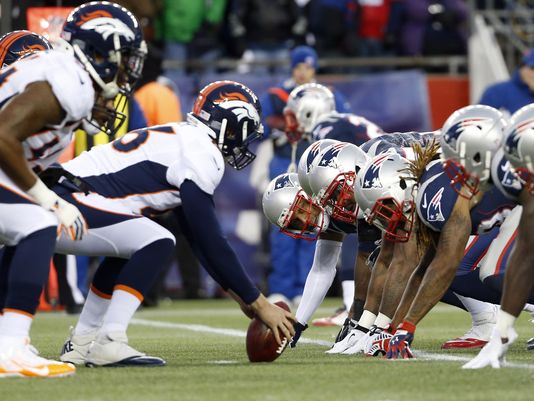
Leagues see real benefits in daily fantasy sports
Bud Selig once tried to warn the world about what would happen if legalized sports gambling spread to more states.
Instead of cheering for their favorite teams, the baseball commissioner predicted, fans would be more inclined to cheer for themselves to win money — a factor he said would harm his sport’s character.
“Players would not be viewed by fans as exceptionally skilled and talented competitors but as mere assets to be exploited for ‘fast money,'” Selig wrote in a statement submitted in federal court in 2012.
Two years later, Major League Baseball is singing a drastically different tune — and so are the NFL, NBA and NHL.
After all four leagues issued similar warnings in 2012, each sport is partnered up with two start-up companies whose business model relies on fans trying to make fast money every day based on player performance in games.
It’s called daily fantasy sports. It’s legal in almost every state. And its popularity is starting to soar, especially among young adult males.
But the recent rise in partnerships with this new industry marks a significant pivot point for these leagues that could have major ramifications for the future of American sports, various experts told USA TODAY Sports.
If the deals work the way the leagues hope, daily fantasy sports consumption will have a steroid effect on television revenue, because nobody watches live sports on television quite as intensely as fans with money at stake.
At the same time, such deals have led to conflicting, and certainly evolving, positions on the subject.
— In November, the NBA announced it had become an equity investor in FanDuel, a daily sports fantasy site that says it pays out $10 million in weekly cash prizes. Yet the NBA won’t allow its players or personnel to buy what FanDuel is selling — daily NBA fantasy games that pay out these prizes based on real-life player statistics.
“Our policy is that NBA personnel are prohibited from participating in NBA fantasy leagues that require payment of an entry fee or award prizes to participants,” NBA spokesman Tim Frank told USA TODAY Sports.
A day after the NBA’s FanDuel announcement, NBA Commissioner Adam Silver advocated for legalized sports betting in an editorial in The New York Times.

Is Bitcoin the Future of Online Poker? Bitnplay Thinks so
“Bitnplay” — a new online poker room that will provide real-money play using the cryptocurrency Bitcoin — is set to launch in February of this year.
The idea of side-stepping government backed currencies — and their regulations — has something of a cult following amongst the more technologically savvy portions of the poker community.
It remains to be seen if the cryptocurrency online poker model can be sustainable over the long-term. However, new investment will go a long way toward determining if there is in fact a viable business strategy here for the industry moving forward.
Rake Tokens Offered

The 12 Biggest Poker Stories of 2014: #8 Advantage Gambling on Trial
Our countdown of the biggest poker and gambling stories of 2014 continues, and in this installment we have a gambling story involving baccarat and one of poker’s legendary and most popular players, Phil Ivey.
Ivey found himself at the center of a $20 million controversy that had nothing to do with Full Tilt Poker funds in 2014, and everything to do with hustling and casino incompetence.
The story is still unfolding, but here is what we know so far.
Advantage gambling or cheating?

Why Are Credit Card Companies No Longer Afraid Of U.S. Gambling Laws?
When the Unlawful Internet Gambling Enforcement Act (“UIGEA”) was signed into law in October 2006, legal experts predicted the act would scare away credit card companies from funding businesses that could arguably be construed as illegal sports gambling.
The prevailing theory, at the time, was that even if U.S. laws could not deter entrepreneurs from entering into risky online gaming markets, U.S. laws could certainly deter prudent and stodgy credit card companies such as Visa and MasterCard from funding these gaming ventures.
At first, the UIGEA seemed to work. But over time, the UIGEA’s impact has been far more limited than what Congress may have expected.
Today, few, if any, payment processing companies seem to be truly afraid of the UIGEA. Only eBay , which operates the payment processing company PayPal, takes the threat of government action at all seriously.
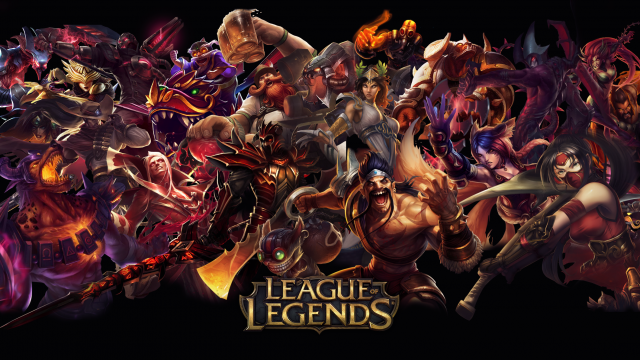
Another College Adds League of Legends Scholarship Program for Competitive Gamers
The University of Pikeville has become one of the small number of American institutions of higher learning to add competitive gaming to the list of sports programs they offer scholarships for.
Yahoo! News spoke to coach and alumni Eric VanHoose, as well as Pikeville’s new media director Bruce Parsons, about the program, which plans to offere 20 scholarships for players matriculating in the Fall 2015 semester.
“It will be a regime a lot like athletics,” Parsons said. “[Students will] have to have a certain GPA. We’ll look at them like student athletes. There will be practice time and video time when they have to study other teams for upcoming competitions.”
Presumably players will also be held to certain standards of behavior in game and out, as are many student athletes in traditional sports. At least for their own sakes, if not so that they don’t run afoul of League of Legends‘ community moderators, who have not hesitated to ban professional LoL players for violations of their code of conduct. And, ladies, as a sport, the scholarships must obey Title Nine rules, so apply, apply, apply.

NJDGE Reports Bright Future in iGaming
Gaming regulators and New Jersey state officials issued a 10-page report that assessed the first year of regulated online poker and gambling, with an optimistic look at a some key areas that hint toward a bright future for the Garden State.
Under the title of the “New Jersey Internet Gaming One Year Anniversary – Achievements to Date and Goals for the Future,” the report summarized the struggles encountered in year number one of its igaming regime. Along with those struggles came accomplishments and lessons learned that will likely soon lead to putting some new strategies into play that will benefit the bottom line.
The Internet gaming letter was prepared and released by New Jersey Division of Gaming Enforcement Director (DGE) David Rebuck. Dated January 2, 2015, the report points out that 506,172 accounts were created by online gamers in New Jersey since launching in late November 2013 through the same month in 2014.
Players from those half-million accounts were responsible for the state’s igaming revenue reaching $120.5 million in the first year of operation. It could have been more, but revenue totals were lessened due to financial institutions shunning some credit card deposit attempts. That is expected to improve this year.

Glenn Straub Awarded Revel for $95.4 Million; Wants to Pay Less
Glenn Straub has finally been declared the winning bidder for the defunct Revel casino in Atlantic City. Unfortunately, he will likely fight the decision to try to get a lower sale price.
According to the Press of Atlantic City, a federal bankruptcy judge declared Polo North Country Club as the winning bidder for the Revel property at $95 million. While it appears that owner Glenn Straub has finally gotten his way, he’s still not happy with the price.
Heading into the proceedings on Monday, Straub was looking to have the final sale price of the casino reduced from $95.4 million to $87 million. Polo North contends that their initial bid of $90 million should stand and that the $3 million break up fee should be applied to the final price, reducing it to $87 million.
Judge Could Sign By Thursday, But Straub May Challenge

PokerStars Lowers Rake; Cracks the Door Open for Individualized Rake Schedules
PokerStars has made the decision to lower its rake for certain games, a statement on the PokerStars Blog announced today. The rake reductions have already taken effect for “Hyper-Turbo” Head’s Up SNG’s, as well as Head’s-Up cash formats.
Plans for future rake increases this year have also been permanently suspended, the statement said. Also noteworthy is that the rake increase on the new “Spin & Go” games has remained intact.
No prior indication had been given that such changes were in the works. Although the announcement caught players by surprise, it is a move that is unsurprisingly being met with enthusiastic approval.
Rake Returned to Pre-Increase Levels