Category Archives: Featured

Senate Committee Approves Bills that Could Help Save Atlantic City

newjersey4

The New Jersey legislature is in the process of taking aggressive measures to help save struggling Atlantic City and possibly prevent a fifth casino from closing this year. On Monday, a state senate panel acted on a group of bills that have the potential to give Atlantic City casinos a needed financial boost and possibly save the Trump Taj Mahal from closure.

Atlantic City has seen four casinos close in 2014 and the Taj is scheduled to close on December 20. At present, approximately 9,000 jobs have been lost in connection with casino closures. The closure of the Taj would add at least 3,000 more to that total.

Tax Stabilization Act Would Guarantee Tax Revenue to the City


Perhaps the most important of the five bills is S2572, the Casino Property Taxation Stabilization Act. This bill would allow casinos to make flat payments of $150 million over the next two years instead of paying property taxes. After the initial two-year period, taxes would then be based on gaming revenue in the city. Tax payments could be as low as $75 or as high as $165 million. This system would be in place for at least 13 years.

For those thinking this looks similar to Carl Icahn’s plan for the Trump Taj, you would be correct. Icahn had asked for a similar tax break for the Taj from city administrators but was subsequently denied. This bill would not just benefit the Taj, but all casinos in Atlantic City.

Bills Would Look After Full-Time Employees

One of the reasons that Icahn encountered resistance in his quest for state aid was his desire to terminate union employee health care and pensions at the Taj. While he has backed off from that position, the legislature is making sure a similar fiasco doesn’t happen in the future.

Under S2583, licensed casinos would be required to give full-time employees a “baseline health care and retirement package.” This bill would seem to cover all full-time employees, and not just union employees.

Unite-HERE has yet to act on Icahn’s request for the union to drop their appeal of a bankruptcy judge’s ruling that the Taj could eliminate health care and pension payments to union employees. Icahn later decided that he would reinstate health care and provide partial pension payments to employees provided they drop their appeal.

Legislation Could Save the Taj

The odds of the Taj seem to be improving by the day and the passage of these bills may be enough to guarantee the casino’s continued operation. Major Don Guardian told the Senate committee that, “I do believe this legislation is going to save the Taj from closing.” Considering that S2572 would give Icahn at least part of what he needed to keep the casino open, Guardian believes Icahn will proceed with his plan to invest $100 million into the property.

Senate President Stephen Sweeney supports the bills and is focused on stabilizing the Atlantic City economy. Right now, between 8,000 and 9,000 people are without jobs thanks to the casino closures and up to another 5,000 are facing similar prospects. The most important thing right now, according to Sweeney, is to right the sinking ship that is Atlantic City.



15 Online Gambling Twitter Accounts to Follow in 2015

TwitterFollowers

2015 is shaping up to be a big year for online gaming. California and Pennsylvania will revisit their online gambling bills; several other states are also likely to look into iGaming; sports betting will continue to be a hot topic in New Jersey and perhaps beyond; and the Daily Fantasy Sports industry continues to grow by leaps and bounds.

With this in mind, I’ve compiled a list of Twitter personalities that anyone interested in poker, gambling, gaming, and Fantasy Sports should follow.

Before I get started, let me point out that there is no doubt in my mind I overlooked some deserving people on this list, but the great thing about Twitter is the connectivity, so the people I have overlooked will become apparent simply by following the people listed below.

Victor Rocha @VictorRocha1 – 2015 is going to be all about the bass… I mean California (sorry, that song is catchy) and there is nobody with their finger on the pulse of the gaming industry and tribal interests in the Golden State more than Pechanga.com editor Victor Rocha. Rocha’s Twitter feed is full of relevant links to gaming and tribal stories as well as Rocha’s own thoughts on a variety of topics.

Chris Grove @OPReport – Analysis, data, and informed commentary are the hallmark of the OnlinePokerReport.com Editor’s Twitter account. In addition to his insightful tweets, you’ll also be following the best live-tweeter in the business.

Adam Krejcik @akrejcik – An Eilers Research Analyst, Krejcik is one of the Internet’s go-to sources for Daily Fantasy Sports news and information (what do you mean you’re not following DFS, it’s all the rage), as well as offering up his insights into the iPoker and iGaming industries.

Chris Krafcik @ckrafcik – The top man (North American Research Director) at one of the top iGaming news outlets (Gambling Compliance) is a must follow. Krafcik is not the most prolific tweeter in the world, but when he does tweet it’s often information no one else is privy to.

Adam Small @A damLoebSmall – The PocketFives.com cofounder provides excellent insight on a variety of iGaming and poker issues. Small is a regular contributor to Twitter discussions on just about any topic that happens to capture his interest.

John Mehaffey @John_Mehaffey – The longtime poker industry columnist is a fountain of information on the industry as well as the local Las Vegas gambling scene, to the point that it sometimes seems like he has a mental database of the location of every gaming machine and table in Clark County.

Alun @Poker_Hack – A leading poker industry authority (and the Head of Content at Pageant Gaming Media) with a unique and varied perspective on the industry; he can also lay claim to one of the best Twitter snark games going; oh, and he hates semicolons.

_Tizzle @_Tizzle – A true poker industry insider (Tizzle is one of the minds behind PokerTracker), with strong insights and opinions, an incredible rolodex, and a very refined palate – _Tizzle is the go-to authority for fine dining in the poker community.

Alex Weldon @benefactumgames – A new columnist in the poker industry over at PartTimePoker, Alex is a really strong player and as a board game designer is able to dissect promotions and games like few others. His premiere column which included an adjustable fish to shark ecology model put him on the map and he’s been churning out good content ever since.

Marco Valerio @AgentMarco – The former QuadJacks presenter and interviewer extraordinaire has moved on to a larger role in the iGaming world. Marco is well-connected, covers all aspects of gaming, and filled with just the right amount of wanderlust (is there a conference he doesn’t attend?).

Kim Lund @InfiniteEdgeKim – While most of the people on this list advocate for expansion, consultant and longtime industry man Kim Lund focuses on an ancillary aspect of the gaming industry, as he continues to beat the drum for improved ecologies.

Robert DellaFave @DivergentGames – Somewhere between a commentator and an analyst, DellaFave is one of the top reporters in iGaming, with his work featured at a number of prominent sites. DellaFave has a keen eye for the analytics of the industry and often breaks down data from traffic reports to tournament series.

Roger Gros @GlobalGamingBiz – Along with California, another big story in 2015 will almost certainly be the continued remaking of Atlantic City and potential sports betting legalization in the state. So if you’re not following Global Gaming Biz’s Roger Gros for your New Jersey information, you’re doing it wrong.

Michelle Minton @MichelleMinton – Michelle offers up a libertarian point of view to the legalization discussion, and does so in a very academic way. Minton’s dissection of the 1961 Wire Act was key in pushing back against Sheldon Adelson’s online gambling prohibition efforts. The poker world owes Michelle a debt of gratitude for her research, writing, and diligence on this issue.

Steve Ruddock @SteveRuddock – Hey, that’s me! My Twitter account is full of iGaming links (to my stories and others), some opinions, and the occasionally witty remark.


Restoration of America's Wire Act not Added to Omnibus Spending Bill

poker usa

Online gambling opponents will have to wait another day for a federal ban on online poker.

The Restoration of America’s Wire Act (RAWA) — which would overturn a US Department of Justice interpretation limiting the scope of the current prohibition under the current version of the Wire Act law to sports betting — is not attached to the omnibus “must pass” spending bill by Congress.

The development is a major victory for the online gambling industry in the United States.

Fears had been circulating for months that a back room deal similar to the one that saw the Unlawful Internet Gambling Enforcement Act (UIGEA) attached to the omnibus bill in 2006 would happen again.

Although the anti-gambling lobby will undoubtedly continue its efforts in 2015, it will now have to do so by slogging its way through the normal legislative process. This promises to make the debate over the future of American online poker much more robust, open, and transparent.

More Money; More Problems

It appears as though the worst kept secret in Washington these days is that the anti-iGaming lobby is being almost entirely bankrolled by one man: Republican super donor Sheldon Adelson.

Normally, money and politics go hand in hand, especially in the United States where campaign finance regulation is weak. Nevertheless, pushback has begun to ferment at the grassroots level against the idea that one man could have so much influence over what is potentially a billion dollar industry.

Conservative groups especially have voiced strong opposition to the perception that Congress could be bought off by Adelson to craft regulation squashing direct competition to his personal, land-based, gambling empire.

Congressman Ron Paul dedicated an entire op-ed piece to his railing against Adelson’s influence on Capitol Hill and what he labeled “crony capitalism” in its most pure and brazen form.

This political climate appears to have given Republican politicians pause that they risk a serious backlash from their base if they are seen as walking in lock-step with the epitome of special interest money.

State Rights Arguments Also Resonate

In addition to disgust at the money being thrown around, Republican politicians are also hearing from voters in their base who are wondering out-loud why the federal government is even getting involved in regulating online gambling at all.

Land-based casino gambling has always been the prerogative of the sovereign state governments, and many conservatives view the idea of a federal ban as an example of encroachment on the principle of state sovereignty.

Grover Norquist — who is the president of Americans for Tax Reform and one of the most influential figures in conservative politics — has also come out strongly against any federal ban on exactly this point.

States’ rights is an important issue for conservative voters, and so this too seems to have scared off support amongst Republican politicians unwilling to be labeled as going against core political values.

The Best Defense is a Good Offense

The defeat of RAWA in this Congress is welcome news. However, it is only one battle in the larger, ongoing war to avoid the proverbial federal ban-hammer.

The iGaming industry has come a long way since 2006. This recent skirmish with big money validates the efforts of industry advocacy groups such as the Poker Players Alliance and the community in general to step out of the shadows and into the mainstream cultural consciousness of the nation.

Players and operators alike clearly do now have a voice in the halls of power.

Even more encouraging is to see that the issue has now been removed from the simple “pro” vs. “anti” gambling dichotomy and is instead being discussed in the language of the broader American political debate. This is a development that cannot be overstated.

It makes it much less likely — though certainly not impossible — that a federal ban will be able to get through Congress.

Conclusion

Although the omnibus bill can be amended at any time, the high-visibility of the issue in recent weeks makes it unlikely that online gambling legislation will be coming out of Congress until at least 2015.

All eyes will now be on California, as well as the possibility of an interstate compact between Nevada and Delaware. Should these happen, they will cement the industry even further and — given the amount of opposition already present to a federal ban — make it almost impossible to dislodge it.

For that reason, the coming year is shaping up to be the biggest one in the history of US iGaming.


Paul Phua Illegal Sports Betting Case: Five Defendants Sentenced

American Flag and Gavel 300x152

During the height of the FIFA World Cup this summer, members of the FBI raided three villas in Caesars Palace and arrested an array of people under suspicion of running an illegal sports betting operation on the premises. Last week, five of those people were handed their sentences.

Yung Keung Fan, Herman Chun Sang Yeung and Yan Zhang appeared before Nevada U.S. District Judge Andrew Gordon where they pleaded guilty to misdemeanor charges of being an accessory after the fact to the transmission of wagering information. They were each fined $100,000, ordered to give up a further $125,000 in cash and assets, and handed a five-year probation that means they had to leave U.S. soil immediately and not return until their sentence has been served.

Two further defendants were tried separately. Inaugural Big One for One Drop participant Seng Chen ‘Richard’ Yong also received the same $100,000 fine and probationary sentence, but was ordered to forfeit $400,000 in cash and assets. A fifth member, Hui Tang, admitted to playing a more comprehensive role in the enterprise and was handed a $250,000 fine, five-year probationary sentence, and told to stump up $250,000 in cash and assets. A sixth defendant, Wan Kin Yong, saw all charges dropped.

That leaves Paul Phua and Darren Phua to face the gavel. Their attorneys are challenging the legality of the FBI search, which they believe was illegal. If you are unfamiliar with the case, the key argument centers around a plan concocted by the FBI, Caesars Security, and the Internet Service Provider (ISP) to cut off their Internet supply and then send in FBI agents dressed as technical teams so they could gain evidence of wrongdoing.

Phua’s lawyers believe that the warrant was only obtained because of the observations that the dummy technical team made during their visit to the villas, and therefore it should be thrown out of court. Prosecutors are taking the angle that as the ISP only cut off DSL service to the villas, leaving Wi-Fi in tact, meaning the defendants didn’t have to invite the FBI agents into the property.

Prosecutors stated that $13m in profit was created in the short time that the operation was up and running.

The two Phua’s will be sentenced this week.


New York to Name Winning Bids for Casinos

new.york.state

Gambling expansion is coming to the state of New York in the form of four new casinos and today we will likely learn the names that will adorn the entrances to those casinos, as well as the specific locations.

Voters approved the construction of the new land-based gambling establishments last year and the Gaming Facility Location Board has been perusing 16 bids from companies with well-known names such as Churchill Downs, Genting and Caesars. The regions in which the casinos will be placed are already known, while the winning bidders are not — until later.

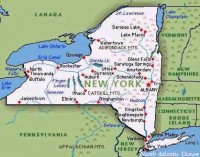
Three areas have been approved — Albany, Catskill Mountains-Orange County, and near the neighboring state of Pennsylvania. The second of those three is seen as perhaps the jewel of the bunch, Bloomberg reported, as Orange County is about one hour away from New York City and its population of more than eight million.

New York is already home to five casinos run by Indian tribes, as well as nine video slot parlors located at horse racing facilities. The new casinos are expected to co-exist with the land-based gaming operations currently operating.

Following the announcement of the winning bids — a Christmas present of sorts for those chosen — the New York State Gaming Commission must also give their rubber-stamped approval. A likely mere formality, as the Gaming Facility Location Board was specifically set up to handle much of the process.

Online Poker Next?

New York lawmakers took a look at two online poker bills introduced this year. Sen. John Bonacic proposed S 6913 in the spring and Assemblyman J. Gary Pretlow followed with A09509 weeks later.

Both bills aimed to allow games requiring skill to be regulated, while excluding house-banked casino games. Both also cited the need for safeguards that regulation would provide, noting that many New Yorkers play at unregulated sites where protection and safety of funds is questionable.

Two East Coast states have already enacted online poker and gambling legislation — Delaware and New Jersey — and another, Pennsylvania, may be next in line following in-depth research into the possibility. The bills introduced in New York did not gain much traction, but the state is miles ahead of other states who have yet to even consider proposals.

Perhaps after the identities and locations of the winning casino bidders are named and construction is underway, online poker regulation can be debated with greater intensity. New York is the third largest state in terms of population and would be much-welcomed as a regulated state by online poker and gambling activists.


Delaware Online Gambling Revenue Jumps 42% in November

Red Up Arrow

The Delaware Lottery released its revenue numbers for the month of November and the results show a massive 42% increase over the previous month.

Delaware Park, Dover Downs, and Harrington Raceway took in a collective $184,898, which ranks as the fourth-best month out of 13 since The First State launched its online gaming regime in November, 2013. The latest totals bettered last month’s $130,268.

The November figures can be viewed as wonderful news considering that the regulated online poker and gambling industry in the U.S. has not been without its problems, many of which center around failed expectations and decreasing revenue. And that’s not just Delaware, but New Jersey and Nevada as well.

Delaware saw igaming revenue reach its peak in April when the three sites pulled in $240,762. Its low point occurred during the first month online — November 2013 — when only $111,387 was earned. However, that month started with a soft launch when one week in November had already passed, so it’s not entirely fair to count or compare the numbers posted for less than a full month of operation.

The Delaware site with the largest share of the market continues to be Delaware Park, recording two-thirds of The First State’s action at $122,894. Dover Downs took in $31,421 for the month, a market share of 17%. Harrington Raceway was less than a grand behind Dover Downs, netting $30,582.

Online Poker Revenue Increases as Well

Action on the online poker tables also saw a rise over the previous month, 15% more than October’s $28,465. The three sites combined saw a profit of $32,814 from poker rake and fees. Delaware Park’s dominance over the other two sites also comes into play on the virtual poker felt, albeit at a slightly lesser market share than igaming of 59%.

The best month for ipoker throughout the state’s 13-month history was December, 2013. Rake tallied $106,922 in that month one year ago, which is a whopping 69% more than the month just gone by.

Those figures point to the obvious, that Internet poker players among Delaware’s teeny population of under one million came out in strong numbers following the regulated launch. But most have vanished, likely due to a lack of liquidity and action.

Online poker players are typically attracted to a wide variety of choices available, stake levels and game types included. With a ring-fenced intrastate market drawing from a populace of only 900,000 or so, those choices are severely limited.

Delaware hopes that more online poker players log on when the Multi State Internet Gaming Agreement (MSIGA) with Nevada takes hold. A number of Delaware residents (and Nevada too) have been sitting on the rail, waiting for that launch to come into play. The governors of both states signed the MSIGA in February, but the intricacies involved in such an endeavor are still being worked out.

While online poker and igaming revenue was up for November in Delaware, new signups were down. Only 308 players created an account at the three options available, which is the lowest total for any month — ever. The best month for new accounts was the first, when 2,654 online gamblers signed up. That just about doubled the next-best month of December 2013 that saw 1,336 players register.