Category Archives: Featured

Triple Crown Video Ad Seeks to Build Interest in Horse Races

By Frank Scandale @Fscandale

Poet Robert Frost may have immortalized the phrase, “The Road Less Traveled,” but a new video ad campaign seeks to put a new spin on it as momentum builds for the first leg of horse racing’s most coveted jewel – the Triple Crown.

Launched by America’s Best Racing, the four-part series promotes the road to the Triple Crown, arguably one of the most difficult titles in sports. The first ad kicked off today (Monday, April 6) and is called appropriately, “The Road Less Traveled: The Road to the Triple Crown.”

The first video, http://youtu.be/BAxtFGM05bw , employs a narrative effect on what it takes to be great by invoking the names of great athletes of our recent generation, such as Yankees shortstop Derek Jeter and Chicago Bulls great Michael Jordan. A 1958 Chevy Apache truck rolling down the the road in lush horse country while the narrator waxes poetic achieves its goal of building interest in the Derby on May 2, the Preakness on May 16 and the final leg, the Belmont Stakes on June 6.

Shot in Kentucky, the successive videos will be rolled April 13, April 20 and May 6, a few days after the first leg of the Triple Crown is run in Louisville.

The Triple Crown has only happened on 11 occasions since 1919, with the last time occurring in 1978, when Affirmed captured the title. Prior to that, Secretariat, also mentioned in the first video ad, broke a 25-year drought, according to BelmontStakes.com. Twenty one horses have come into the Belmont Stakes last leg with two victories under their belts, only to fall short on the final attempt

A 3-year-old Thoroughbred must win three races – Kentucky Derby, Preakness and Belmont Stakes, each at a different distance – over the span of five weeks. Despite the overwhelming odds, the annual quest to capture this coveted crown attracts millions of viewers. According to Nielsen Ratings, 20.6 million viewers tuned into NBC to watch the California Chrome’s quest fall short at the Belmont Stakes.

The ads will utilize the hashtag #RoadtoTC and will pop up on Facebook, YouTube and Yahoo.com, says America’s Best Racing’s release. The ads can be seen on www.AmericasBestRacing.net, which will also feed updates, news, blogs, photos and gambling insights for all three races.

Draft Kings’ Latest Moves Seek Royalty Status of Pay Fantasy

By The Daily Payoff @TheDailyPayoff

Experts will say a key factor in driving business is healthy competition.
“You want to be the Avis to their Hertz,” the late Jay Larkin, former head of Showtime Sports, once said, when referring to his network’s ability to create opportunities for boxing when going up against rival HBO. “Healthy competition makes for a great marketplace and challenges you to do better and stay sharp. Without it, you go flat.”

Perhaps the same can be said of the pay fantasy space, where competition was at its peak last week. The attacker brand in the multi-billion dollar business, Boston-based Draft Kings , put on a 48-hour splurge of competitive activity that would have made Larkin very pleased.

On Thursday it was revealed that Major League Baseball Advanced Media had renewed its investment with Draft Kings and had used that investment to push the brand forward as the league’s official pay fantasy partner.

Later on Thursday it was also learned through industry sources that the company would be the official and exclusive partner of all Major League Baseball teams. The move effectively locked out its bigger rival, Fan Duel, from a critical growth area in pay fantasy, the sport of baseball and the millions of dollars in transactions and promotion that will take place as Opening Day arrives this weekend.

It was the first time that a team or a league with an investment had moved to lock out a competitor with its clubs, making Thursday a landmark day for the brand and the business.

Then late on Friday, The Sports Business Journal broke the long-rumored story that ESPN was going to make an equity investment in Draft Kings, with a number in the range of $250 million while valuing the company at roughly $900 million. http://www.sportsbusinessdaily.com/SB-Blogs/On-The-Ground/2015/04/0403-ESPN-DraftKings.aspx

The key component of the deal, Sports Business Journal reported, will be a premium ad spend by Draft Kings across ESPN, somewhere in the range of $50 million, with lots of incentives and cross promotions factored into the deal. The official announcement will not come until May when Draft Kings announces its next round of funding.

“An affiliation with ESPN is industry redefining,” Geoff Reiss, a former ESPN executive who was in a similar position two decades ago when ESPN parent Disney bought Starwave, which became ESPN.com told SBJ in their story. “ESPN represents the largest and most consistent promotional platform in sports for daily fantasy. The only other kingmaker as far as this industry goes is the NFL.”

All this rapid news for Draft Kings is by no means the end of the road for the much larger Fan Duel business. The New York-based company received a similar investment from Comcast Corp.’s venture arm last year, and has the NBA as an equity investor as well, along with an engaged audience which some experts say is about 60 percent bigger than Draft Kings.

The company also had a huge share of the very lucrative pay fantasy space for football this past fall, and with the NFL announcing last month that teams will now be able to take on pay fantasy partners in 2015 for the first time, the competition to have affiliate partners market by market will be very heated.

By the way, Draft Kings has an investment from Kraft Sports Group as well, and has announced partnerships with both the New England Patriots and the Denver Broncos in place.

The “official” partnership with MLB for Draft Kings in no way excludes Fan Duel from pay fantasy baseball in any way either, as the data used for games can be licensed from any number of sources. It limits exposure and the use of rights and likenesses but does not mean that Fan Duel could not buy advertising on broadcasts or partner with former players on endorsement deals. Their trove of marketing dollars is very deep, which has propelled them to a leadership position in the space to date.

Despite the massive investments in both fantasy companies, multiple reports suggest neither is near profitability yet, as the space is still too new, and the dollars too small, to bring either company into the black.

“It’s the Wild West for sure, with everyone trying to position themselves for leadership in a growing space,” added Chris Lencheski, a longtime sports marketer now running the firm Phoenicia. “The hedge for all these companies is legalized wagering at some point in the future, which will lift the pay fantasy business beyond where it is. But for now it certainly is impressive what Draft Kings has done, and it will be interesting to see Fan Duel’s next moves as well.”

Officials for ESPN, Draft Kings and Fan Duel declined comment Friday, which was of course Good Friday for many, but a Great Friday for Draft Kings and their backers .

Is MLB Ready To Hit A Pay Fantasy Homer?

By The Daily Payoff Staff @TheDailyPayoff
    As we head toward baseball’s Opening Day this weekend, the question remains where does the MLB stand on joining the fantasy wave?
   The NFL recently opened the door opening  for teams to engage in daily pay fantasy partnerships, joining both the NBA and the NHL in creating extra revenue streams for the teams. The move also  provided engagement opportunities for fans who are looking for more and unique ways to follow their favorite teams, now with a dollar figure attached.
   However baseball is still silent on the opportunity, either as a league or with clubs, for pay fantasy. Could a break be coming soon? MLB Commissioner Rob Manfred said again this week in an interview with MLB.com that he understands and supports the value of fantasy baseball as a way to engage. He has said numerous times that MLB, like the NBA, needs to consider the possibilities of working to find ways to make gambling legal for fans in North America like it is in other parts of the world.
   Sports media observers say MLB sees the value and the opportunities, but will jump in when the time is right for it.
   “When they are ready,” said Dan Cohen, now head of North America for MP & Silva, one of the world’s largest sports media sales companies and a growing player in the digital activation space for teams and leagues. “There is no doubt that baseball is a data-rich sport and fans love digging into the numbers and MLB has seized that opportunity over the years. However they will balance the pros and cons of official pay fantasy engagement as a sport, and will make the call when they see the full opportunity. Everyone sees what other leagues and teams are doing, and MLB will be able to have any partnership they want when the time is right.”
   Manfred has also said on numerous occasions that finding ways to keep a younger audience involved with baseball is a priority, and that the gaming industry could be a key factor there.
“MLB is aiming to find more ways to inspire children’s passion for baseball. If kids are interested in fantasy baseball and stats, they could be on track to becoming passionate lifelong fans. That’s exactly what we want to achieve. If tracking batting average or ERA helps kids build some fundamental skills, then we welcome all of those practical applications,” Manfred said in an MLB.com interview this week.
   So why not a partnership yet, or some form of open agreement for clubs to partner with companies like Draft Kings (who MLB Advanced Media has made an investment in but has not yet activated against) of New York-based Fan Duel or both?
   The NBA made an investment in Fan Duel but left the teams the opportunity to cut their own team-specific deals, which has resulted in a mix of partnerships for pay fantasy, a mix which the teams benefit from by playing one of the mega-companies against the other.  There are also smaller companies, like New Jersey-based Hotbox Sports, which cut their own team deals with the Philadelphia 76ers.
So when will baseball, with the most savvy digital business in sports under Bob Bowman, and the most data-rich of any sport, engage in pay fantasy partnerships?
   Part of it still may reside in the hesitancy of baseball, a sport whose commissioner’s role came about as a result of a gambling scandal (albeit in 1919 with the Black Sox), to still make the change that “gambling,” whether it is legal like pay fantasy or not, is still frowned upon.
    No one has to look any further than the Pete Rose ban to wonder how strict baseball still will be on circumventing rules involving dollars wagered in any form and baseball, and this week Mason Levinson at Bloomberg reported that MLB in the offseason put measures in place so that no players could be involved in pay fantasy in any way as well, an escalation of the anti-gambling policy for the sport.
   It is the first time players won’t be permitted to join paid fantasy baseball leagues, following an agreement between the sport and the MLBPA, an agreement which the NBA and the NBAPA have failed to reach for their players. The MLB deal, according to the story, doesn’t limit players’ ability to sign sponsorship deals or other business transactions with fantasy sites, however, creating a bit of a paradox. Also no leagues prohibit their players from legal gambling on other sports, which can only be done right now in Nevada. Pay fantasy however, moves such wagers to one’s smart phone.
   “We are certainly in unchartered waters with lots of dollars at stake, and the leagues are taking very careful measures not to circumvent anything going on in Washington with regard to federal laws on gambling,” said Chris Lencheski, a longtime sports media consultant now running his own firm, Phoencia. “However there is no doubt that everyone sees the dollars out there and pay fantasy is the next step to take advantage of for the teams and the leagues and at some point soon, the players will also look for their share of the action.”
   For now, the league and the teams play a wait-and-see game. Will it be a short term wait or will the game deepest in tradition continue to be outside the pay fantasy lines? For now, no one is saying officially, from Draft Kings and Fan Duel, which did not return calls, to several teams, who refused comment.
   As fans settle in to make their final choices for the fantasy baseball season, the clock is ticking.

Egaming: Bigger Than The NHL?

By Joe Favorito @JoeFav


“We are going to be bigger than the NHL,” declared Major League Gaming head Mike Sepso several months ago about the growth of his company and the sport of E-Gaming.

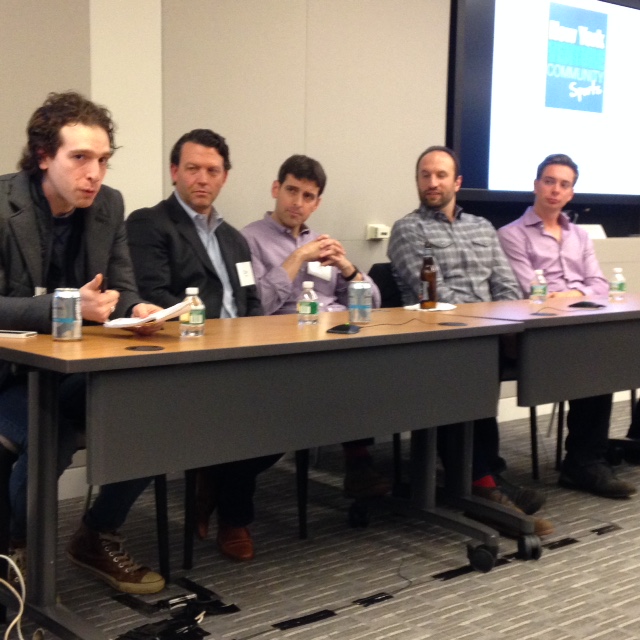
And to hear the numbers thrown around on engagement Tuesday night at a New York Sports Venture Group forum on the fast-rising sport, it might be hard to argue his claim.


For the uninformed, especially those over 30, Rod “Slasher” Bresleau, perhaps the most informed media member on Egaming and now the lead for the first Egaming news website portal “The Score” in Canada, explained the phenomenon in the simplest of terms.

“If you look at the games themselves, like World of Warcraft, as a sport unto itself like soccer, then view the industry and all its individual games as the Olympics or the XGames,” he added. “Each game has its own stars, its own storylines and its own followers, many of which are now in the millions, and all are very engaged consumers of every aspect, both as a player and as a viewer.”

How engaged? Both Craig Levine of ESL, one of the largest event creators and developers in the space, and Don Reilley EVP of Global Sales for MLG, talked about stadium audiences in the tens of thousands and viewership in the tens of millions, easily eclipsing traditional sports viewership in some of the biggest events.

“Everything that I thought would happen is happening,” Reilly said about the growth. ”We have to balance the needs of the people at the events with those of the people watching at home, watching their favorite players.”

Levine mentioned sellout crowds watching gaming events in places ranging from Korea and Croatia to New York and Seattle, with fans showing up armed with dollars to buy merchandise just like they would for a hometown sports team. The difference is really in the audience demo, which is the one that brands and traditional sports leagues crave; the dominant egame follower, according to most research is male, 18-34, highly engaged and very passionate about every aspect of the game he follows. Think UFC and NASCAR of a new era.

So what is the secret sauce for egaming? Reilley said that for MLG it’s not that different at all from what brands and broadcasters have been doing for 50 years on television, albeit with a key twist.

“We provide great content for a passionate audience, most of the time with events in a live environment, just like the networks have done with MLB or the NFL for 50 years. It is that live engaged audiences that brands crave and are now activating against,” he said. “However the big difference is in how and where we engage. Unlike traditional broadcasts our audience does not have to be plugged in. They can engage on whatever device they choose and do so wherever they are. We deliver the programming to them however they like, and that is what sets us apart from traditional sports right now.”

Another aspect of egaming’s success has been the accessibility of the gamers to an engaged audience. Like the UFC of five years ago or the NHL of 10 years ago or NASCAR, egaming providers boast about the ease of contact fans have with the elite players. Send them a text or an email and you get a response, and the response is seen by millions, not just a few hundred.

That sort of access, they claim, is what is missing from today’s traditional sports, where despite all the trimmings of social media, athletes are locked behind a wall of handlers, team officials and brands who say the stars of baseball, football and basketball are accessible, but in reality the chance to email Bryce Harper or Kobe Bryant and get a response is less than zero.

“Because we are still evolving and the elite players are almost of the same age and background of many of their fans, the relationship is different and is much more intimate right now,” added Levine. “That means a great deal to a generation that is used to access without barriers, and that type of access has great value to brands as well.”

The numbers for egaming engagement that are thrown around are certainly staggering. Over 32 million live followers for a recent “World of Warcraft” event. A gate of over 30,000 for a live event in Croatia, a billion dollar investment made by Amazon to buy streaming service Twitch, which provides highlights from any series of games to millions of followers 24/7. But for all the success, there are some growing pains.

“It’s the Wild West for sure,” Bresleau told the packed room of approximately 150 representing a wide spectrum of interests. “Companies come into the space with a great deal of capital and find ways to engage with fans, and the people with the real brand value, the players, are now seeing greater opportunity to monetize their success at a new level. Right now it’s all great and any success helps the sport, but down the road there may be a consolidation as the business settles in.”

Another example of global growing pains comes in the form of what traditional sports have seen; game fixing. Bresleau added that as many as 18 professional players in the past few months have been banned for fixing games for money. Illegal gambling it seems, has also found itself into big time gaming.

There is also the question of wider appeal to a casual fan who would be willing to watch egaming in person or online, along with the question of whether massive stadium events are just one-off phenomenon’s or are they able to sustain a repeat audience. It is a similar question the UFC has had to address time and again as a new sport on the traditional block, and they too have handled the issue well.

“We see a fan as one who is very engaged and he or she will come back again if they have an amazing experience,” Levine added. “We can’t oversaturate a market and we are still building, but all signs are the business sis not just here to stay, it is growing at a very fast rate.”

And what about traditional sports as a form of egaming? Millions has been spent on creating marketing and selling products like FIFA 2015 and Madden for years, but those sports games, although successful, have not migrated into the new egaming space.

“Those games are great for their audience, but when you can watch a live NBA or NFL game with real stars playing it, the level of professional egaming is diminished,” Bresleau added. “What captured the egaming world is the ability for the gamer to really be someone else, to travel to another planet or be a superhero or an elite warrior, that’s the transcendent appeal that is drawing millions in.”

And are the elite gamers actually athletes like those in the NBA or NFL or the Olympics? “They train, they travel, they sacrifice and they have great skill, so my argument is yes and it’s why egaming is an amazing sport,” Bresleau added.

The panelists all believe that despite the mainstream media covering egaming as a novelty event up until now, coverage of the live events and the sport itself is about to ramp up considerably.

Engaged audiences, young demo, brand activation, young stars and global appeal. Egaming is rising fast, and it will be interesting to see how high and how far it will go as a business of the future. Look out not just NHL, but MLS, MLB and anyone else in a traditional business. The sports world is changing.



IS NFL EYEING LEGALIZED GAMBLING ON BOTH SIDES OF THE ATLANTIC?


Is the NFL inching closer to joining the NBA in the push for legalized sports wagering? Depends on whom you talk to.

Late last week commissioner Roger Goodell announced that teams will be allowed to do one-year pay fantasy deals for the 2015 season, all of which will be subject to review after the season. While not a huge value proposition for the long-term yet, it does open a door that had been closed for a much-needed new revenue stream for teams.

Only a few teams have inked deals so far of some sort with fantasy outfits. The Denver Broncos and the New England Patriots, each inked deals last fall with Draft Kings. Most most other clubs still deferring on what and how the decision will be made.

Patrick Smyth of the Broncos public relations office, said the team signed on with Draft Kings, one of the two big players in the Fantasy arena, last fall for good reason.

“The decision to become involved with fantasy sports provided an opportunity for us to engage and connect with our fans through a new and growing avenue,” Smyth said. “we moved forward with our partnership after consulting with the league office.”

At the time of the signing, the team explained that daily games and contests were the next frontier for fantasy sports, and that this would be another way for fans to engage with the sport and the team they love. The Patriots expressed similar reasons for being the first team in the NFL to partner with a fantasy operation.

According to a story last fall in the Boston Globe, the Patriots said then “many of our fans in the stadium are playing daily fantasy sports, and we want to provide them with the most up-to-date information.” http://www.bostonglobe.com/business/2014/10/16/draftkings/5E2bKV1bzN2103jl1lg7BO/story.html

Calls to a dozen NFL teams seeking comment about their status with fantasy sports were mostly unreturned. Two said they had no comment at this time.

The New York Giants’ Pat Hanlon did say while the team had no comment at this point, ” It’s a matter we will be discussing internally once we have all the details of what is allowable.”

Another more intriguing issue is if the NFL and other leagues like the NBA, who play games in markets like London where legal gaming is allowed, will take a big step in 2015 and license an official local betting partner. With the NFL now holding regular season games and promoting more to a global audience, a natural next step could be to pull in dollars, legal dollars, in places where the games are played.

Speaking at the Sportel Conference in Miami two weeks ago, NFL EVP of International Mark Waller was somewhat evasive and very cautious on the subject.

“Right now we are looking at all options as we should as a business, but to say the NFL will license gambling or create a partnership anywhere with a legal bookmaker is not on the table,” he said. There have been rumors that both the NFL and the NBA would sign deals this coming summer, creating a new revenue stream and again testing the waters for what legal dollars good flow in from legalized sports gambling, but right now both leagues have been relatively silent on the matter.

If the leagues were to sign deals to license their marks, it would raise an intriguing question for a state like Nevada, which currently does not have any of the four professional sports playing in the state, but is pushing hard to add the NHL with a new arena.

In year’s past, when teams like the Los Angeles Lakers played regular season games in Las Vegas, sports books would not take legal bets on the games. Now in a changing landscape, a move to have a legal betting partner abroad could open the door for a legal Nevada partner by the leagues, especially for the NHL, in advance of any federal law change to allow sports betting across the board. A host of other states continue to challenge the Federal law on sports gambling, but as of now Nevada remains the only place in the US where sports betting is legal and regulated.

Quietly some of the worlds largest betting houses have set up operations in the United States and continue to monitor the activity with regard to sports betting and pay fantasy while staying engaged in legal betting operations in sports like horse racing and poker.

Casinos are also looking for the added bump sports gambling could bring as a way to enhance team partnerships that have been in place for years as well. Is the NFL’s cautious toe in the water with pay fantasy a next step in taking the public temperature for legalized gambling and will their overseas games open other doors? Right now most are silent, but it will remain a key story to watch for when the pads go back on later this spring across America.

The issue of teams signing deals with fantasy companies came alive again last week when Daniel Kaplan of The Sports Business  Journal wrote that the league was making it clear to teams they could ink one-year deals.

Kaplan wrote that the league told teams they could sign daily fantasy deals during the league’s annual meeting in Arizona.

The league said it wanted to formalize its position because it did not have a policy in that category.

Kaplan quoted an email by Brian McCarthy, the NFL’s VP/Communications, saying, “With more teams signing advertising deals last year the league reviewed the overall landscape and made a proposal to enable all clubs to explore potential arrangements. It would be for one year.”


Frank Scandale @Fscandale contributed to this report.

March Madness and MLB Linked by CEO Pool

By Joe Favorito
@joefav
How can baseball benefit from March Madness? It’s In The Pool.
As we head toward the Final Four and Opening Day of Baseball there is an interesting mix we had previously talked about that ties both sports together in an unusual way. At the beginning of March Madness, Bloomberg announced a pool with 32 high level CEO’s each kicking in $10,000, with the winner getting the whole pot, $320,000 to go to a dedicated charity of their choice.
The list of CEO’s ranged from Michael Bloomberg to AOL’s Tim Armstrong, and from the Milwaukee Brewers owner Mark Attanasio to Under Armour’s Kevin Plank, all chipping in for the cause of their choice. From education to food banks, cancer charities to wrestling programs, the help would be for a wide range of programs.
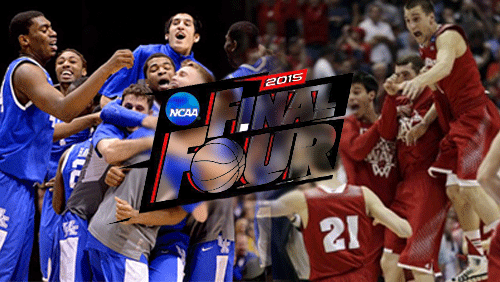
As we turn the corner and head for home in Indianapolis the Final Four has little Cinderella and lots of favorites, all of which could lead to a compelling finish to a great event at Lucas Oil Stadium. Who in the Bloomberg pool could cash in? One unique mix has baseball potentially benefitting, while the other may have some good karma for basketball and LeBron James.
Gary Cohen, CEO of Goldman Sachs, leads the group with all four of his Final Four intact, but needs Bo Ryan’s Wisconsin Badgers to win it all. If Frank Kaminsky and company make it past Kentucky and through the finals, the windfall would go to HARLEM RBI, the not-for-profit that works with Major League Baseball to grow the game in inner cities.
Cohen’s 144 points places him ahead of Quicken Loans Founder and owner of the Cleveland Cavaliers Dan Gilbert, who is second with 139 points and has 3/4’s of the Final Four left. The difference is Gilbert has overwhelming favorite Kentucky winning it all, which would move him to the top spot as he plays for the Children’s Tumor Foundation .
EBay President and CEO John Donahoe is third, with Milwaukee Bucks owner Mark Lasry fourth, although neither appear to have the mix to leapfrog the top two.
On the bottom, keep fretting Lakers fans, as it looks like CEO Jeanie Buss will be bringing up the rear with just 90 points, although she does have Kentucky winning it all. Plank sadly is just ahead of her and with no one left in his Final Four, he may hit bottom as well. All in fun and philanthropy though.
The new concept by Bloomberg could bode well for giving elsewhere as well. How about a Women’s World Cup pool coming up as well, with some global heads putting $10 K in the kitty.
View original Source: Bloomberg’s Brackets for a Cause

Dubai World Cup preview

Dubai World Cup preview
By Jerry Bossert @JerryBossert

Last year, California Chrome took trainer Art Sherman on an incredible journey, traveling across the country, winning the Kentucky Derby and the Preakness Stakes, before ending with a fourth-place finish in the Belmont Stakes.

Now, the 77-year-old trainer has his bags packed again as California Chrome has taking him halfway around the world to Dubai, where he’ll compete in the $10 million Dubai World Cup, the world’s richest horse race on March 28.

California Chrome drew the outside post in the field of nine and was made the 8-5 morning-line favorite in the mile-and-a-quarter race.

“I call him the California rock star,” Sherman said. “He’s got such a following all over the world. I thought nobody would know in Dubai but from the moment I stepped off the plane, people said ‘there’s California Chrome’s trainer’.”

California Chrome will try to become the third Kentucky Derby winner to win the Dubai World Cup in the race’s 20-year history, joining Silver Charm in 1998 and Animal Kingdom in 2013.

“He’s kind of push button,” Sherman said of the 4-year-old California-bred colt. “He’s not a one-dimensional horse and that’s important. Just keep him in the clear and have a place to go. That’s all I ask.”

California Chrome will once again be ridden by jockey Victory Espinoza, who rode the colt to victories in the Kentucky Derby and the Preakness last year.

“By a $2,500 stud out of a maiden $8,000 claiming mare, to come by and win all these races, it gives an incentive to the little guy,” Sherman said. “This is a game where you can buy your way into a lot of things, but we are proof that a dream can happen. You don’t have to be a millionaire or a billionaire to win these kinds of races. In the end, I’d like to leave some sort of legacy with him that says ‘wow, I remember California Chrome, he was a great horse and we had a lot of fun watching him run.”

African Story, who won the World Cup last year, will try to become the first repeat winner of the race and will break from post three looking to give trainer Saeed bin Suroor his seventh win in the World Cup.

Trainer Bill Mott, who saddled Cigar to victory in the inaugural Dubai World Cup in 1996, is back to try and win his second with Lea, winner of the 2014 Donn Handicap.
“It is great to be back with a serious contender,” Mott said. “We are drawn in the middle (post five) which is perfect.”

My selections: Lea, California Chrome and African Story.
Back in the United States, two important prep races will be held for the Kentucky Derby – the $1 million Florida Derby from Gulfstream Park and the $750,000 Louisiana Derby from the Fair Grounds.

In the Florida Derby, Upstart will try to get back into the winner’s circle after being disqualified from last month’s Fountain of Youth Stakes and placed second.

My selections: Upstart, Materiality and Itsaknockout.

International Star will be the one to beat in the Louisiana Derby seeking his third straight stakes score and is a perfect 2-for-2 over the Fair Grounds surface.

My selections: International Star, Stanford and Mr. Z.

MMA Looks Like It Will Get Its Decision In New York

MMA Looks Like It Will Get Its Decision In New York
Joe Favorito @JoeFav
The lone state holdout on Mixed Martial Arts in any form may soon finally be coming to an end after years of debate and millions of dollars spent by the UFC and other organizations lobbying for a decades old ban on the sport.


On Tuesday, The New York State Senate again passed legislation to approve MMA as a professional sport, something which had happened five times prior. The difference this time is that both Governor Andrew Cuomo and Assembly Speaker Carl Heastie appear to be in support of the bill, one which was fought tooth and nail by former Speaker Sheldon Silver, a fight which the now indicted politician won each time under previous administrations.


The reasons for Silver’s vehemence were widespread; they ranged from lobbyists of boxing working behind the scenes to keep the sport out of one of boxing’s most profitable states to his abhorrence with the violence of MMA (his brother is a prominent physician who has dealt with head trauma and has always been firmly against the brutality of MMA) to frankly, other more pressing issues in the State such as gay marriage and other causes that needed more attention. Still at this point with casinos in the State lobbying to bring in small events, while large venues like First Niagara Arena in Buffalo to Madison Square Garden and the Barclays Center in New York to the Carrier Dome in Syracuse all wanting to reap bigger gates and paydays that have gone to Connecticut, New Jersey and Pennsylvania, the time may have come for change.


Mixed Martial Arts in the non-professional sense has thrived in New York for years. There are scores of training centers throughout the state which house not just amateur but professional fighters. The Renzo Gracie Academy just two blocks from MSG has trained UFC star Georges St. Pierre as well as a host of Gracie jiu-jitsu fighters, but their buts usually have been through the Lincoln Tunnel at places like the IZOD Center or the Prudential Center or in Atlantic City. The only full-fledged MMA cards have been in unregulated underground gyms which have catered more to the unfettered violence lawmakers have railed against than the safer and more regulated state controlled events that legal MMA would bring and have brought to virtually every other state across the country.


This week the UFC even brought their latest star, Ronda Rousey to meet with Governor Cuomo and defend her sport. The final holdouts against the bill, which include state Senator Liz Krueger, worry about the sexism and open violence against women that legal MMA would bring to venues, even though the fights are seen in millions of homes across the country and around the world today.


“Having women shown fighting on TV shows that it’s OK for us to be strong,” she said in an interview with MMA Fighting. “It’s OK for us to fight. So much history is being made through MMA for women in sports. It’s a new sport so it’s not really bogged down in tradition the way that a lot of others are.”


The solution she says, is for those who find the fights offensive to simply not watch or buy tickets. Proponents see the legalization of MMA as a huge windfall to venues across the state. However that huge flow of dollars has not held true in many cases. Big fights bring big crowds, and the possibility of a UFC card on Broadway will garner the exposure the sport would love on occasion. However small shows do not regularly outdraw similar boxing events, and the rush to book events with lesser known fighters could backfire in some cases.  Regardless, in a free economy the opportunity to create and host events to fill distressed seats and dates in a controlled and sanctioned environment is a good thing for the sport of MMA and for the state of new York, which regardless of successful gates, will reap tax dollars and registration fees for events that are going elsewhere right now.


While MMA is known for its quick endings, this battle in Albany, New York has been a long and bloody one, one which it looks like will finally come to a decision and it will be a good one for a still fast-growing sport popular more with millennials than anyone else.  Controversial and entertaining to many MMA is, now with a potential new home not far from Madison Avenue

NFL Opens The Pay Fantasy Door For Teams

NFL Opens The Pay Fantasy Door For Teams
Joe Favorito @JoeFav


The end of this week’s NFL meetings in Arizona brought about what could be seen as a big crack in the armor for pay gaming and the gridiron. According to Dan Kaplan of Sports Business Journal, the league will allow daily fantasy deals for one year, formalizing a policy that has been more restrictive than the NHL and NBA and had forced several teams into a difficult situation when looking at new in-market revenue streams. The one year deals with companies like FanDuel and DraftKings will have a one year team opt out according to Kaplan, but will open a door that could be very lucrative for individual clubs, especially given the huge dollars that flow into fantasy football already every year. Which teams will formalize agreements now that the option is open remain to be seen, with one, the New England Patriots Jonathan Kraft’s Kraft Sports Group, having an equity stake in Boston-based Draft Kings.

The announcement in Arizona comes at a time when baseball, also with a small stake in fan Duel through MLB Advanced Media, should also be entering into the daily pay fantasy world more than ever before, although league sources say no deal is imminent as Opening Day comes into view this weekend. MLB Commissioner Rob Manfred said recently that he felt it was time to take a look at all forms of legal wagering as a revenue stream, echoing the statements that NBA Commissioner Adam Silver has made in recent months as well.

The NFL meanwhile has been the most silent on any kind of pay fantasy or gambling talk, with its owners most concerned about the ill-will that could be fostered from gambling talk, especially coming off a recent period of negative publicity that has damaged the NFL shield, but not its coffers. Whether one year deals will reap a windfall for fantasy businesses who choose to align themselves with teams remains to be seen, but the amount of money spent in marketing to NFL fans through broadcast and digital buys by the two biggest players in the market was at record levels in the tens of millions last year. Official designations with teams would allow any company to use the marks of their respective partner and could open up digital and in-stadium activation, but without a longer play the company runs a big risk of losing equity should the league change its stance, or create a league-wide partnership beyond 2016.

Regardless, the openness to accept pay fantasy partners is a signal of an acceptance trend that seems to be a long time in coming, and could be yet another escalation in a business, pay fantasy and legalized gambling, which many experts say could be a billion dollar industry within five years

Sportsjam’s Doug Doyle talks with TheDailyPayoff Scandale

The Daily Payoff Co-Founder Frank Scandale
Episode: 2015-03-25. Frank Scandale is the co-founder of The Daily Payoff, a website dedicated to informing the public about the gaming and gambling industry. Scandale, a long-time New York Mets fan, is a former editor with The Record (Bergen County) and The Denver Post.


see more here http://www.wbgo.org/internal/mediaplayer/?device=m&podcastID=6207&type=sportsjam

Rick Horrow the Sports Professor interviews Frank Scandale of TheDailyPayoff.com

Rick Horrow the Sports Professor interviews Frank Scandale of TheDailyPayoff.com – The Daily Payoff is the first U.S.-based platform to cover all business aspects of the gaming and gambling businesses. The site is powered by Sportsblog, the fastest growing independent sports publishing site on the web with over 20 million unique visitors a month

[soundcloud url=”https://api.soundcloud.com/tracks/197607637″ params=”color=ff5500&auto_play=false&hide_related=false&show_comments=true&show_user=true&show_reposts=false” width=”100%” height=”166″ iframe=”true” /]


Sports gambling hot topic in domestic leagues

special thanks to Tanner Simkins @TannerSimkins
From hockey to broadcast to global soccer, the legalization of sports betting in countries and territories where it is not yet legal continues to be a hot topic. While in the United States officials from NBA Commissioner Adam Silver to MLB Commissioner Rob Manfred are now more open-minded and forward-thinking about the possibility of legalized gambling on a national level down the road, most see the possibility as at least 3-5 years from becoming reality.
At last week’s Sportel North America Conference in Miami the topic came up several times ones again, as the billion dollar broadcast sports industry could also someday get a bigger piece of the legal gambling pie if and when all becomes free and clear. “Gambling is part of sports. The time is coming to bring it out of the shadows in the US,” said NBC’s Rob Simmelkjaer during a panel discussion on the media rights business. Simmelkjaer eluded to the recent comments by Silver and others in saying that the veil of secrecy around all the gambling that goes on illegally in places like the US should be lifted while the right system is put into places that brings revenue into the teams and networks that are investing in growing sport not just in the US, but around the world. One place that NBC may see a bump from starting in 2016 in in the Olympic space, where, at least in Las Vegas, the International Olympic Committee recently OK’ed the start of gambling on the games in sports books in the state of Nevada.
The impact of gambling in its legalized form is not just an issue in the US, but abroad as well where many countries are unlike France, the UK and Australia and still do not allow wagering on major events like World Cup and Rugby. That ban on implementing gaming companies into media rights discussions has been a well-raised sore spot with rights holders selling some of the world’s biggest events, especially in soccer. “We would love to be involved in sports betting but UEFA & the clubs we work with don’t want us to be yet,” added Thomas Schmidt, Managing Director, Sports Media Rights For Team Marketing AG during the panel. “We are well aware of the dollar value betting houses can bring, but right now it is not something our partners are willing to investigate as a revenue stream, but we will keep trying.”
Another rights holder now in the US is MP & Silva, who recently acquired the European rights to the NFL, one of the few American sports still silent on the gambling issue and opportunity, despite the common knowledge that football, as much as any US sport, probably benefits the most in attention because of all the small and large scale illegal wagering that goes on around the game. One of the biggest areas for growth should gambling become legal will be in the mobile space, as fans can engage in minute to minute wagering like is done in the UK on soccer, using any sort of analytics that are available. The mobile space, more than any other, is seen as the real sweet spot in the debate. “Right now “70 percent of people between 12-18 consume almost all sports content on mobile,” said MP & Silva’s VP of North America Dan Cohen when asked about the value of the mobile space going forward, an area which will become even more valuable as the years pass and revenues are realized.
Still for now, the wait and see atmosphere continues, even with the debate and the opportunity becoming more clearer. The estimated dollars being spent on the NCAA Tournament this month are in the billions, which leave broadcasters and rights holders from all corners of the world wondering “what if,” should the gambling seas part in the years to come.

N.J. spars with sports leagues once again over sports betting in federal appeals court

New Jersey’s long battle to bring legal sports betting to casinos and racetracks returned to federal appeals court last week, as attorneys for the nation’s leading sports leagues and lawyers for the state clashed over whether the latest betting plan violates a federal ban.

The arguments featured everything from a fight over what the word “authorize” means to a state attorney paraphrasing Dr. Suess’s “Horton Hears a Who” while making a point to a three-judge panel that includes the sister of Donald Trump and the wife of former Pennsylvania Gov. Ed Rendell.

This was the second time in less than two years that a U.S. Third Circuit Court of Appeals panel in Philadelphia heard the case, as New Jersey continues to push sports betting as a way to help revitalize Atlantic City and the state’s horse-racing industry, both of which are struggling. The NFL, NBA, MLB, NHL, and NCAA are suing to stop the state’s effort, saying it violates a 1992 federal law banning sports wagering and threatens to hurt the integrity of their games.

Full credit to nj.com See here http://www.nj.com/politics/index.ssf/2015/03/nj_battles_sports_leagues_again_over_sports_betting_in_federal_appeals_court.html

Team Owners Among CEO’s Playing Bloomberg March Madness For Charity

Team Owners Among CEO’s Playing Bloomberg March Madness For Charity
36 leaders from top corporations and financial organizations submitted entries for Bloomberg’s Bracket Challenge, pledging $10,000 to the winner’s charity of choice. The champion’s designated non-profit will receive $360,000 in the winner-take-all competition.
Bloomberg CEO Mike Bloomberg, Under Armour CEO Kevin Plank (playing for the V Foundation), AOL CEO Tim Armstrong, Strauss Zelnick, chairman and chief executive officer of Grand Theft Auto video-game maker Take-Two Interactive Software Inc, Cisco Systems Inc. Chairman and Chief Executive Officer John Chambers, Brewers owner Mark Attanasio, Lakers CEO Jeanie Buss, Cavs Owner Dan Gilbert, Bucks owner Mark Lasry,  Celtics co-owner Steve Pagliuca, Fortress CEO Mike Novogratz (Playing for Beat the Streets Wrestling),  and Goldman Sachs CEO Gary Cohn (Playing for Harlem RBI) are amongst those in the game, which is updated in real time.
The full graphic can be found here: http://www.bloomberg.com/graphics/2015-march-madness/

Mondogoal To Launch First-Ever Fantasy Soccer Platform For 2015 Women’s World Cup

Fantasy sports has made its way to the women’s soccer game…

By: Joe Favorito @JoeFav

New Game To Include All Nations And Will Be The First-Ever Daily Fantasy Product For A Women’s Team Sport

“The Women’s World Cup is a phenomenal platform for the game, and will draw not just passionate soccer fans but a casual audience interested in both women’s sport and the majesty of a global event,” said Shergul Arshad, CEO of Mondogoal in a recent releas.. “By creating this game for a global audience we will provide a unique engagement platform for all, and we believe it will raise the visibility and the interest not just for soccer but for women’s sports as well. In North America, Daily Fantasy Sports has taken off, and interest in soccer is at an all-time high. With contests for Major League Soccer and now Women’s World Cup, we are making sure the North American soccer fan not only can play fantasy contests from popular European leagues, but also from the best available locally.”


Mondogoal will have daily pay fantasy games throughout the Women’s World Cup for all teams and all matches. Each day of the group stages, fans will pick a team of 11 players from the four games on that day using the Mondogoal salary cap format and then watch the Women’s World Cup to see players earn points for their fantasy teams with every contribution they make during the game.  Like in any pay fantasy game, the best compiled scores at the end of the day from a series of statistics will win the top cash prizes.


Because Mondogoal is licensed to operate globally, it is the only daily fantasy sports site available for cash play in multiple major markets around the world, with specific emphasis on the United Kingdom, United States, Canada, Ireland, and Brazil.  In just over 24 weeks since full season launch with its partners in soccer (Chelsea FC, FC Barcelona, Liverpool FC, West Ham United FC, Manchester City FC, and AS Roma), Mondogoal is already offering major cash prizes throughout the week, and the adoption of a new form of engagement with fans of soccer clubs not used to fantasy play is growing exponentially every week.  With Mondogoal, simply login or create an account, add funds, and every matchday there is the chance to win money by building a formidable starting 11 and competing in a Head-to-Head battle or Multi-User-Tournaments.


Data analytics for use by consumers are compiled in real time by Perform’s Opta Sports, with points  awarded for goals, assist, tackles won or lost, shots on goal, passes completed, shutouts and much more.  Mondogoal runs contests on a daily or matchday basis for La Liga, Premier League, Serie A, Bundesliga, Major League Soccer, Ligue 1, the FA Cup, European Championship Qualifiers and the prestigious Champions League and Europa League.


For a full set of contests and to sign-up today please visit: www.mondogoal.com.


Mondogoal, incorporated in the Isle of Man with business operations in Boston, Massachusetts USA, has a compelling and unique fantasy sports engagement system to enable fans to have many ways for their players to earn points. With data provided by the world’s leading analytics company, Opta Sports, statistics are updated live, so fans can enjoy a true second screen experience as they watch their favorite matches on TV or at the stadium. While many sites can offer fantasy sports or even fantasy soccer, no one brings the excitement of real-time scoring, multi-league competition and large cash competitions to the global soccer audience the way Mondogoal does.


The company has an impressive roster of investors with backgrounds at Google, eBay, Morgan Stanley, Bingham Dana & Gould, and JBoss and has equity advisors who have been leaders in the eGaming space as well as in the business and digital operations of some of the world’s elite soccer clubs. For more detail go tomondogoal.com

Daily fantasy pushes to continue growth streak

Daily fantasy pushes to continue growth streak

After more than 60 years in existence, fantasy sports has seen its foundation dramatically altered by a younger sibling.

The family newcomer — daily fantasy — is fun, popular and easy to get along with, and has quickly become a favorite child. But many wonder if the charm of youth will endure. So daily fantasy operators are acting aggressively to ensure that last year’s mainstream arrival was just the beginning.

Few business advancements have had as much effect on an industry as daily fantasy has over the past year, and the early signs of 2015 show no slowdown.

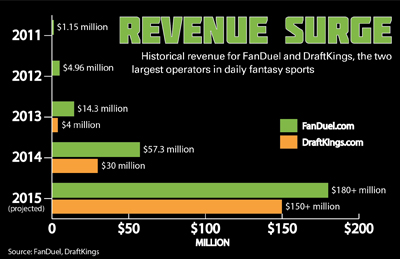
Boston-based DraftKings, one of two major daily fantasy game operators, is actively developing a Series D venture capital round that would exceed $100 million and value the company in the neighborhood of $1 billion, executives there said. A closing is expected sometime this spring.

New York-based FanDuel, DraftKings’ key rival, is said to be mulling a similar major fundraising move, industry sources said. This comes after both companies received significant funding rounds just last summer, worth a collective $111 million, that catapulted them into prominence.

Those prior funding rounds — $70 million for FanDuel and $41 million for Draft-Kings — nearly eclipsed the entire history of venture money in fantasy sports up to that point, and involved major entities such as New York investment bank The Raine Group and NBC Sports Ventures…..

Daily Fantasy sites have poured money into sponsor deals (like FanDuel’s deal with the Magic) and advertising spots.


Daily fantasy’s quick play and big payouts have drawn a desirable young demographic to the FanDuel (above) and DraftKings sites.


Full credit to Sports Business Journal and Eric Fisher

Your March Madness pool is probably illegal

Your March Madness pool is probably illegal

Adam Jeffery | CNBC

An estimated 50 million people reportedly took part in March Madness office pools last year, and the number should be about the same this time around. And those people may be breaking the law.

Trying to pick the winner of college basketball’s men’s national championship tournament, while avoiding bracket-busting losses along the way, can be downright exhausting and time consuming.

In fact, companies are expected to lose at least $1.2 billion for every unproductive work hour during the first week of the tournament,according to global outplacement firm Challenger, Gray & Christmas.

So is it legal?

“The answer lies in the legal meaning of ‘bet,’ ” said Tony Campiti, a lawyer with Thompson & Knight in Dallas.

Americans will drop $9 billion betting on March Madness

Americans will drop $9 billion betting on March Madness

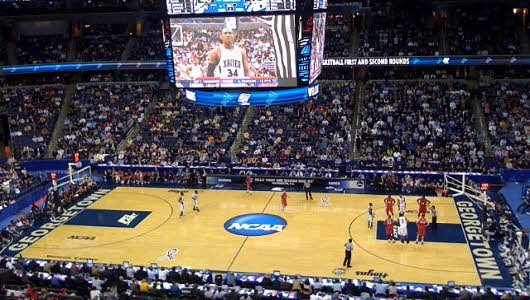
March Madness is kicking off, and from your office to the Oval Office, Americans are poised to bet more than ever before on the NCAA men’s basketball championship tournament.

The American Gambling Association, assisted by GfK Custom Research North America, estimates Americans will drop $9 billion betting on the games.

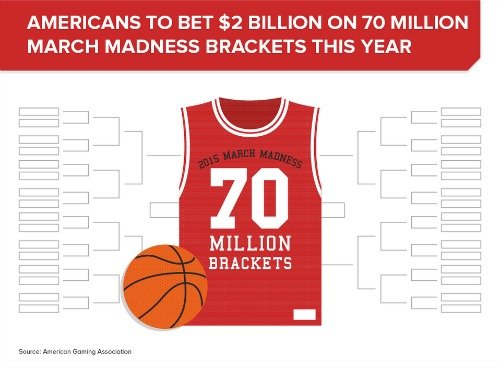
According to the AGA, on average participants will bet on two brackets each at a cost of an average $29 per bracket. Gamblers will wager $2 billion on bracket pools themselves, but many more will likely wager much more on individual games, which is how the American Gambling Association arrives at its $9 billion tally.

NCAA March Madness betting even outdraws the Super Bowl

The $9 billion to be bet on this year’s tournament amounts to more than double what gamblers bet on the Super Bowl, which was closer to $4 billion.

Read more: http://www.businessinsider.com/ncaa-tournament-gambling-projection-2015-3#ixzz3UUmyQrei

Real Madrid Looks To Turn Pay Fantasy Into A Winner For Fans

Real Madrid Looks To Turn Pay Fantasy Into A Winner For Fans
By: Joe Favorito @JoeFav

The pay fantasy space keeps growing in interest in the United States as well as now, globally. In recent months a host of European soccer clubs like FC Barcelona, Chelsea FC and AS Roma have launched pay fantasy games in hopes of drawing in new dollars and engaging a worldwide audience, especially one in the US that is now soccer savvy and used to playing pay fantasy in American football and baseball especially. The developer on many of these is Mondogoal, with offices both in the States and in Isle of Mann.

However this past week another high powered soccer club launched their own game, this one with a Million Dollar payoff. It was Real Madrid, and in partnership with US-based Hotbox sports, they created a game where a $5 wager can turn into a big winner. After months of quiet speculation and some difficult logistical hurdles which had to be cleared, the contest was unveiled before this coming weekend.

Unlike the traditional salary cap games that fantasy consumers are used to, the Real Madrid game is pretty simple; supporters pick nine players from any position for the match. There is no cap limit on stars. There are a series of analytics that will rally points for your nine players ranging from shots to saves to passes to time on field, all based on the playing roster the club has that day. Your best points totals overall will help net a winner, no pun intended. A series of tiebreakers will also help create the best possible winning scenarios.

“The concept of the game is simple, and the potential payoff is huge,” said Terry Lyons of Hotbox Sports, who has created a similar pick em game with the NHL New Jersey Devils, the first ever for a US sports league. ‘While many pay fantasy games are complicated and sometimes difficult to understand, we have taken a concept with a global brand and made it very understandable for everyone who follows the team. You control the roster and you root for your team. The better your guys do, the better the chances are of cashing in. We think it will be a big hit with the global audience Real Madrid has.”

Real Madrid hosts Levante in a La Liga match on the 15th before their showdown with FC Barcelona on the 22nd.

GAMBLING GROWTH SHOWN IN KEY STATES Just ask Ohio and Maryland

GAMBLING GROWTH SHOWN IN KEY STATES
Just ask Ohio and Maryland

By Frank Scandale

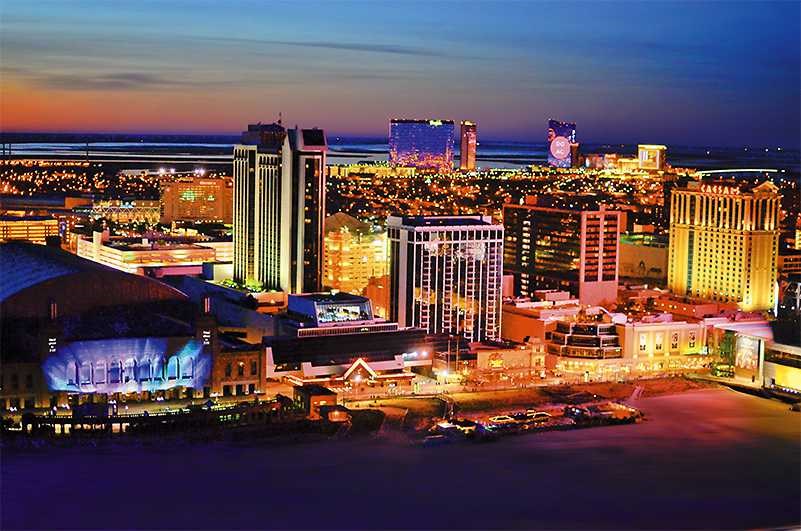
If you are living in New Jersey, you might think the commercial casino gambling industry is two steps from sliding into the Atlantic Ocean.

It’s not without good reason. Casinos in Atlantic City seem to be closing faster than Radio Shacks. Revenue consistently declines year to year as competition to the north, west and south increases.

If there wasn’t an Ocean to the east, it might be worse.

Yet, if you stand back and look at the industry across the nation, the overall picture is not without promise. Just ask the three companies that are wagering on new casinos in Upstate New York. Among the states that are cause for optimism are Maryland and Ohio, each registering significant double-digit growth figures in 2014.

“When you look at Maryland and Ohio, for instance, it’s growing. Overall there is growth,” says David G. Schwartz, director of The Center for Gaming Research at the University of Nevada Las Vegas. “There seems to be a tradeoff. In 2014, the commercial gaming market grew by 2.14 percent. “

That figure includes casinos and racinos only, but not traditional state lotteries, horse racing and other non-gaming elements.

He cites states like Florida (+8.5 percent), whose racino industry is expanding, and Illinois (+15 percent), which since adding electronic poker in bars has spurred overall revenue growth, as other states that are offsetting the flat or declining revenues in other states.

Ohio and Maryland are growing strong, owing to a variety of reasons. contrasting a dismal scene in New Jersey, where Atlantic City casino revenues have been in a steady decline for years. Revenue in New Jersey has dropped 47 percent since 2006, according to the center’s research reports, when it hit its peak in terms of revenue at $5.2 billion.

Yet, at least one expert still marvels at Atlantic City’s situation and revenue numbers if only because of its unique geographic characteristic: all the state’s casinos are packed into a two or three mile square area at the southern end of the state.

“What is extraordinary is that no place outside of Nevada has that much supply and still does $2.5 billion in business with no local population to sustain it,” said Dr. Izzy Posner, the executive director of the Lloyd D. Levenson Institute of Gaming, Hospitality and Tourism at Richard Stockton College in New Jersey. “If Martians came down and looked at this, they’d say, “What? How’d they do that?’ “

Posner provided historical perspective, reminding us that the legislation to allow legalized gambling in New Jersey in the 1970s was done so to spark the economy in Atlantic City.
“Now, everywhere else that has legal gambling, they spread it around the state. “And Pennsylvania has its licenses so that they are also on the borders of New Jersey.”
The competition is what is sparking growth nationwide in the industry, Posner said.
“A lot of that decline (in Atlantic City) did not wash away with the incoming tide. It kind of spread around a bit.”

Garden State, meet the Buckeye State.

For Ohio, a relative newcomer to the gambling industry, the gains are strong. Experts point to the growth due to its continuing additions each year.

With four fully licensed casinos now and seven racinos scattered around the state, Ohio has benefited from growth in properties from eight in 2013 to 11 last year.

Ohio, which entered the casino and racino business in 2012, now boasts four fully licensed casinos and seven racinos, with total revenue for last year topping $1.4 billion, up from $1 billion the year before, or 36 percent.

“If you look at the total revenue of the tracks and casinos, we have more properties open than last year,” explained Jessica Franks, director of Communications for the Ohio Casino Control Commission. “All four casinos are up and running for a year or more now. And the last racino opened in early Fall last year. That accounts for some of the growth.”

In Ohio, the racinos and lotteries are overseen by the state’s Lottery Commission, explained Marie Kilbane of that office’s communications department. The state is just starting to get a fix on what the potential growth might be in the state.

“You need to get your sea legs first to figure out the marketplace and now that all the operations are working, you can see how the Ohio market bears with having the VLT (Video Lottery terminals) entertainment across the state,” Kilbane said. “The gambling game is always changing in reaction to economic conditions.”

Ohio has approximately 10,500 VLTs in operation today.
Meanwhile, Maryland, where the state operates five casinos (a sixth is on the way next year), saw its February revenue this year jump 25 percent from the same period a year ago, according to the Maryland Lottery and Gaming Control Agency, which released the latest figures last week.
With nearly 9,000 slots and almost 400 table games, the state’s casino business kicked of with the inaugural opening of its Hollywood Casino Perryville in 2010. Even the Center for Gaming Research referred to Maryland’s gaming industry as “one of the most talked about gaming markets on the East Coast.”

As it nears its five-year anniversary this September into the gaming arena, its monthly revenue is robust, taking in $83 million in revenue in February alone. However, agency spokespeople explain that year-to-year comparisons are difficult, as Maryland has added one new property each year since its inception, which also contributes to the overall growth as more casinos come on line.

Maryland’s revenue registered $931 million in all of 2014, up from $745 million in 2013, according to the Center for Gaming Research.

Levenson’s Posner concurred on the Maryland and Ohio reasons for growth, and expounded on the positive revenue of Florida and Illinois.

He cites the demographics and growing population of Florida, now the third most populous state with 19.9 million people, according to Census figures. “If you look at the last couple of winters in the Northeast, it’s really helping Florida. And think about the wealth going there. You have a lot of discretionary income and a lot of seniors.”

As for the future of New Jersey’s casino industry, Posner cautioned that the ongoing speculation about casinos in the Meadowlands in North Jersey, while tempting, is not without speed bumps.

“Obviously the northern part of the state is attractive. There’s a lot of red meat there,” he said. “If you are a lion, it’s a good hunting ground. It’s a densely packed part of the state and if you add the wealth there, it is very attractive.”

Though voters’ approving such an expansion is not, in golf parlance, a gimme, he said.
The last poll by the Levenson Institute last year found voters were against it by a 2-1 vote, however, that included a large number of undecided.

And then there is New York City and those politics. New York’s legislation currently prevents a casino from going into the New York City area for another seven years.

“Would New York sit still if it saw the Meadowlands getting a casino?” he asked. “So before anyone puts a billion dollars into North Jersey, you have to take the region into account.”